
Jack Madsen sent me this photo of a bird seen near Rapidan, Minnesota.


Hide your windshield wipers!
Jan Wicklund of Wayzata sent a couple of photos of a turkey vulture on the hood of an automobile that were taken by her son-in-law Mancel Mitchell. Jan was wondering what the bird was eating. I love seeing vultures, the sanitation crew of our roadways who are willing to work for food. The vulture in the photo was likely nibbling on windshield-wiper blades or window seals. Everglades Park has a problem with black vultures destroying those things. There are records from here and there of crows and jays doing the same thing. Keas in New Zealand demolish wiper blades and rubber moldings. Learned behavior, I suppose. The vultures must get something from this behavior. Perhaps they are using the cars for biting and tearing practice. Maybe it’s part of the initiation into a vulture fraternity. It might be a rite of passage, a step on the path to maturation. Maybe wiper blades are easier to find than bubblegum. As far as I’m aware, no one knows for certain why vultures do this. Vultures have also been known to gnaw away at vinyl roofs. What will a vulture be nibbling on next, a tire?


Song sparrow
What better name could there be for a sparrow that sings.

I think these things produce wind

Holy Spirit Retreat Center
From Sister JoAnn. "On April 26th we have two of our Franciscan sisters coming to Holy Spirit Retreat Center to do a program on Owls and Bees, since I know you are interested in these things could you put it out to the public. We’d love to have you come, let me know if it might be possible? Blessings and may you experience Joy this Easter season along with blessings these days of Holy Week.
Welcome Spring! Sunday, April 26. 1:30 pm – 3:30 pm Who's Who? WHAT DOES OWL SAY? S. Rita Brom will bring an owl (or more?) and her naturalist’s insights into the world of owls. What's the Buzz? S. Alice Thraen, Assisi Heights beekeeper, will share her wonder at the amazing world of bees. Free Will Offering. Holy Spirit Retreat Center. 3864 420th Ave Janesville, MN 56048. Phone: 507-234-5712. E-mail: retreat@frontiernet.net. Web: www.holyspiritrc.org
Look up!
Oh, great, as if I didn't have enough things to worry about already.

Another reason for not burning any bridges.

Iowa is a beautiful place.
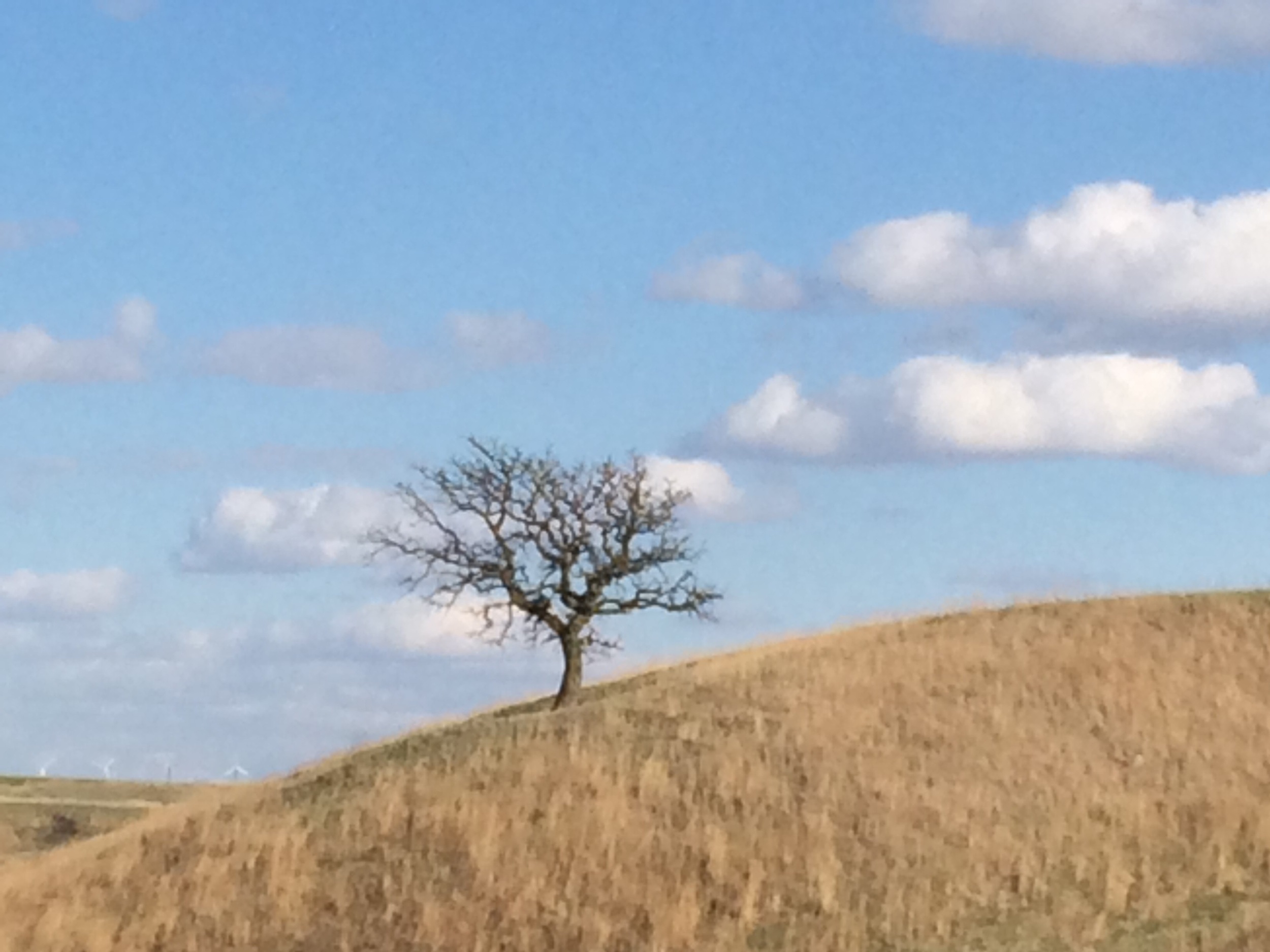
Some changes are good.
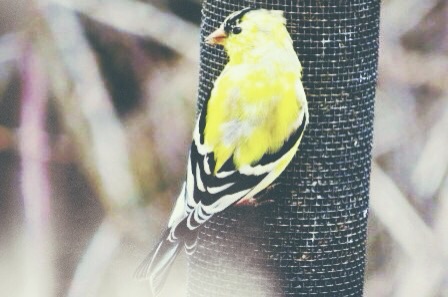
The goldfinches, once an olive drab color, give us gold in the spring.
Our Town, our nature
Robins sang a cappella in the yard. The major movement of robin migration is timed to follow the 37-degree isotherm, a line on a weather map showing where the average daily temperature is 37 degrees.
I listened to the robins. Helen Isabel Moorhouse wrote, "And I think if you listen closely in the sweet glad days of spring. With the song of the brook, the breeze, and the birds, you can hear the flowers sing."
House sparrows chirped jauntily. These birds are much too interesting to be unvalued.
A friend retired. Now he has the time to take a cup of coffee onto his deck and listen to the cardinal's morning song. That’s a delightful benefit of retirement that is seldom mentioned.
I spotted a pair of mallards in a road ditch. A drake has the tightly curled tail feathers, but it’s the hen that quacks.
A woman from Minnetonka told me that she had grown up in a family that had a crow. The bird pecked holes in cigarettes so that smokers couldn't draw smoke. It was a health-conscious crow.
In "Our Town," Thornton Wilder wrote, "Oh, earth, you're too wonderful for anybody to realize you."
That’s probably true, but I’m giving it a shot.
It's not all deductible.
But it sure makes for an interesting life.

A ghost on glass
An impact image of a bird on a Minneapolis window. Photo by Richard Greene of New Ulm.


It's a bluebird day in Minnesota.
The snow has melted.


Heckle and Jeckle
Were magpies.
A sculpture done by a pileated woodpecker.
A friend, Jody Wynnemer, shared this photo with me.

There is no more beautiful flier
The vulture performs an aerial ballet for those who are fortunate or wise enough to watch.

The juncos will leave us soon and head north.


An American robin documentary
Or a robin reality TV show.
A window unto nature
I had one of those stare out the window moments. Sometimes, it’s just the thing to do. Most of the world is out there somewhere. Daydreaming delights me and a window offers fascinating things well worth contemplating. Each gaze brings amazement. Each glimpse brings wonder. During this particular look, the signs of spring were outnumbered by the signs of March--a March made of both winter and spring. Cold and snow prevailed. Spring could have been just a myth.
Yet, the day was decorated in birds and the morning had secrets to share. Goldfinches had begun to be golden birds once again as their plumages moved from olive drab to yellow. The bills of starlings had turned yellow for spring. Canada geese honked like hounds on a fresh trail as they flew overhead. House finches sang beautiful songs that once made them caged birds sold as Hollywood finches. The red of the handsome males was good to see. They can be orangish or yellowish, too, depending upon diets. Robins fueled by testosterone tussled in territorial disputes. It seemed unnecessary at such an early date, but they must know what they are doing. My mother claimed that a returning robin needed three snows on its tail before spring could arrive. Red-osier dogwood showcased its red veins of spring. Also called red twig dogwood or red willow, it brightens the grayish landscape.
The dawn chorus, an inspiring demonstration of vocal athleticism, will begin in earnest before long. It’s when birds, mostly males, declare territories and intentions. Emily Dickinson, described it this way, "The birds begun at four o’clock— Their period for dawn— A music numerous as space And measureless as noon."
Studies have shown that birds sing louder to overcome traffic noise. It’s difficult to escape manmade sound.
I watched and heard a downy woodpecker hammer upon a hollow tree. That’s a cry for spring. The downy is the most common woodpecker species to visit a backyard bird feeder. A woodpecker isn’t the most melodious of singers, so it uses its pointed bill to produce sounds on resonant surfaces. Woodpeckers play percussion instruments in accompaniment to the singers of the dawn chorus.

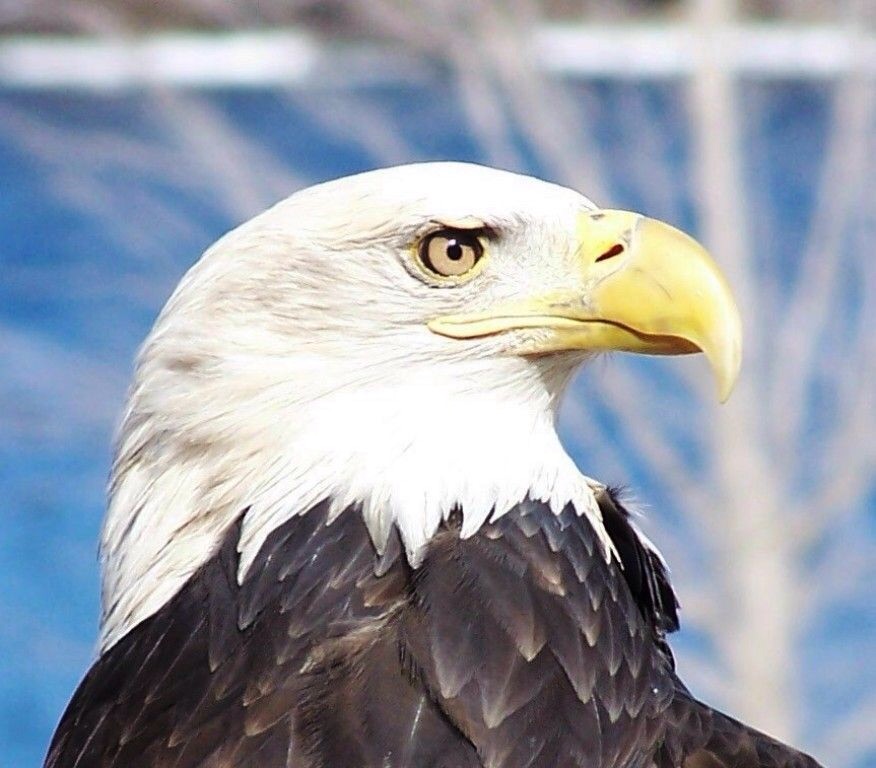
Bald eagles still use phonebooks.
Wild turkey binoculars
Eagle optics has just the binoculars for you. Check out this video.


