An American goldfinch popped up in front of my camera.
Mosquito Lake.
And in today’s views: a bad photo of a skilled fisher.



An American goldfinch popped up in front of my camera.

Mosquito Lake.

And in today’s views: a bad photo of a skilled fisher.


A red-bellied woodpecker finds a way to turn its world upside down.

Crows are happy they aren’t waterfowl.
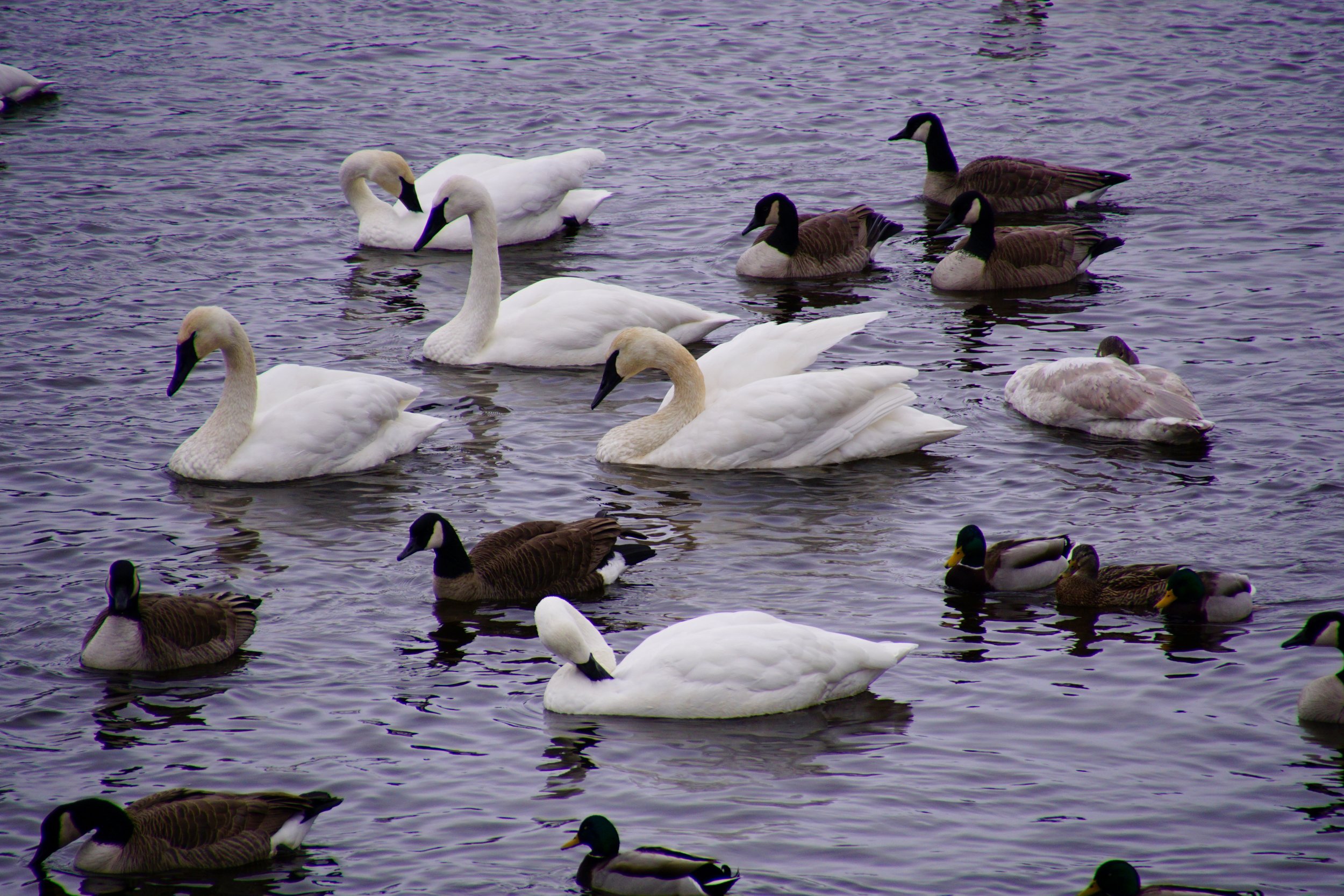
And in today’s views: trumpeter swans.

Birds are stunningly amazing and amazingly stunning.

A blue jay misses the cut.

The Minnesota Chapter of the Appreciation of Trumpeter Swans meets.
Al Batt of Hartland is a member of the Albert Lea Audubon Society. Email him at SnoEowl@aol.com.
The guy from just down the road
My neighbor Crandall stops by.
“How are you doing?” I ask.
“Everything is nearly copacetic. I know only a couple of things and I’m pretty sure one of them is wrong. I know what I know because I read a lot of T-shirts. I just wrote a message for a T-shirt. ‘Remember, there is a “me” in menu.’ That should make me rich. I weighed 10 pounds when I was born. Now look at me. Talk about the effects of inflation. I know I should get more exercise, but there is no nation like vegetation. This is the time of the year when I’ve been known to flip a slipper at a TV weatherman. I try to think about baseball to take my mind off winter. I’ve been following that game since I was old enough to throw a rock. My neighbor Scooter is headed to Florida soon to watch some spring training games of the Twins. Scooter finds it difficult to be positive when the temperature is negative. In the winter, he’ll drive only one direction — south.”
Naturally
The thingamajig with the doohickey connected to the whatchamacallit brought good news. The eastern North American monarch population estimate for the winter of 2018-19 has a population size of about 15 acres, according to World Wildlife Federation Mexico and the Comisión Nacional de Áreas Naturales Protegidas. This is the largest population since 2007 and an increase of 144 percent over last year. The Monarch Joint Venture reminds us that everyone can make a difference for monarchs by creating habitat, educating others and monitoring monarchs.
The weather report had been threatening. A volcano of winter had erupted. It was cold enough that my imaginary fire log went out. You don’t need to touch the flames to feel the warmth.
I leaned into the wind. The wind leaned back. A canvas of fresh snow showed the marks made by small travelers making their way to here and there. I’m glad they shared their tracks with mine. I look and wonder. No walk is just a walk.
There were rainbow-colored sundogs in the sky. They were caused by the diffraction by ice crystals.
I’d checked with Hartland Harry, our local groundhog. He woke up a bit cranky. He told me he had no idea when winter would end and if he did, he wouldn’t tell me. He differs from Punxsutawney Phil. If Phil sees his shadow, Phil says we’ll have six more weeks of winter. Harry is from Minnesota. He’d say we’ll have only six more weeks of winter.
“March of the Penguins” was a great documentary film. The “March of the Pine Siskins” would be, too. Many of the tiny birds had found the feeders in my yard. They joined other birds in a feeding frenzy that heralded nasty weather. The bills of some starlings had begun to turn yellow. Even at nearly -30, that’s a sign of a nearing spring.
I headed down the highway, looking at the road and glancing at raptors. Red-tailed hawks patrolled highway margins. When snow covers much of raptors’ hunting grounds, highways allow a prime place to pursue prey like voles.
I drove in the vicinity of Albert Lea High School. There was a wild turkey standing nonchalantly in the middle of the road as cars went by on both sides of the big bird. It was obviously a turkey with street smarts.
Birds are important. I watch a good number of high school athletic events involving teams from the Big South Conference. There are 13 teams in that league. Six of them are nicknamed after birds. New Ulm and Windom are the Eagles; Fairmont, Luverne and Redwood Valley are the Cardinals; and Waseca is the Bluejays.
Q&A
“Are there any athletic teams nicknamed for plants?” There are. This list is by no means inclusive and some are named for parts of plants, but here you go. The one I am most familiar with is the Blooming Prairie Awesome Blossoms. Others include: Ohio State Buckeyes, Toronto Maple Leafs, Moorhead Spuds, Indiana State Sycamores, The Roses (an English rugby team), Scottsdale Community College Fighting Artichokes, Delta State (Mississippi) Fighting Okra and the Cedar Rapids Kernels (a minor league baseball team). There used to be another minor league baseball squad in California named the Visalia Oaks, but they changed their nickname to Rawhide. I’m sure there are more plant-based nicknames.
“Why do blue jays carry so many seeds in their mouths?” It’s because they don’t have pockets.
Thanks for stopping by
“Whoever you are, no matter how lonely, the world offers itself to your imagination, calls to you like the wild geese, harsh and exciting, over and over announcing your place in the family of things.” — Mary Oliver
“I rest in the grace of the world, and am free.” — Wendell Berry
Do good.

Sports are for the birds. Al Batt/Albert Lea Tribune
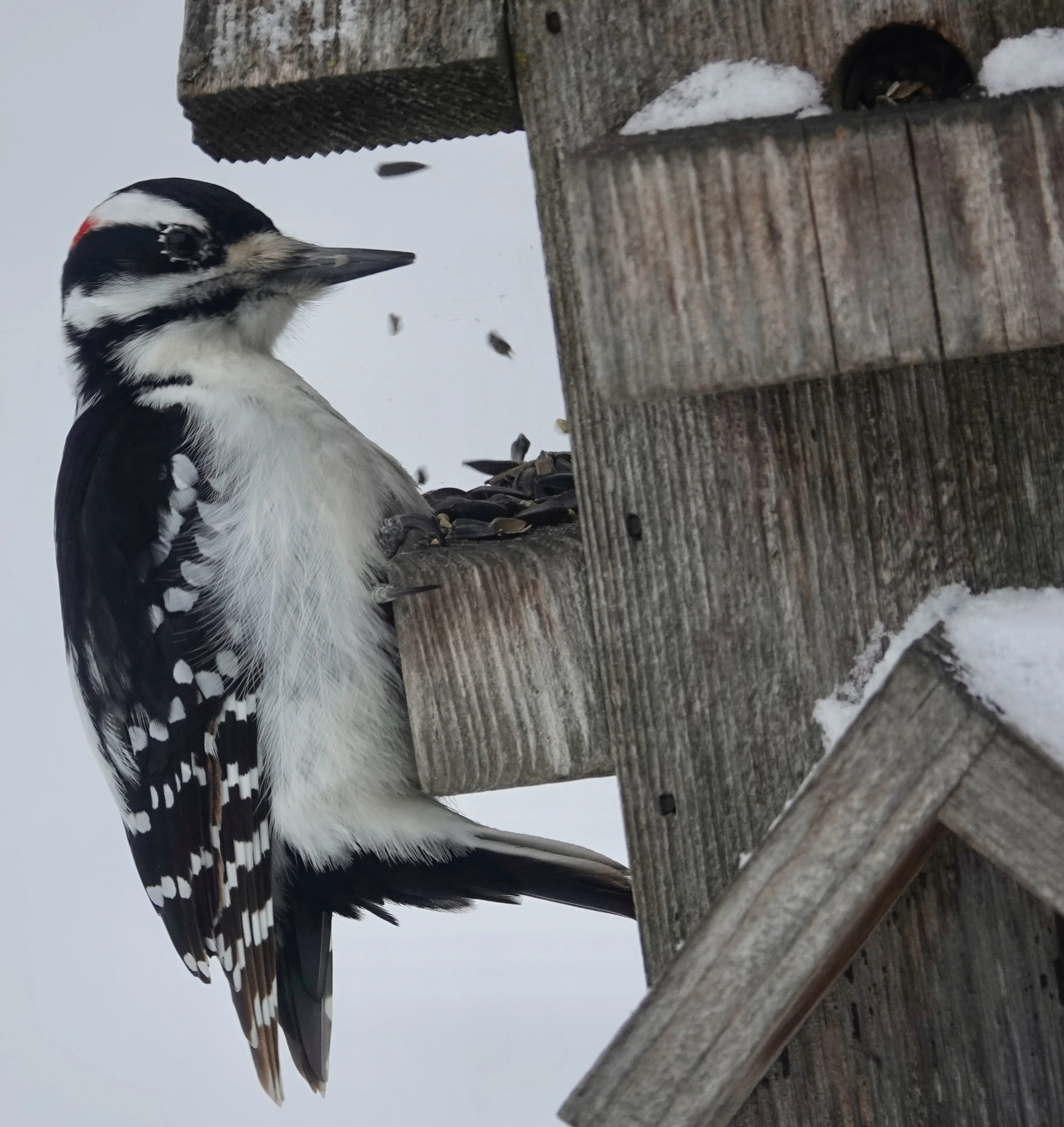
A hairy woodpecker is a magician that makes the sunflower seeds fly.

A hairy woodpecker has woodpecker feet that are zygodactyls: two toes forward, two behind. This makes buying shoes a pain and is why you seldom see a woodpecker in a shoe store.

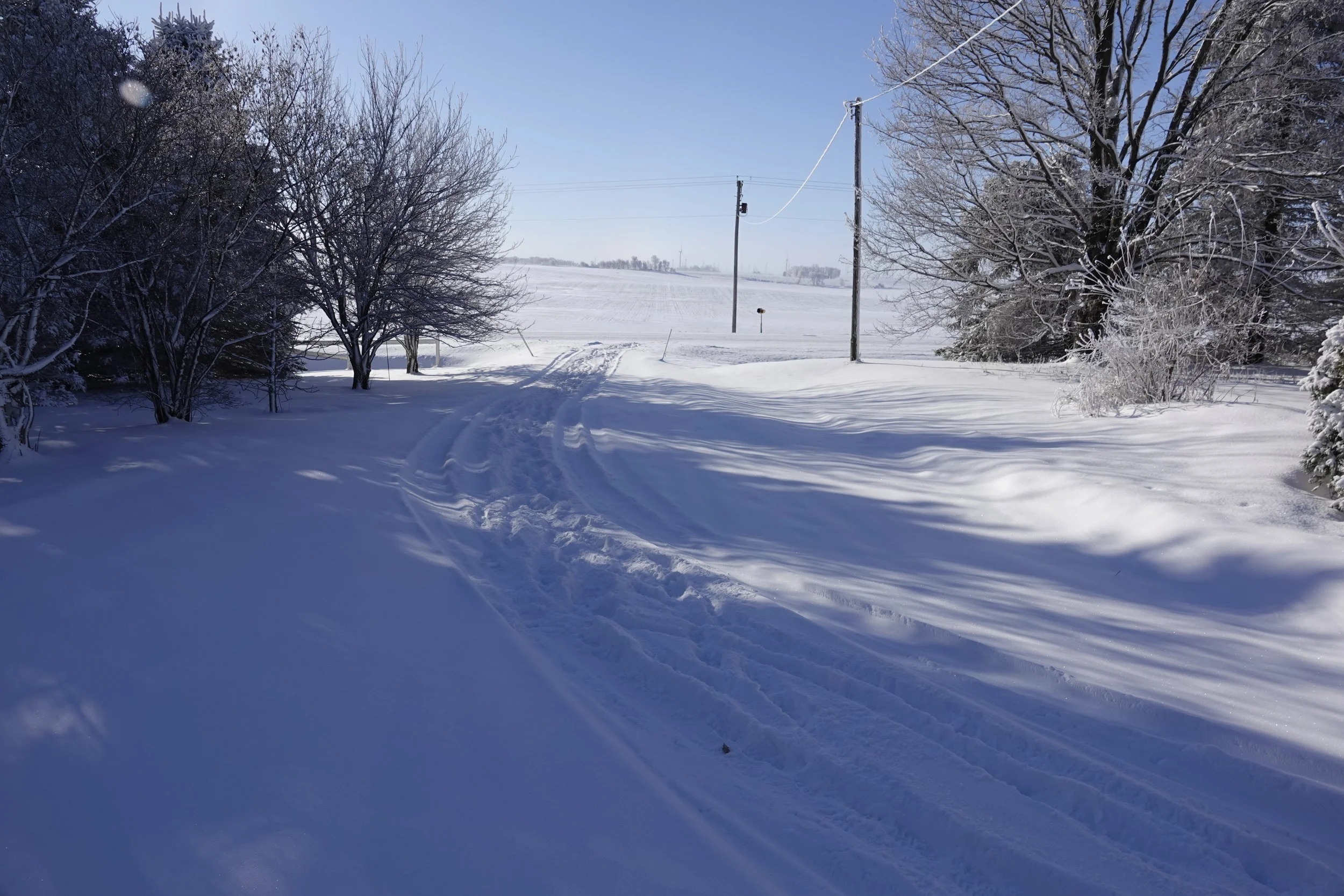
I love to walk. I follow in my own footsteps.

Natural tree flocking.

This cardinal just heard the weather report.

And in today’s views: A bodacious black-capped chickadee.


A male Baltimore oriole has been hanging around Le Sueur, Minnesota, all winter. He likes the town and folks have been feeding him grape jelly. Feeding jelly is a challenge when that foodstuff can freeze so quickly.

The female downy woodpecker forages in inferior winter hunting grounds as the male claims the prime natural locations.

And in today’s views: A crow puts on some mussels.


How we measure snowfall amounts in Minnesota.

Patience is a virtue even at -20 degrees.

I found myself in Germany, following Goethe’s advice, “Nothing is worth more than this day.”

This was how high Paul Bunyan had predicted the snow would be this winter.

Proper signage is important.

The thornapples were snow-capped this morning.

Hawthorn.

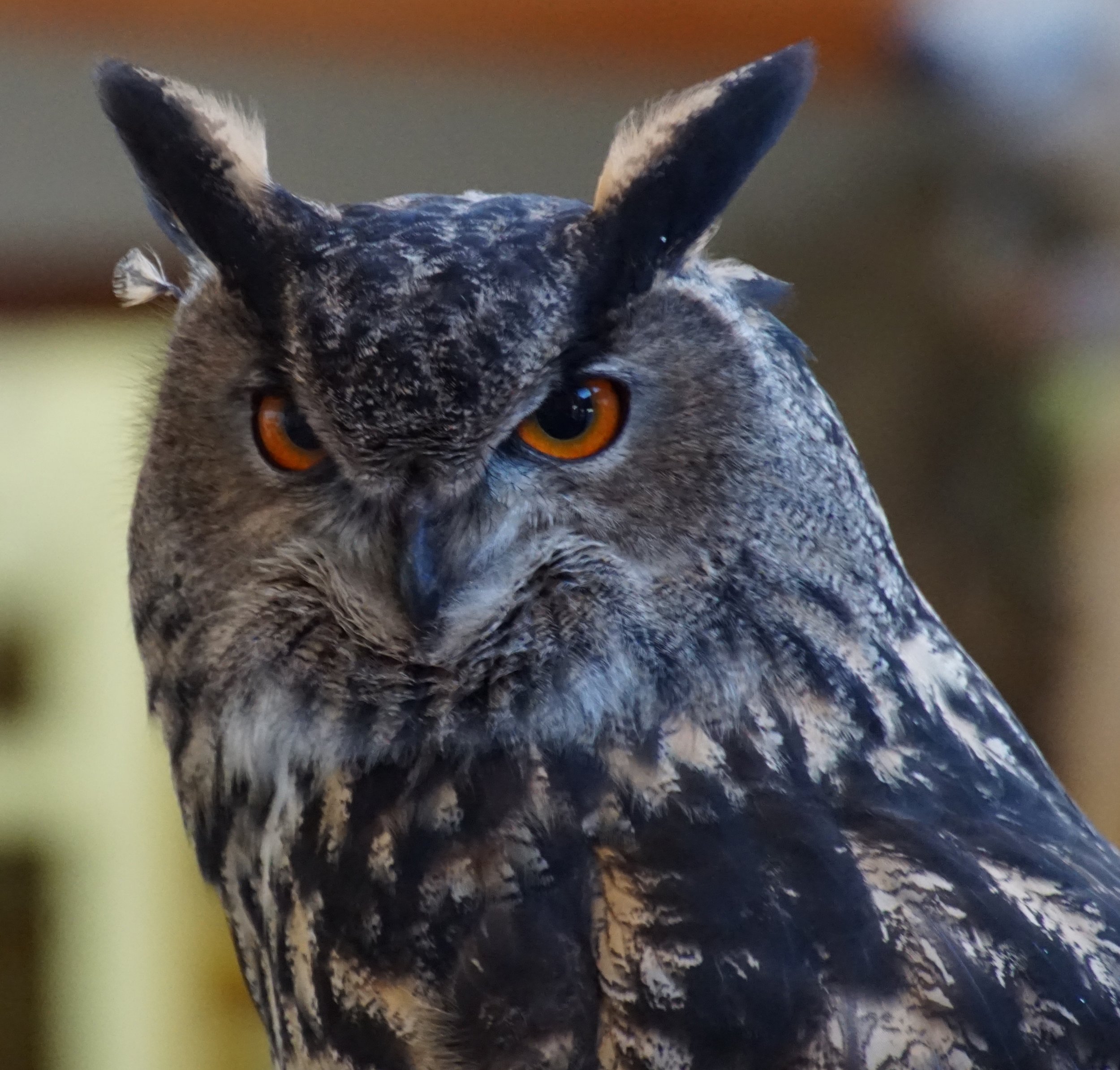
A feather out of place on this Eurasian eagle owl at the American Bald Eagle Foundation in Haines, Alaska.

Give them a caw.

It’s not the Flintstones’ newest vehicle. It’s a fish wheel, a water-powered device used for catching fish.

In today’s views: Our national bird.
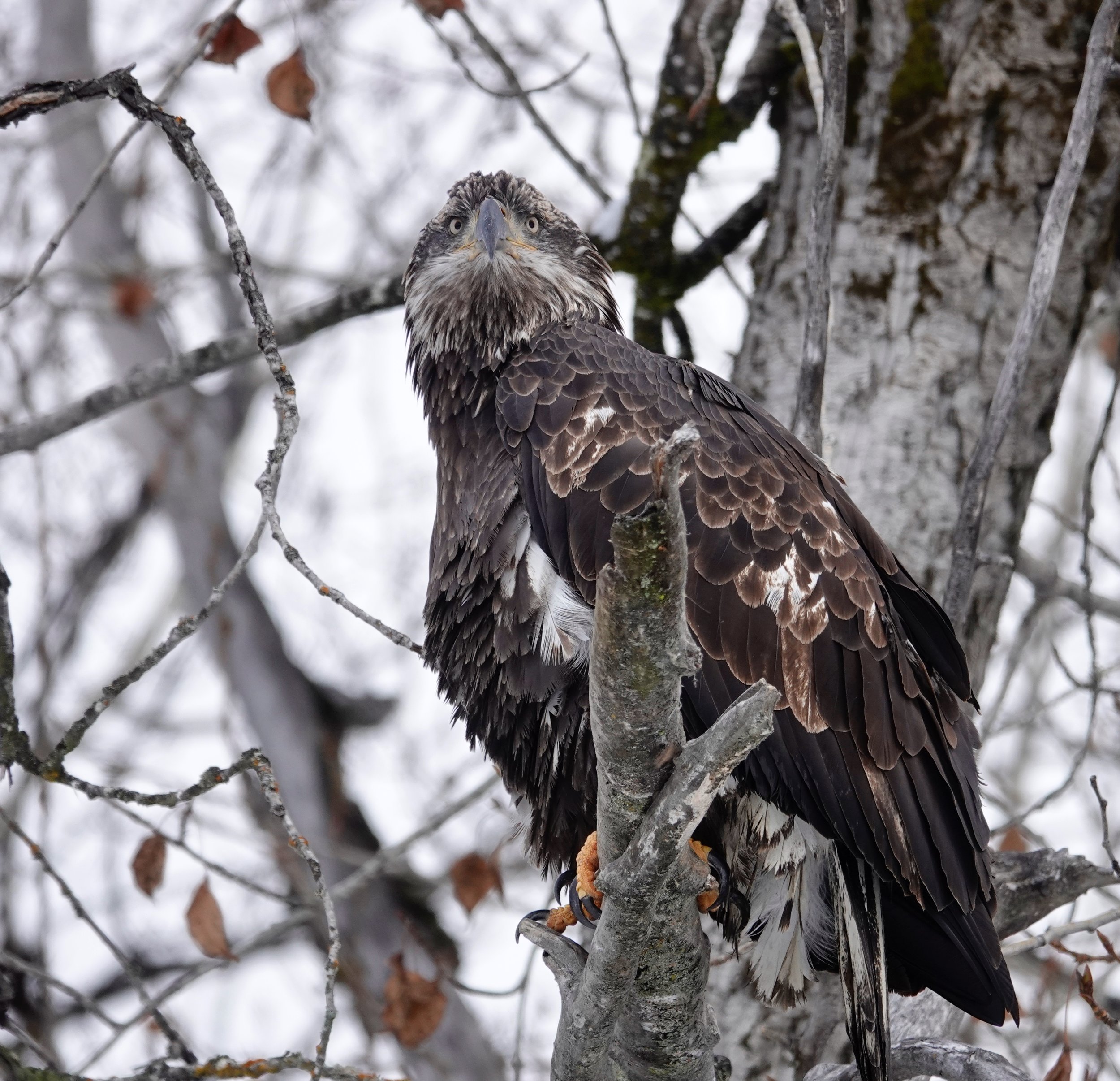
And what are you looking at?
byAl Batt,m.albertleatribune.com
February 2, 2019 09:00 AM
Does a downy find winter weather a downer? Al Batt/Albert Lea Tribune
Al Batt of Hartland is a member of the Albert Lea Audubon Society. Email him at SnoEowl@aol.com.
The guy from just down the road
My neighbor Crandall stops by.
“How are you doing?” I ask.
“Everything is nearly copacetic. Yesterday was a bummer. You know you’re getting older when you pull a muscle while eating a sandwich. And a neighbor has a pet skunk. I just got wind of that. But I’ve had a good day today. I found a Twinkie I’d left in a ‘Bonanza’ lunchbox I had in elementary school. It was delicious. I tell everyone I hate snowstorms, but I don’t. They get me out of doing things. I can sit around wearing my ‘I farm, what’s your excuse?’ T-shirt and ancient sweatpants while eating bad things and watching bad TV shows. A storm had been predicted and I’m the blizzard wizard, so I headed to the Grocery Emporium and Gizzard Rental to stock up on pizza, ice cream, root beer and kale. I knew that was what I was going to buy because I can read my mind.”
“You bought kale?” I say.
“My sister Cruella had been bugging me to eat healthier. Anyway, I buy those things and my credit card company called me with a fraud alert because I’d never purchased anything like kale before.”
Naturally
I tell myself that winter is on my side, but it can be ornery. At least I don’t have to shovel the cold. Here at the Hartland field station in January, I turn to the birds as sunflowers turn to the sun. I endeavor to notice things. It’s an expression of life and of hope.
The crashing temperatures painted frost patterns resembling ghostly plants on the window glass.
I watched a handsome red-bellied woodpecker fly to a feeder. It was a male with a red crown and nape. The female has the red nape, but lacks the red crown.
I saw a pair of critically acclaimed birds — cardinals. Each time I take a good look at a bird, I’m reminded why I’m a card-carrying birder.
A squirrel chattered at me the entire time I filled the feeders. Squirrels have a salty vocabulary. I enjoy squirrels even though they can be hard on feeders. It’s as the psalmist said, “Harden not your hearts.” I reckon that applies to all things including squirrels.
We’d just received somewhere between 8 and 143 inches of snow — most of it parked illegally. It reminded me that Harmony became the Minnesota state annual precipitation record holder by receiving 60.21 inches in 2018. This proves that planning and hard work pay off. Harmony crushed the old record of 56.24 inches set by Waseca in 2016. A downy woodpecker flew in as I was filling the feeder. I wondered if a downy finds winter weather a downer? I told it about Harmony’s record in hopes it might bring cheer, but the woodpecker wasn’t interested.
Q&A
“Where do eagles roost during Minnesota winters?” Bald eagles find shelter in protective areas, in brush, branches and conifers, which reduces exposure to wind. These microclimates hold heat more efficiently than do open spaces. An eagle’s 7,000 to 7,200 feathers are effective insulators and its large size helps it retain heat.
“Do chickens sing?” I think they do. Chickens make a wide range of sounds and communicate with one another. Roosters sing loudly when they crow, and they call hens whenever they find a tasty treat they wish to share. Hens cackle after laying eggs. It’s better singing than I hear from many humans.
“Do vultures have enough carrion space when they fly?” No, and they don’t fly cheep. Vultures asked that I remind human fliers that just because it has a handle, doesn’t make it carry-on luggage. Turkey vultures generally eat mammals, but feed on other carrion such as birds, reptiles, amphibians, fish and invertebrates. I’ve seen them eating rotting pumpkins. A vulture prefers freshly dead animals, but wait for carcasses to reach a condition that George Foreman wouldn’t consider grilling. This makes it possible for the vulture to pierce the skin.
Albert Lea Christmas Bird Count
This count produced 44 species on Dec. 29. There were 104 wild turkeys and 17 pheasants counted, more Eurasian-collared doves than mourning doves, and seven pelicans. Other birds seen included: Brown creeper, golden-crowned kinglet, white-throated sparrow, northern shrike, northern flicker, song sparrow and red-winged blackbird. No robins were spotted. The highest numbers in descending order were: House sparrow, rock pigeon, dark-eyed junco, horned lark and American crow.
Thanks for stopping by
“Faith is taking the first step even when you don’t see the whole staircase.” — Martin Luther King, Jr.
“We have probed the earth, excavated it, burned it, ripped things from it, buried things in it, chopped down its forests, leveled its hills, muddied its waters, and dirtied its air. That does not fit my definition of a good tenant. If we were here on a month-to-month basis, we would have been evicted long ago.” — Rose Bird, former chief justice of the California Supreme Court
Do good.

The blue jay tried to hide from me.
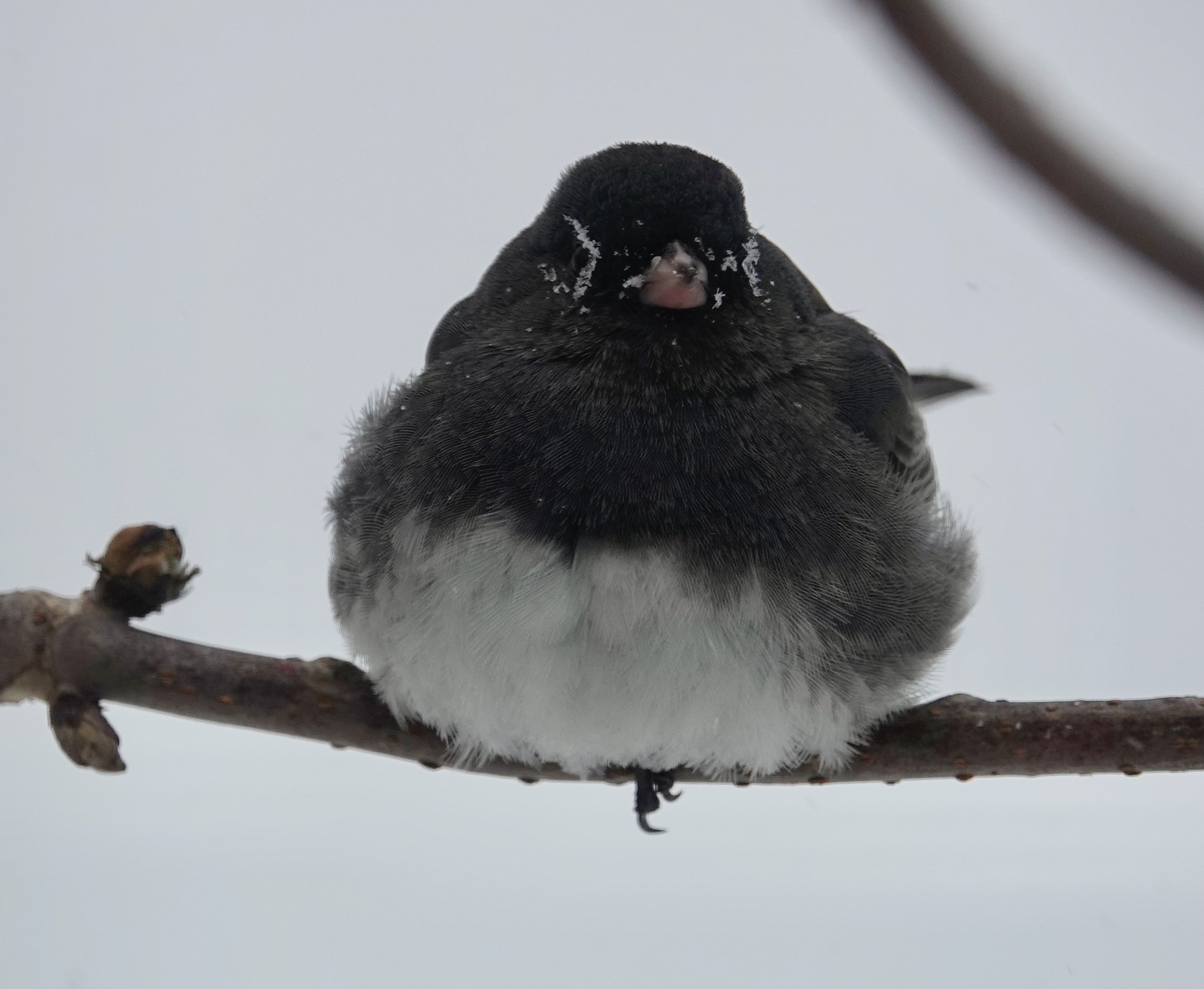
The junco’s snow goggles were made from real snow.

A red-bellied beauty, otherwise known as a red-bellied woodpecker.

When a woodpecker hangs around the suet, it hangs around the suet.


A red-winged blackbird drops by for a bite at the Batt bird table.

I like looking at a house finch.


A fox squirrel watched the wind blow a red squirrel by.

This is how I sneak up to look at the thermometer each morning.

This squirrel is headed to Atlanta. It heard that there will be a lot of nuts at the Super Bowl.


It was cold enough that the guy on the tractor crossing sign wished his tractor had a cab.

It looked as if the ornamental eagle in the yard was hit in the face with a snow pie.
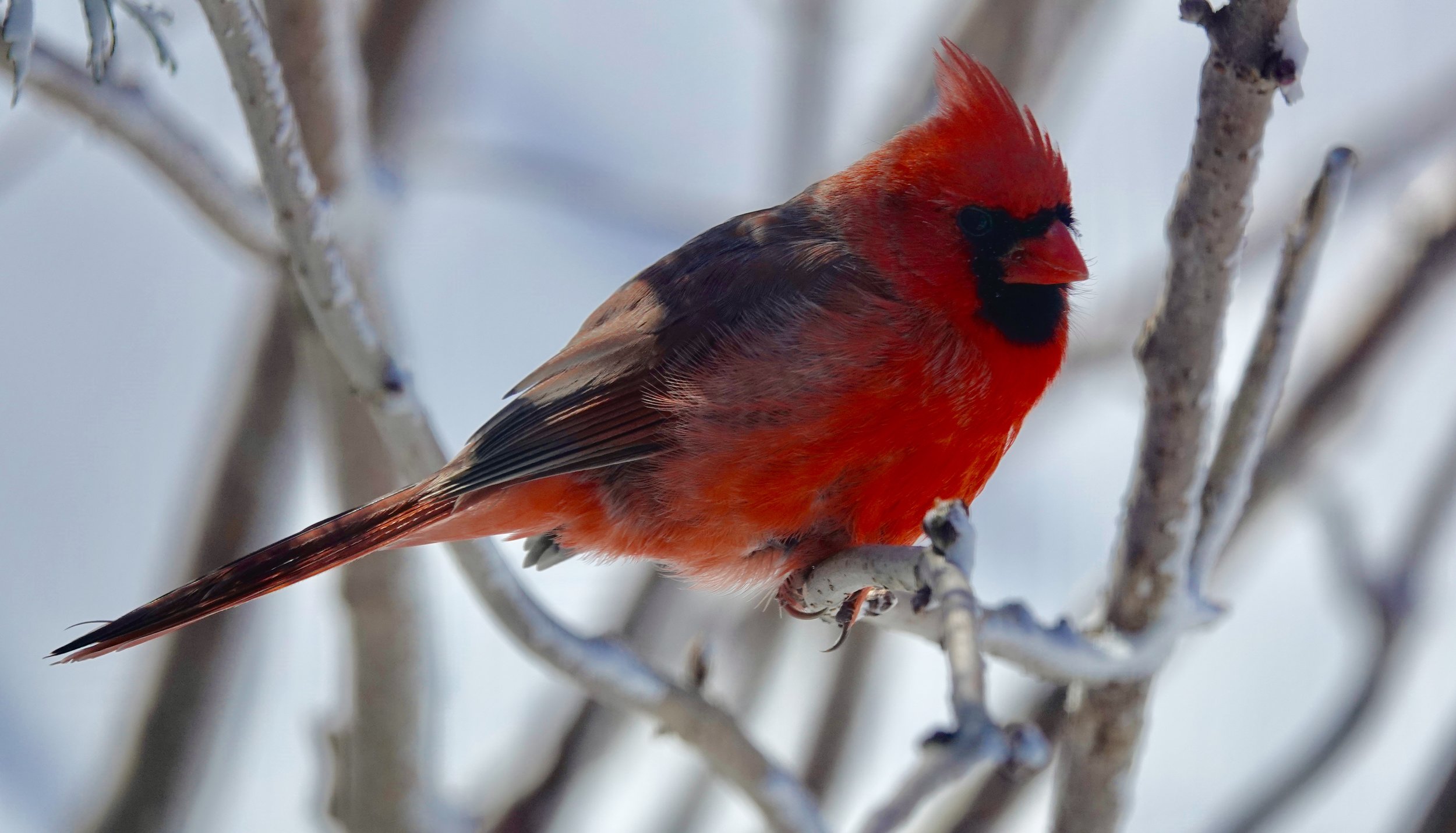
The beauty of the world sometimes hides in the shadows.

A starling wears a coat of many colors and feathers.
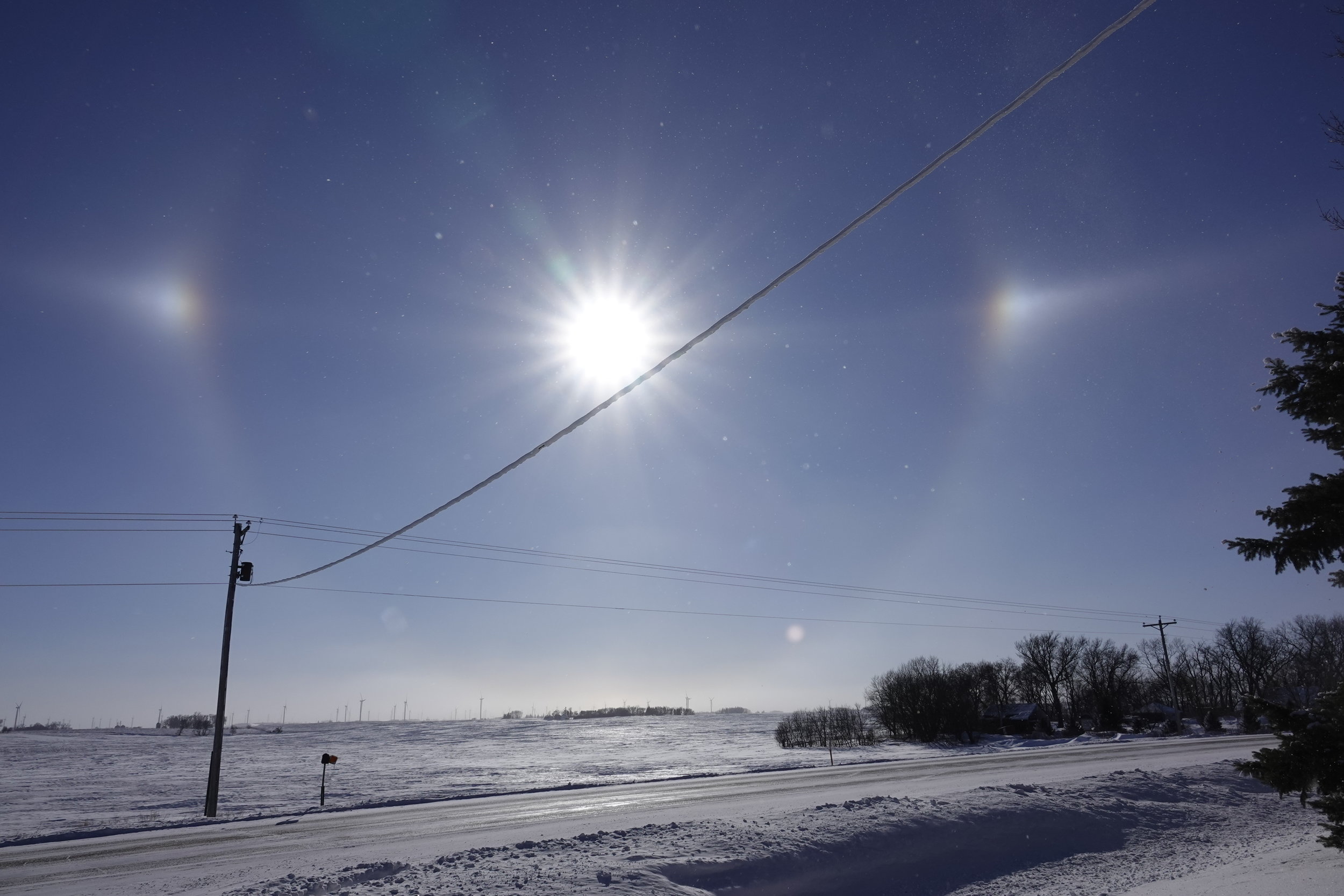
I went for a walk today and took the sundogs with me.

A nuthatch plans its next move.

One of the faces of winter.

We don’t see killdeer in Minnesota when it’s 32 degrees below zero, but a friend considers them to be the true sign of spring. “A killdeer doesn’t lie,” he says.

A scene from a mallard’s dream in January in Minnesota.

And in today’s views: a sedge wren.

Outspoken and captivating — it’s the blue jay way.

by Al Batt, albertleatribune.com
January 26, 2019 09:00 AM
Al Batt of Hartland is a member of the Albert Lea Audubon Society. Email him at SnoEowl@aol.com.
The guy from just down the road
My neighbor Crandall stops by.
“How are you doing?” I ask.
“Everything is nearly copacetic. I’m trying to get a government grant to learn how to get government grants. Yesterday came out sideways. It was because I’d finally figured out that everything isn’t about me. I was shattered. I had to run right out and find a little pie for my whipped cream. My neighbor Still Bill — you have to drive stakes by him to see if he’s moving — bought a new truck. He kept showing me photos of it on his cellphone. Each time, he said, ’Ain’t she beautiful?’ After the 10th time, he’d made me so mad I could spit tacks. I told Still Bill that if he thought his pickup was lovely, he should see my cousin Calvin.”
“Does he have a snazzy truck?” I say.
“Nope. He’s an optometrist.”
Naturally
I walked, enjoying what nature had filled my yard with.
I paid attention to the things in my yard. Mary Oliver, a favorite poet of mine, had just died. She had written, “Instructions for living a life. Pay attention. Be astonished. Tell about it.” She also wrote this: “To pay attention, this is our endless and proper work.”
There is always something out there in the wild kingdom. I spied with my little eye — snow and a deer far off in the distance. It was looking at me or something near me. High numbers of deer reflect a productive landscape. I saw a study that found a white-tailed deer will eat over 600 plant species and 3.5 percent of its weight daily. I know people who exceed 3.5 percent at a single lutefisk feed.
I moseyed past a nice cherry tree that had given up the ghost. The yard chipmunks will miss it as the fruits were a favorite of theirs.
A bald eagle flew overhead as I pruned a tree. The DNR estimated there were 9,800 pairs of bald eagles in Minnesota in 2017. A 2018 survey found nearly 1,700 bald eagle nests in Iowa.
I busied myself providing room service at my bird feeders. Feeding such beautiful creatures warmed me on a cold day. My winter coat helped.
I remember years ago when I’d see evening grosbeaks some winters. I don’t see them in my yard anymore. These handsome “grocerybeaks” displayed prodigious appetites at the feeder.
Q&A
“How many snowy owls does The Raptor Center at the University of Minnesota care for each year?” The Raptor Center treats around 1,000 sick and injured raptors each year. I know they had about 40 snowy owls as patients during one exceptional year, but I’d guess the average is five snowies or less.
“I watched a bald eagle fly over ducks on a lake. Some ducks flew and some didn’t. How does a duck decide what to do?” Its choice of predator evasion tactics might be decided by what kind of a duck it is. A dabbling duck (puddle duck) is a type of duck that feeds primarily along the surface of the water or by tipping headfirst into the water to graze on aquatic plants, vegetation, insects and larvae. These ducks are infrequent divers and are more likely to fly to escape danger. Diving ducks propel themselves underwater with large feet attached to short legs situated far back on the body. When threatened by an aerial predator, they tend to dive to safety.
“How do I know if it’s a hill or a mountain?” According to the U.S. Geological Survey, there is no official difference between hills and mountains. The U.S. Board on Geographic Names once stated that the difference between a hill and a mountain in the U.S. was that a mountain rises at least 1,000 feet above its surrounding area, but this was abandoned in the 1970s.
“Can a large insect fly farther than a smaller insect?” I don’t know. I’d reckon larger insects are the winners, but I’m guessing. I do know the fragile looking monarch butterfly can travel 2,500 miles during its migration. You’d think that would win a gold medal, but it doesn’t. The Pantala flavescens dragonfly, about 1.5 inches long, flies across continents and oceans from India to Africa, about 4,400 miles. According to Smithsonian, dragonflies are known to travel at a speed of 35 miles an hour. Hawk moths, clocked at a speed of 33.7 miles an hour, come in as the second fastest. I’ve read that there is a horsefly that is faster, but not according to Smithsonian.
Thanks for stopping by
“Here is your country. Cherish these natural wonders, cherish the natural resources, cherish the history and romance as a sacred heritage, for your children and your children’s children. Do not let selfish men or greedy interests skin your country of its beauty, its riches or its romance.” — Theodore Roosevelt
“Life would be tragic if it weren’t funny.” — Stephen Hawking
Do good.

When it’s 16 degrees below zero, things freeze in place.


In the jungle, the mighty jungle, the groundhog sleeps tonight.

The eastern cottontail isn’t one to go down the rabbit hole.

I call him Hopalong Cassidy. He doesn’t come when I call him.
Hopalong Cassidy was an old-time star of cowboy shows.

There is room for everyone at the bird table.


When not just any duck would do, a wood duck does.

And in today’s views: a northern shoveler, aka a spoonbill.

The cardinal is a darling of the backyard. Not bad in the front yard either.

Blue-winged teal.

A guard goose.

My father called it a blue canary. By any name, the indigo bunting is an attractive being.


What does the bald eagle see? It’s probably me.

In today’s views: a bald eagle.


The legend of the headless bald eagle continues. Photo purposely blurred to enhance the mystery.

Remembering November.

A bridge to somewhere lovely. Lutak, Alaska.

Each time I take a good look at a bird, I am reminded why I’m a card-carrying birder.

It’s Squirrel Appreciation Day. You should form an exploratory committee to determine if a squirrel could run successfully for public office.

I get this same look whenever I update my computer’s operating system.

Showing the other bald eagles how he used to dance in his younger years.

The fishing was good unless you were a fish.

And in today’s views: a bald eagle.
Al Batt of Hartland is a member of the Albert Lea Audubon Society. Email him at SnoEowl@aol.com
The guy from just down the road
My neighbor Crandall stops by.
“Everything is nearly copacetic. I finally got that coffee stain out of my new coat.”
“How did you do that?” I say, knowing the cleaners had given up on it.
“I used an old family secret. It removes most stains easily. It’s called a scissors.”
Naturally
Eastern cottontails danced in the night’s moonlight. I watched when dawn arrived as they fed upon twigs, stems and bark. Rabbits venture from hiding places at dusk and dawn to find food.
I take a walk to see how the critters are wintering.
Fox, gray and red squirrels bulk up and cache food for winter. This lessens the need to spend time foraging in severe weather. They weather a storm in a drey, a type of nest in the forks of trees that the squirrels build of dry leaves and twigs. They also use tree cavities and nestboxes. Red squirrels cache cones and nuts in middens, piles of food and leftovers. They hang fungi in trees for winter eating.
Chipmunks sleep in their burrows, waking periodically to eat stored food. Ground squirrels and groundhogs use stored fat for maintenance energy during hibernations.
Voles build nests and tunnels under an insulating blanket of snow and eat from a cache of seeds and nuts or consume bark and roots in this subnivean environment. Subnivean means beneath the snow. When forced to leave this safety zone, voles become vulnerable to predation by hawks, owls and foxes.
A red fox stays warm by growing a winter coat and curling into a ball on open ground, using its tail as a warm scarf.
I saw deer tracks at the edge of the yard. Deer change from grazing to browsing in winter. Their gray-brown winter coats have hollow hair shafts and a dense underfur that provides excellent insulation.
Not capable of growing much of a fur coat and unable to construct a suitable drey, some humans opt to migrate to areas of warm temperatures with an abundance of restaurants. The rest of us stay here.
Q&A
“Why are cedar waxwings called waxwings?” The name comes from the waxy red tips of the secondary wing feathers of some birds. The first part of the common name is based on their fondness for cedar tree berries. A group of waxwings is known as an earful or a museum. You might see some tomorrow, as they’re more nomadic than migratory.
“I watched songbirds flock around a screech owl. Why do they do that?” Birds mob predators as a collective response to danger. Are they trying to drive the threat away or call attention to it? Maybe both.
“Is it correct to call insects “bugs”?” The insects don’t mind. People tend to use bug to identify many small creatures. However, a true bug belongs to the order Hemiptera. A true bug has a stylet (a mouth like a straw) that they generally use to suck juices from plants. Leafhoppers, aphids, cicadas, stink bugs and bed bugs are true bugs. Insects belong to the class Insecta and are characterized by three-part bodies, usually two pairs of wings and six legs. Bees and mosquitoes are good examples. Arthropods are in a separate phylum from bugs and insects. They include centipedes, spiders and ticks. Not all insects are bugs, but all bugs are insects. To repeat myself. To repeat myself, a key difference between true bugs and other insects are the mouthparts. True bugs suck.
“My grandfather said that dogs with floppy ears make the best trackers. Is he right?” Of course, he’s right. Grandfathers are always right. Beagles, Basset hounds, bloodhounds and coonhounds are exceptionally good trackers. That’s partially because their long, floppy ears scoop up scent particles and send them toward the nose. Long ears might limit a dog’s ability to hear distant sounds, forcing the canines to rely more on a sense of smell.
“Do windows of houses kill many birds?” The study “Bird–building Collisions in the United States: Estimates of Annual Mortality and Species Vulnerability” was published in The Condor in 2014. It was authored by Scott R. Loss, Sara S. Loss, and Peter P. Marra of the Smithsonian Conservation Biology Institute and Tom Will of the U.S. Fish and Wildlife Service. The study provided quantitative evidence to support the conclusion that building collisions are second only to cats as the largest source of direct human-caused mortality for U.S. birds. They found that roughly 55 percent of the avian mortality occurred at low-rises, 44 percent at residences and 1 percent at high-rises.
Thanks for stopping by
“No snowflake ever falls in the wrong place.” — Zen proverb
“The test of a first-rate intelligence is the ability to hold two opposed ideas in mind at the same time and still retain the ability to function.” — F. Scott Fitzgerald
Do good.


A fox squirrel disguised as snow.

A snowbird in a snowfall.

A chickadee puts the finishing touches on a sculpture.

A chickadee weathers a storm.

A red squirrel thinking red squirrel thoughts.

Does a downy find winter a downer?

And in today’s views: a bald eagle grasping driftwood.