
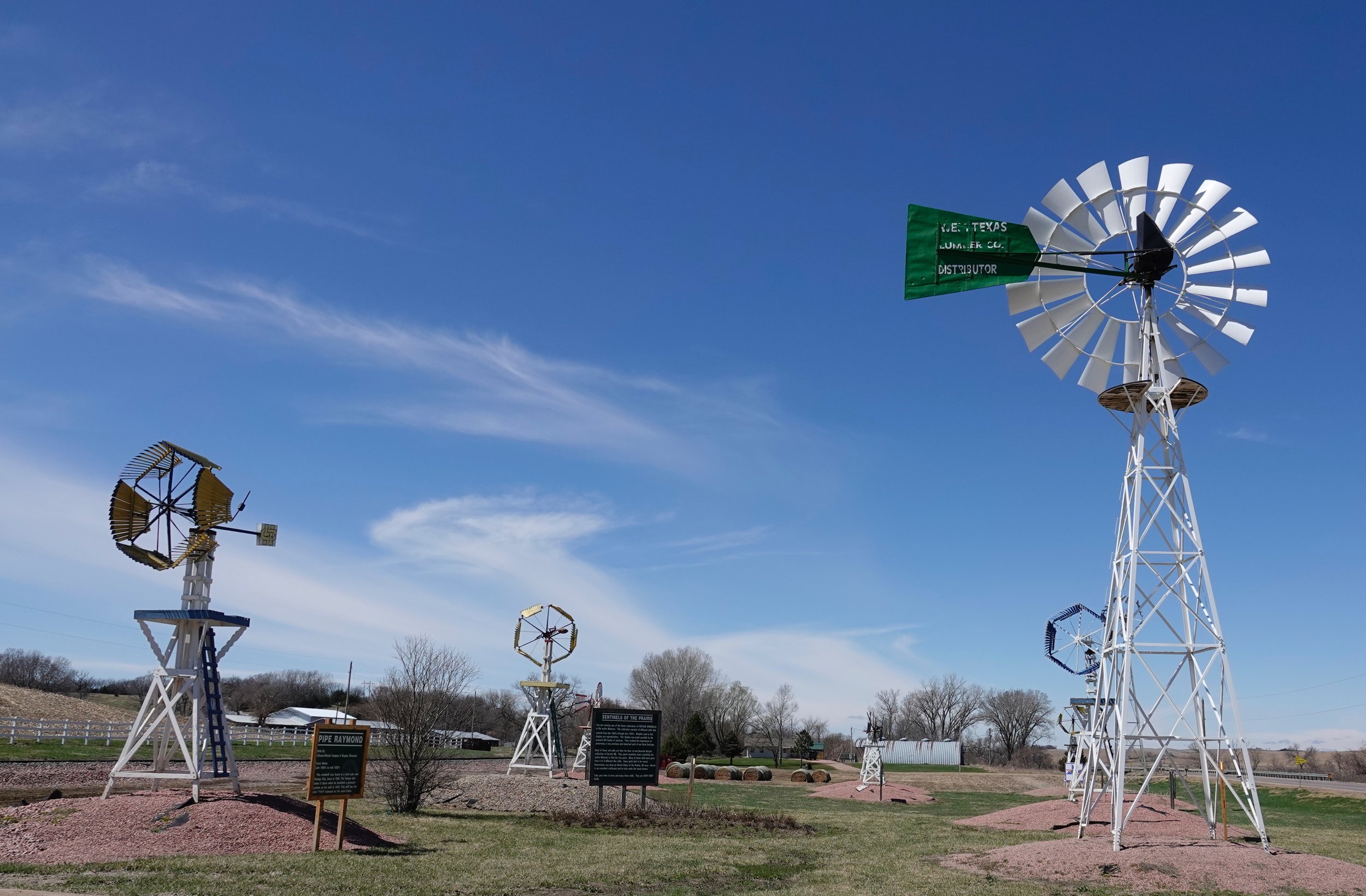
Seen in the city of Taylor, population 190, the county seat of Loup County, Nebraska.
A muskrat enjoying some muskrat chow.
A trio of teal.
An odd great horned owl nest with an owlet visible.
A tree blooming in yellow-headed blackbirds.

Seen in the city of Taylor, population 190, the county seat of Loup County, Nebraska.

A muskrat enjoying some muskrat chow.

A trio of teal.

An odd great horned owl nest with an owlet visible.
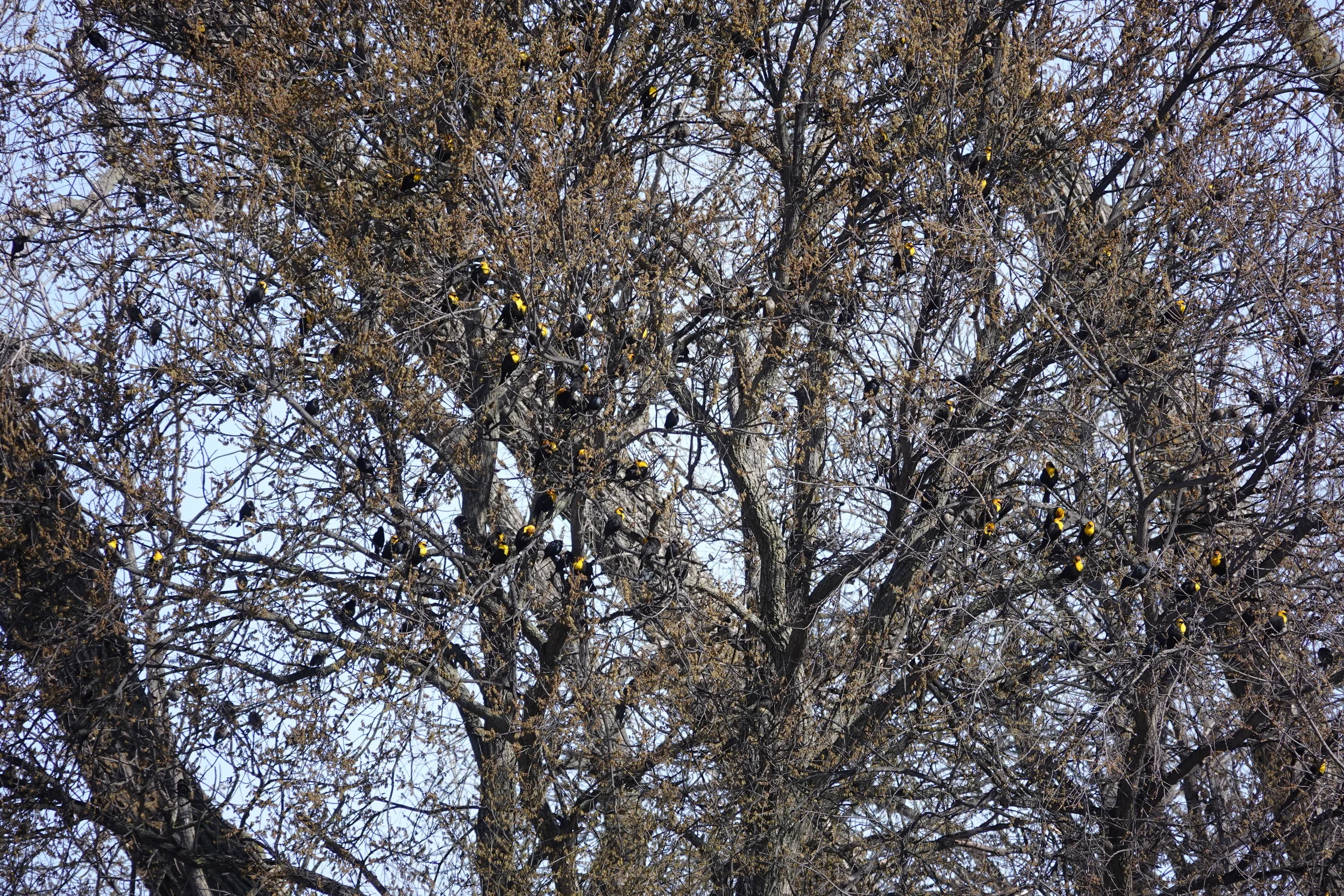
A tree blooming in yellow-headed blackbirds.

A post vulture.
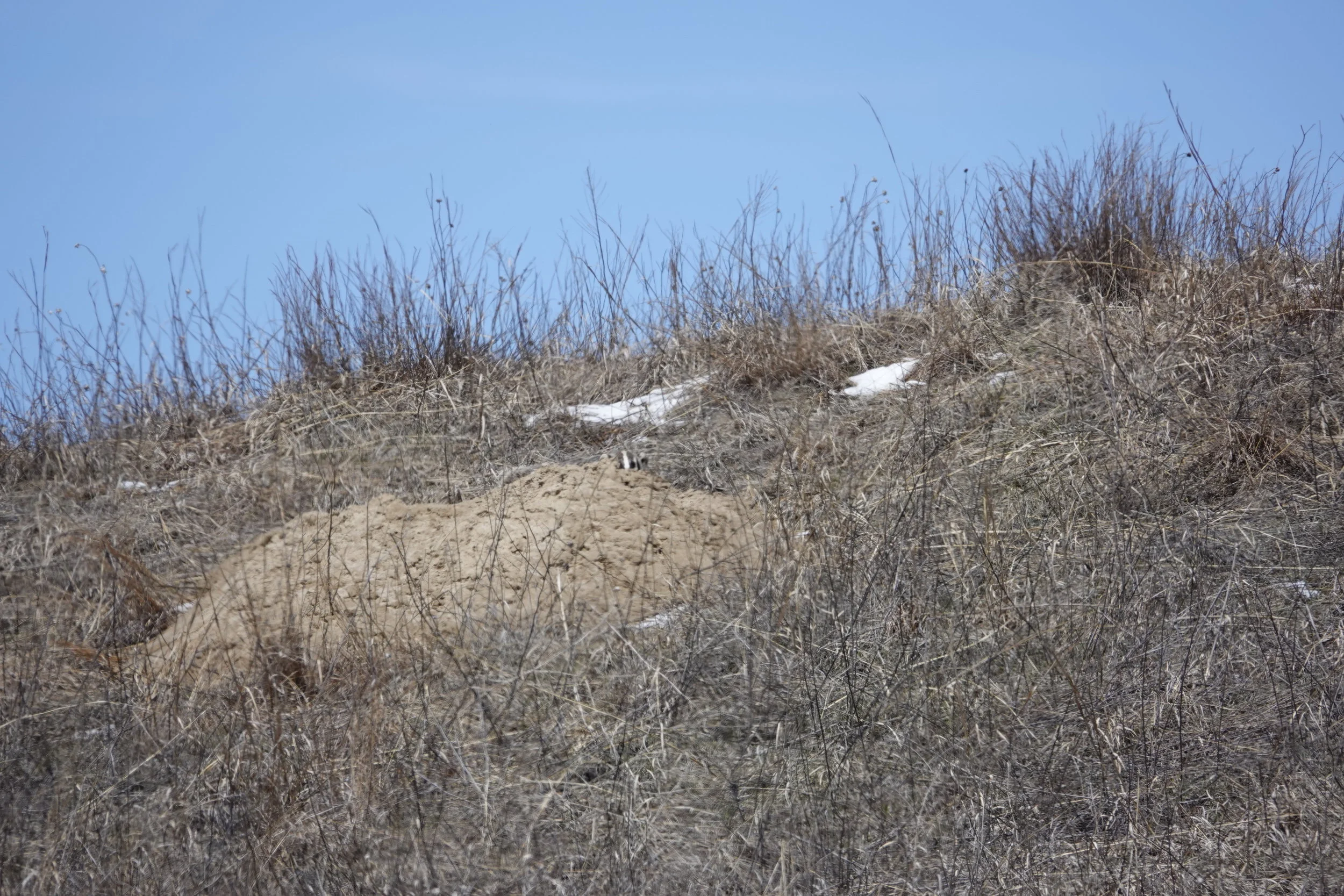
There is a badger spying on me. Can you see it?

The blue-winged teal is the second most abundant duck in North America, trailing only the mallard.

I’ve been told that a group of cinnamon teal is a "seasoning.” If that’s not true, it should be a “spice.”

I’ve found staring at a cinnamon teal to be helpful.

“Badgers? We need stinking badgers!”


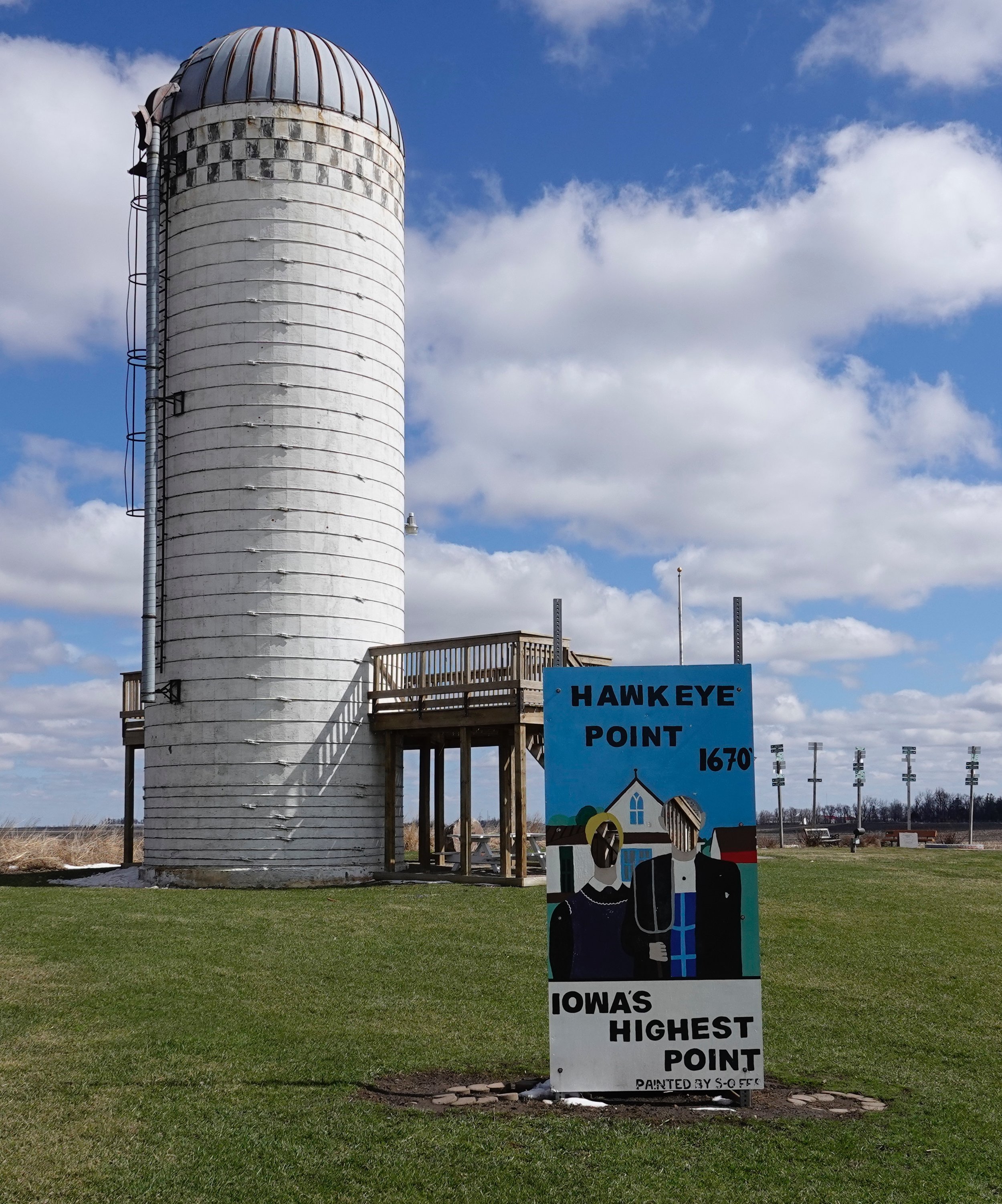
The view from Hawkeye Point near Sibley, Iowa, looks much like Iowa.
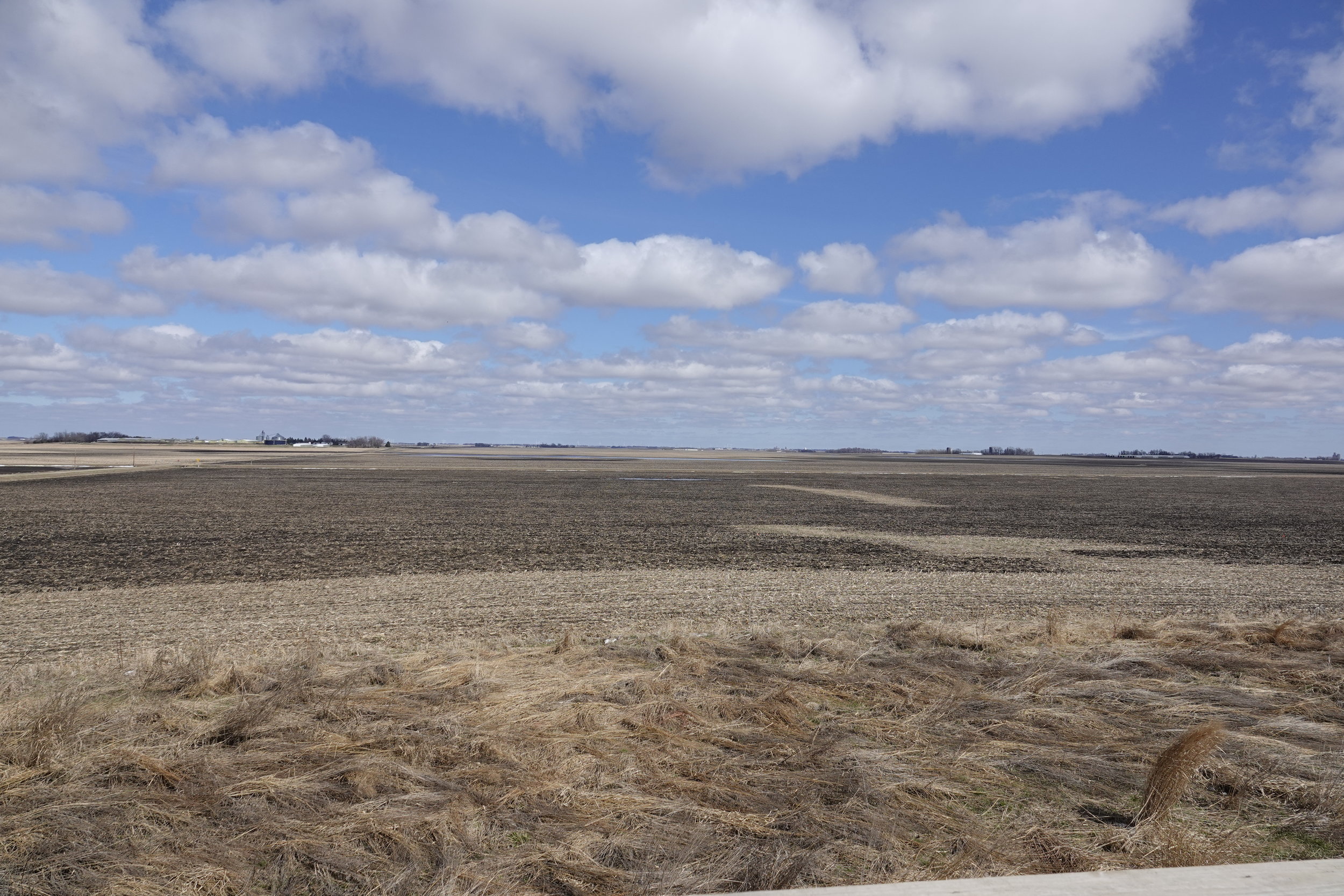
The view from the tallest point of land in Iowa.

The western meadowlark’s whistles and warbles must dodge grass in order to be heard.

A postcard of pintails.
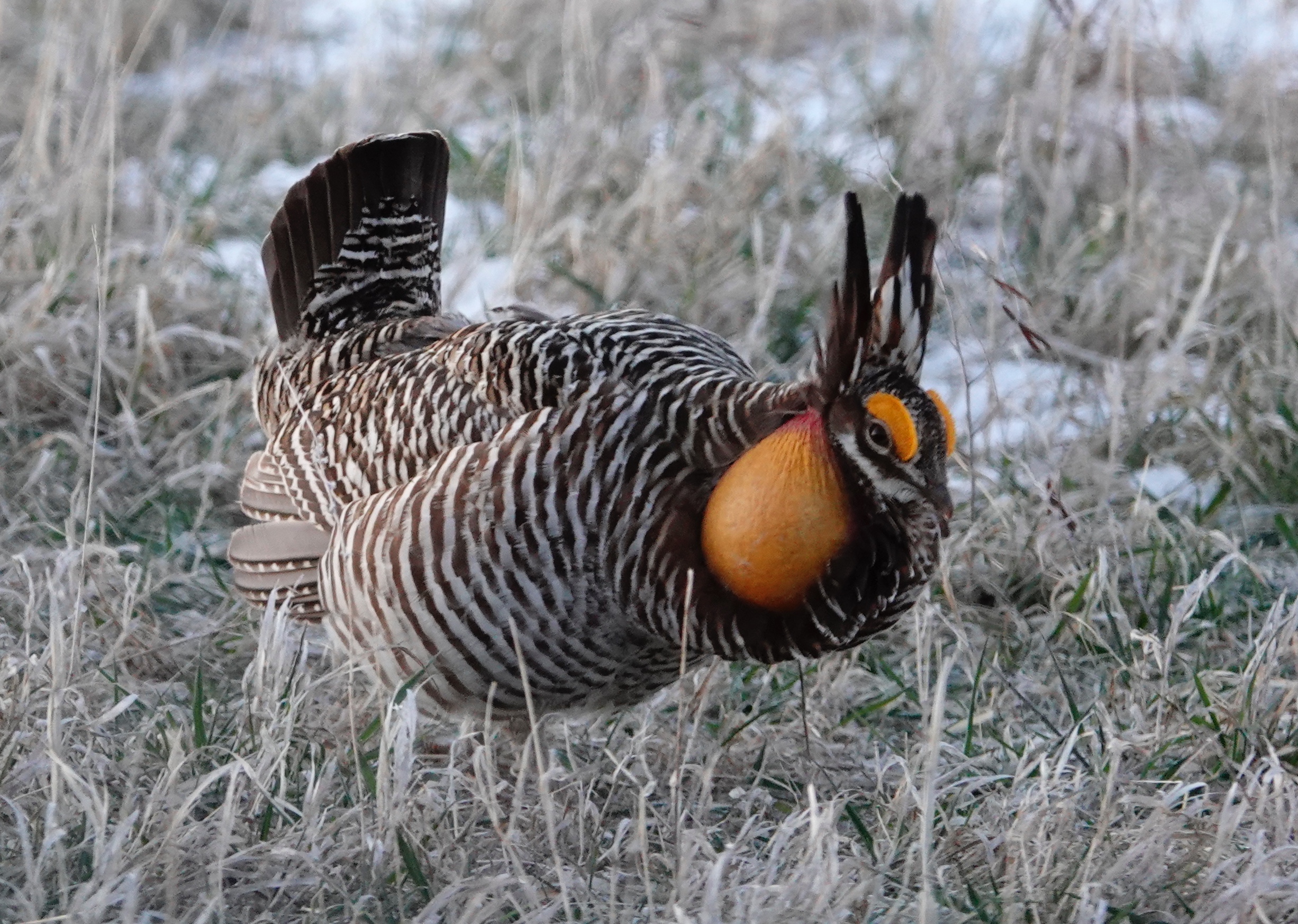
A greater prairie chicken dances on a snowy lek on Switzer Ranch near Burwell, Nebraska.
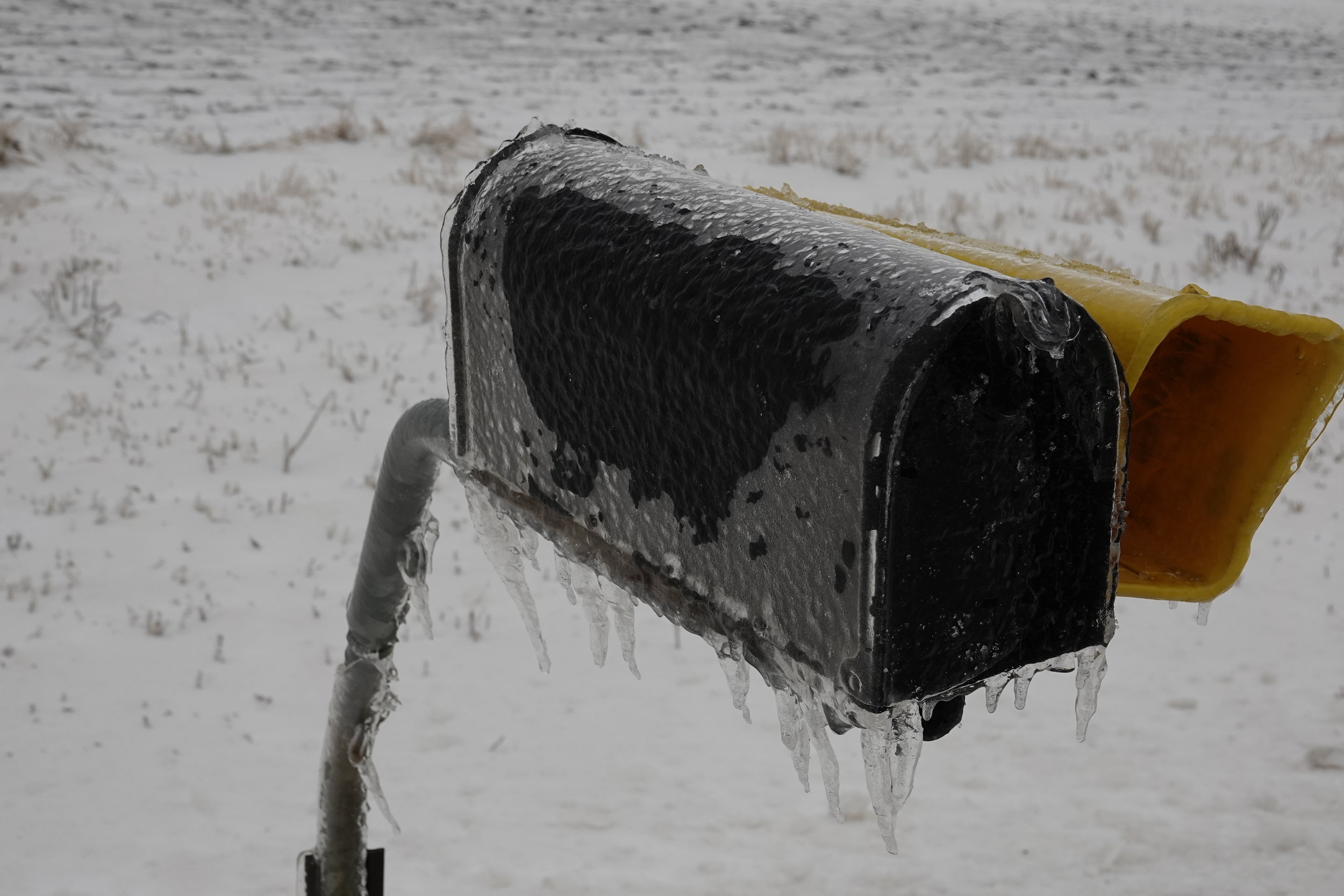
Over 200 power poles went down in the April storm, but the mailbox held firm.

The northern pintail is the “greyhound of the air.”
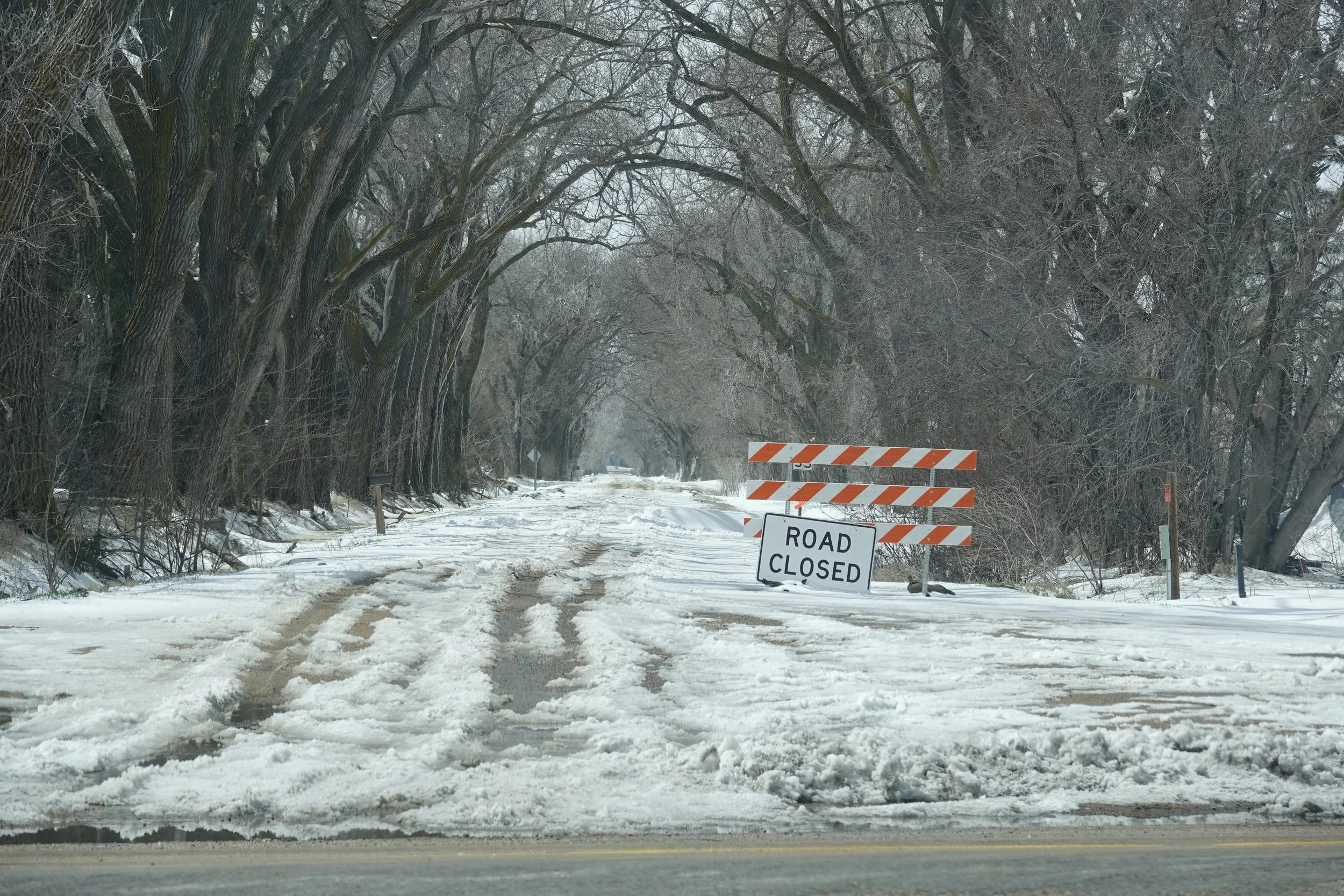
Some of these signs have begun to wilt in the nice weather.

This rooster pheasant is looking good.

That’s not salt on this bird’s tail. It’s snow.

A union of opposites — American goldfinch and house finch.

This rusty blackbird had avoided becoming an icy blackbird.

“Bye Bye Blackbird” becomes a sad song as the population of the rusty blackbird declines.

A red-winged blackbird finds a bit of green on a day that would never be mistaken for St. Patrick’s Day.
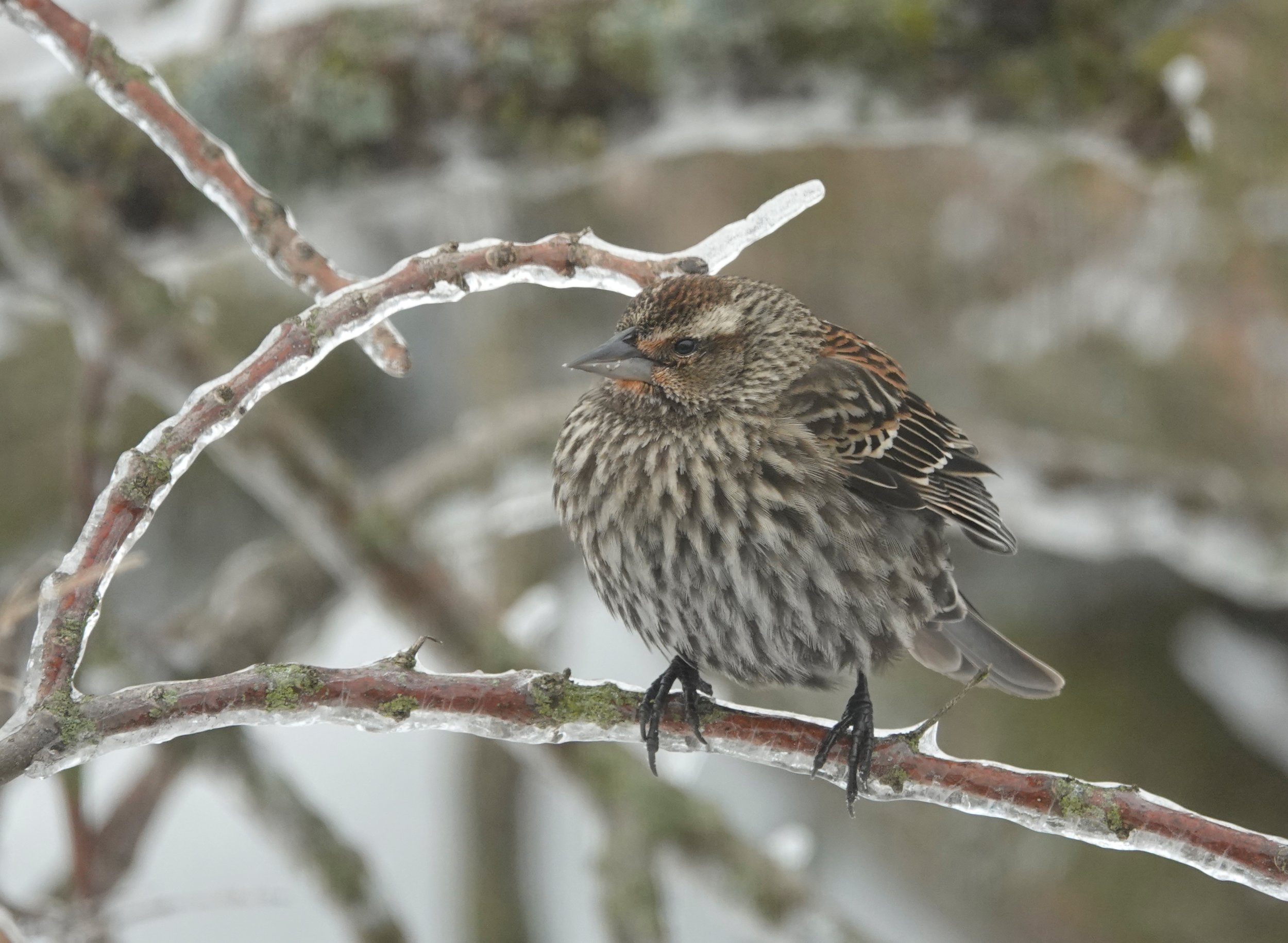
This female red-winged blackbird has never watched The Weather Channel. It is a weather channel.
byAl Batt,albertleatribune.com
April 13, 2019
Al Batt of Hartland is a member of the Albert Lea Audubon Society. Email him at SnoEowl@aol.com.
My neighbor Crandall stops by.
“How are you doing?” I ask.
“Everything is nearly copacetic. I have a grandson who makes up things rather than admit he doesn’t know.”
“Have you talked to him about that?” I say.
“I told him, ’You have become a man, my son.’”
Naturally
I’ve come into my season. Red-winged blackbirds are the sounds of spring. Rooster pheasants crowed. Canada geese claimed nest sites. That’s a noisy job. Turkey vultures tilted through the sky. The poet Mary Oliver wrote, “Like large dark lazy butterflies they sweep over the glades looking for death, to eat it, to make it vanish, to make of it the miracle: resurrection.”
Tundra swan flocks, eastern bluebirds and brown-headed cowbirds suddenly appeared whenever a birder was near. Cowbirds are brood parasites. They don’t build nests. Instead, they lay their eggs in the nests of other birds. The host birds incubate cowbird eggs and raise the chicks, often to the detriment of their own offspring. Sandhill cranes rattled, trumpeted and bugled as they took flight. Opportunistic omnivores, their varied diet includes waste corn, small mammals, amphibians, insects, reptiles and snails. Northern harriers return when the snow leaves the fields. Once called a marsh hawk, it courses low over the ground while hunting small mammals, reptiles, amphibians, birds and insects. They locate some prey by sound.
Pocket gopher mounds declare the frost is out of the ground. I browsed the seed selection in a store. I used to plant marigolds around the borders of vegetable gardens to discourage rabbits. I stopped when the eastern cottontails began eating marigolds.
The bluebird guy
The Rice Soil and Water Conservation District selected Keith Radel of Faribault to receive the 2018 Wildlife Enhancement Award for Rice County. Keith volunteers with the Bluebird Recovery Program, checking and maintaining a bluebird trail consisting of 175 nest sites throughout the bluebird mating season, from April through August. Keith has fledged 13,148 bluebirds from those nest boxes over 30 years. He began with 25 boxes on a 5-acre patch of land.
“If a bluebird had flown in, it would have hit a box,” recalled Keith.
That year, those boxes had no nests, no eggs and no baby bluebirds. Keith added six boxes the nest year. He fledged eight bluebirds. Keith realized that the 5 acres should have had only two sites. If paired, that meant four boxes. He culled the herd of nest boxes to four and 81 birds were fledged. Keith learned that a young bluebird could fly up to 300 feet on its maiden flight. He gives a box two years to fledge birds. If it doesn’t, he moves it to another location. Keith mentioned Roger Strand, a most successful wood duck landlord, who mounts wood duck boxes on baffled poles in water. The baffles keep predators away. Roger keeps the boxes 16 feet away from trees to prevent squirrels from leaping onto the boxes.
Q&A
“Do owls eat fish?” Mike Kennedy of Winona told me that he’d had a barred owl pestering his bobber while Mike was fishing. Barred owls do catch and eat fish. The great horned owl and other owls will sometimes go fishing.
“The seed in my bird feeders disappears so quickly. What’s going on?” My guess is that the birds are eating it.
“How many baby robins live a year?” About one in four survive 12 months.
“Where is the best place to put a bird feeder?” I have the best luck by putting a feeder outside. In the TV series “Mad Men,” a character said, “Nothing concentrates the mind like the prospect of being hanged at dawn.” This was a variation on a Samuel Johnson quote, “Depend upon it, sir, when a man knows he is to be hanged in a fortnight, it concentrates his mind wonderfully.” When putting up a feeder, concentrate your mind just enough to hang it in the best spot, which is some place where you’ll see it regularly without much effort.
Thanks for stopping by
“All winter long, behind every thunder, guess what we heard! Behind every thunder the song of a bird a trumpeting bird. All winter long, beneath every snowing, guess what we saw! Beneath every snowing a thaw and a growing, a greening and growing.” — a Native American song from the book “Earth Prayers”
“Years ago I had a Buddhist teacher in Thailand who would remind all his students that there was always something to be thankful for. He’d say, ’Let’s rise and be thankful, for if we didn’t learn a lot today, at least we may have learned a little. And if we didn’t learn even a little, at least we didn’t get sick. And if we did get sick, at least we didn’t die. So let us all be thankful.’” — Leo Buscaglia in his book, “Born for Love: Reflections on Loving”
Do good.

The male cowbird is all feathers and no cattle. - Al Batt/Albert Lea Tribune

This stubborn structure near Belden, Nebraska, was once someone’s dream house.

I hadn’t considered moving to Nebraska, but they might have named a town after me. That’s applying pressure to relocate.

A horned lark homesteads bare ground.


An April blizzard blew in a brown-headed cowbird with white feathers on its brown head.

Starlings gossiping at the suet feeder.

A mourning dove endures the indignities of spring’s winter weather.

A robin desperately seeking worms.

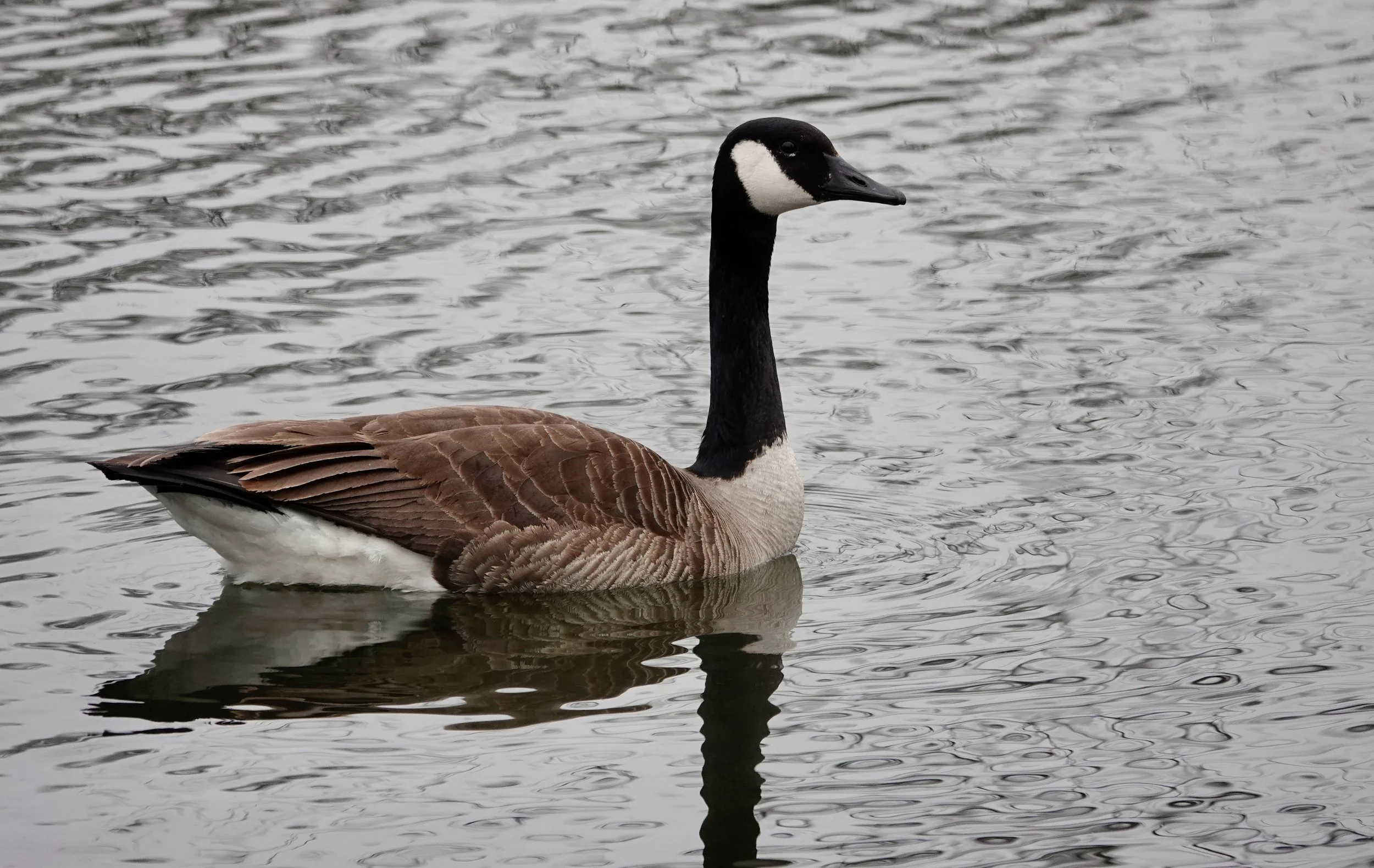
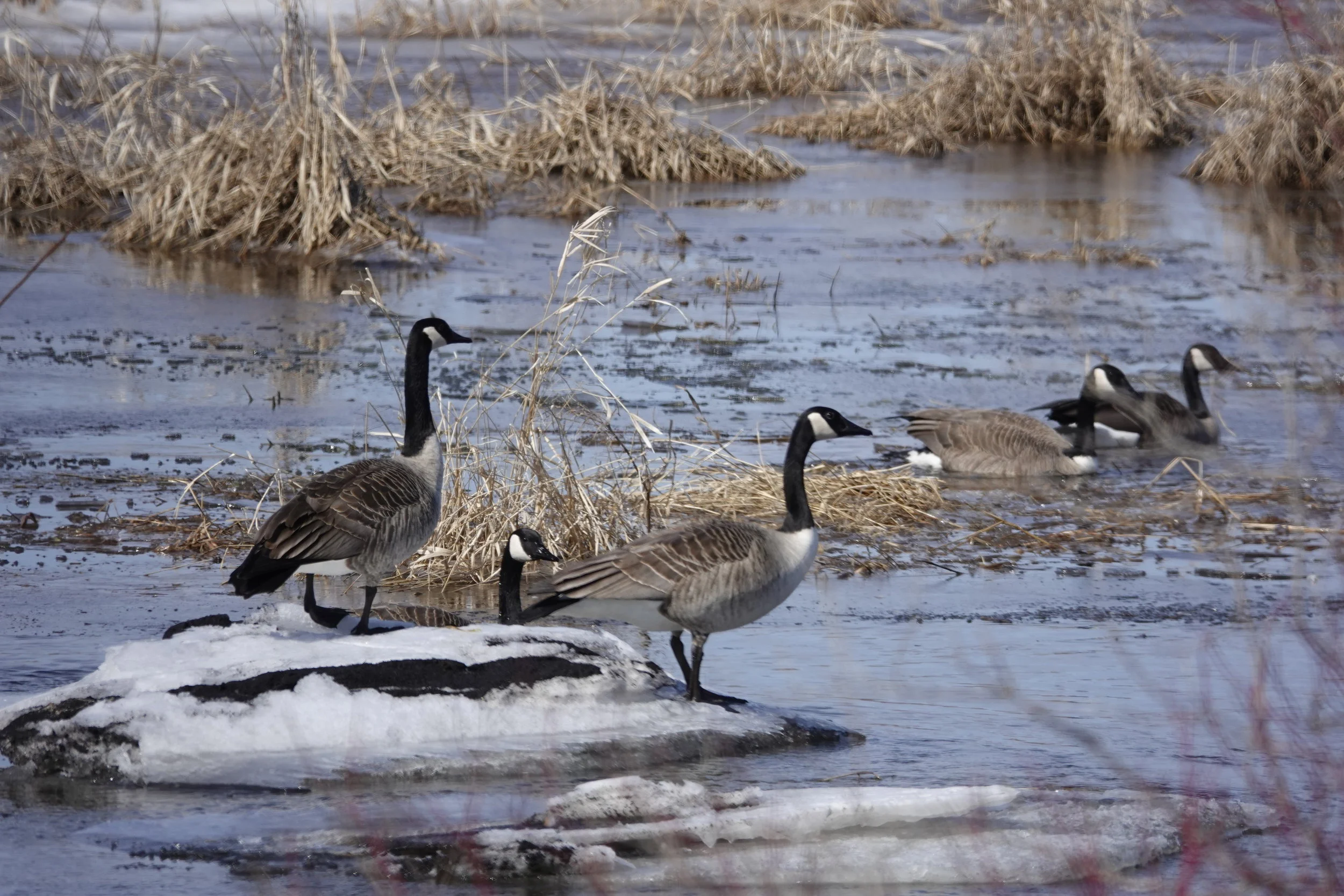
I heard a man call a Canada goose a “cobra chicken.” Maybe because of the hissing.

April blizzards bring tree damages to our yard.


Time has knocked the wind out of this barn.

Buffleheads, compact divers and cavity-nesting ducks, bounce upon the water.

Elders of the milkweed tribe.

Here I am taking a 1991 Wheaties box, featuring Kirby Puckett and Kent Hrbek on the front, for a ride. It’s nice to get out.
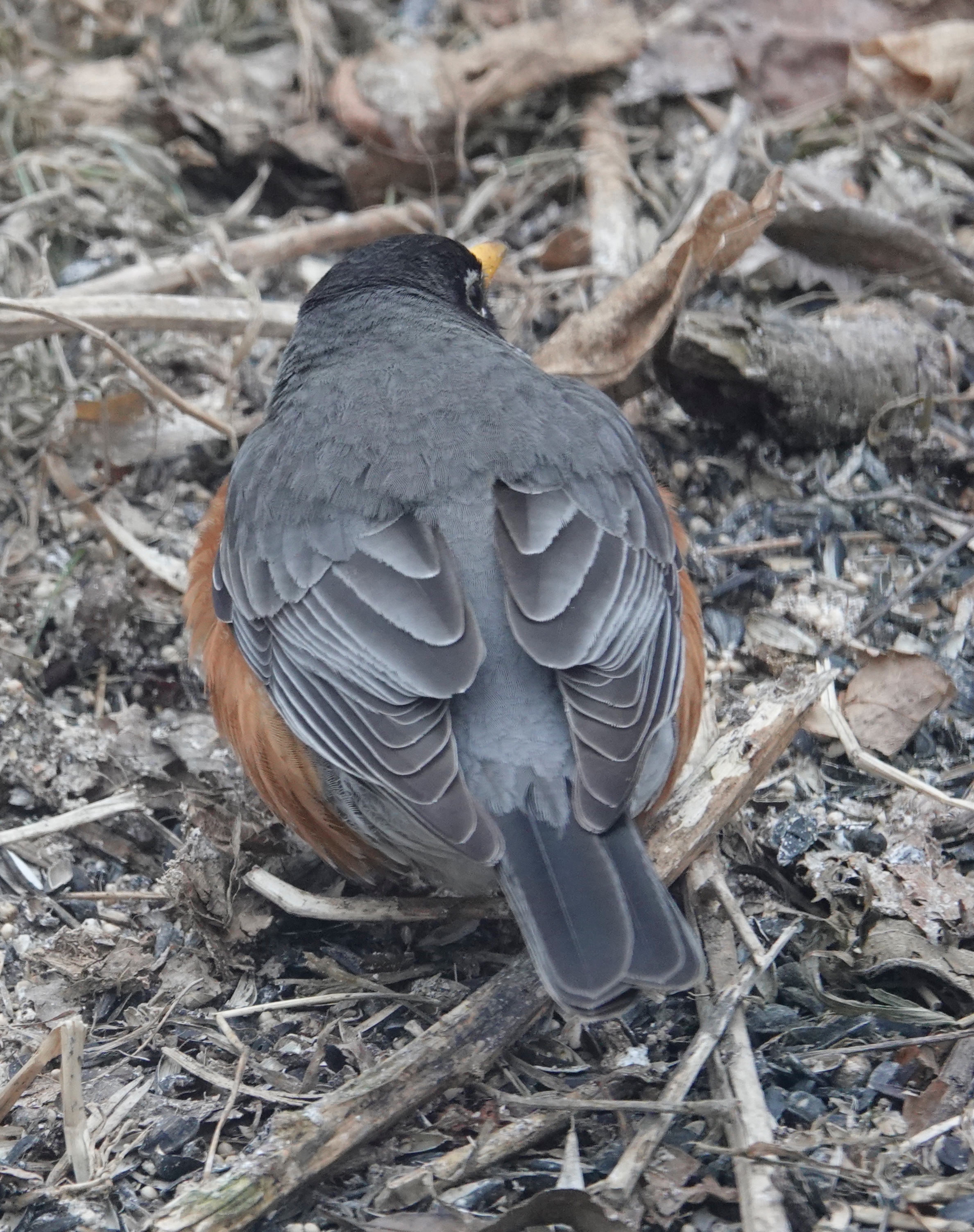
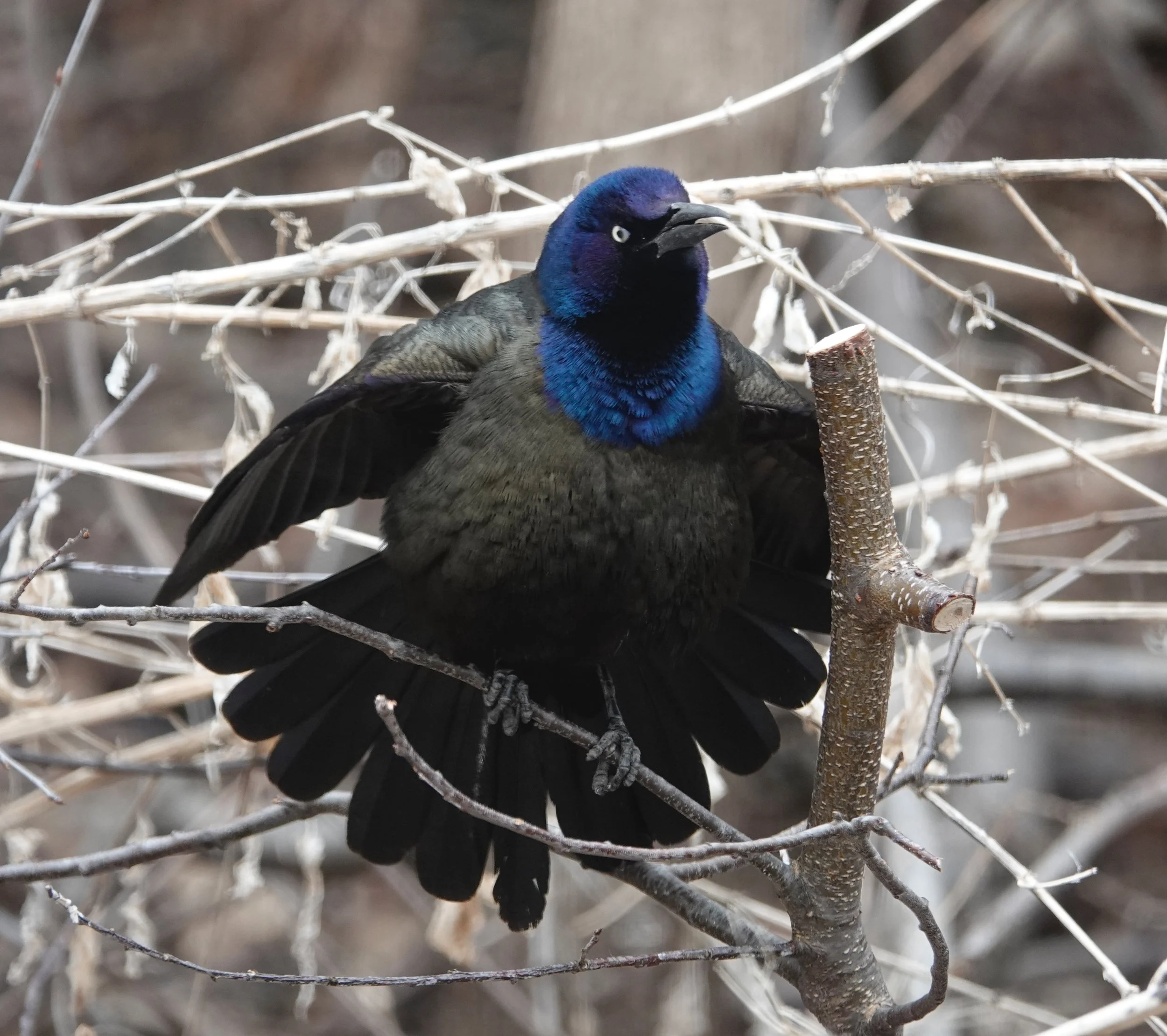
A grackle contemplates daylight saving time.
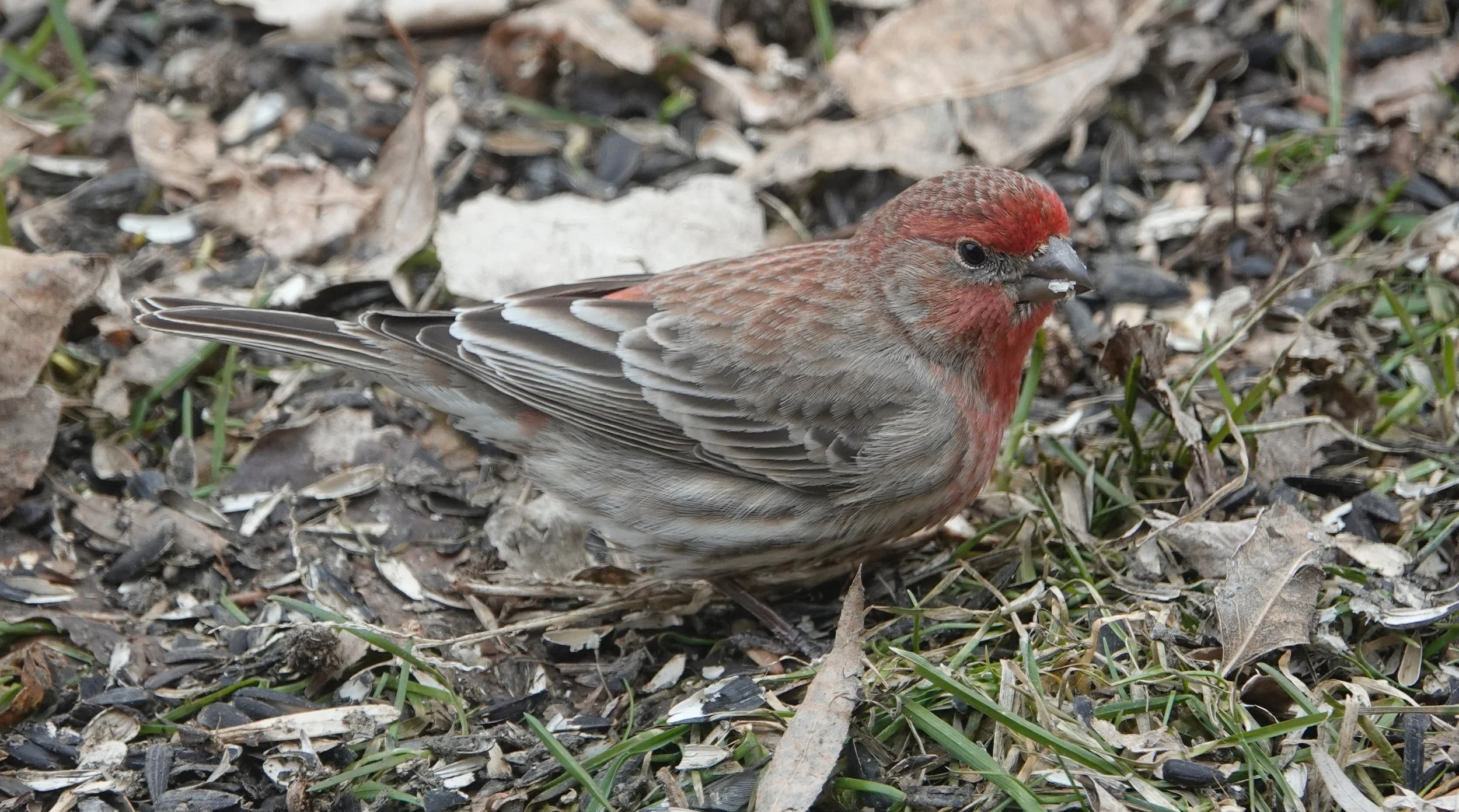
Hearing a house finch sing strengthens my gratitude.
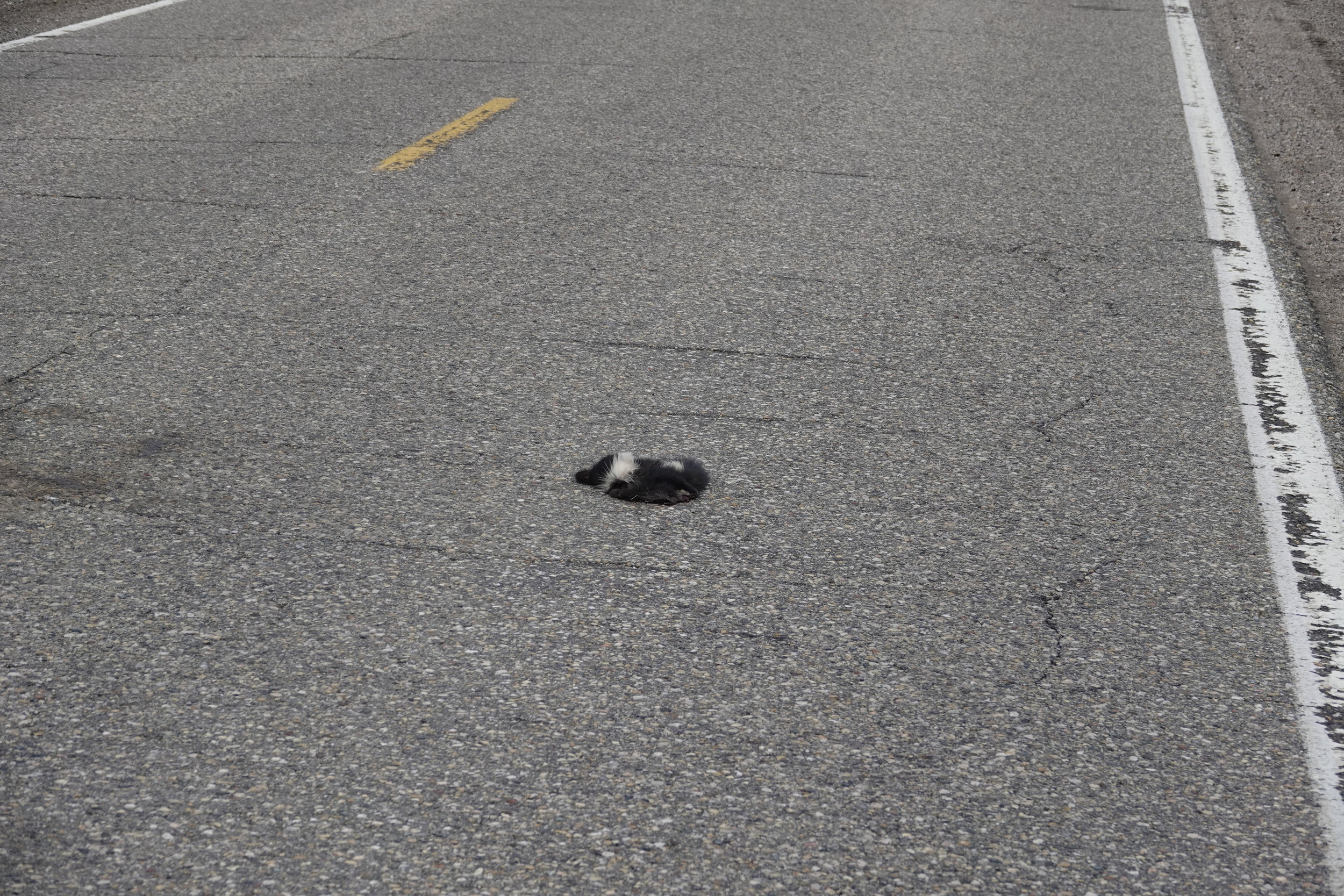
Would London Wainwright III sing, “Dead skunk near the middle of the road”?
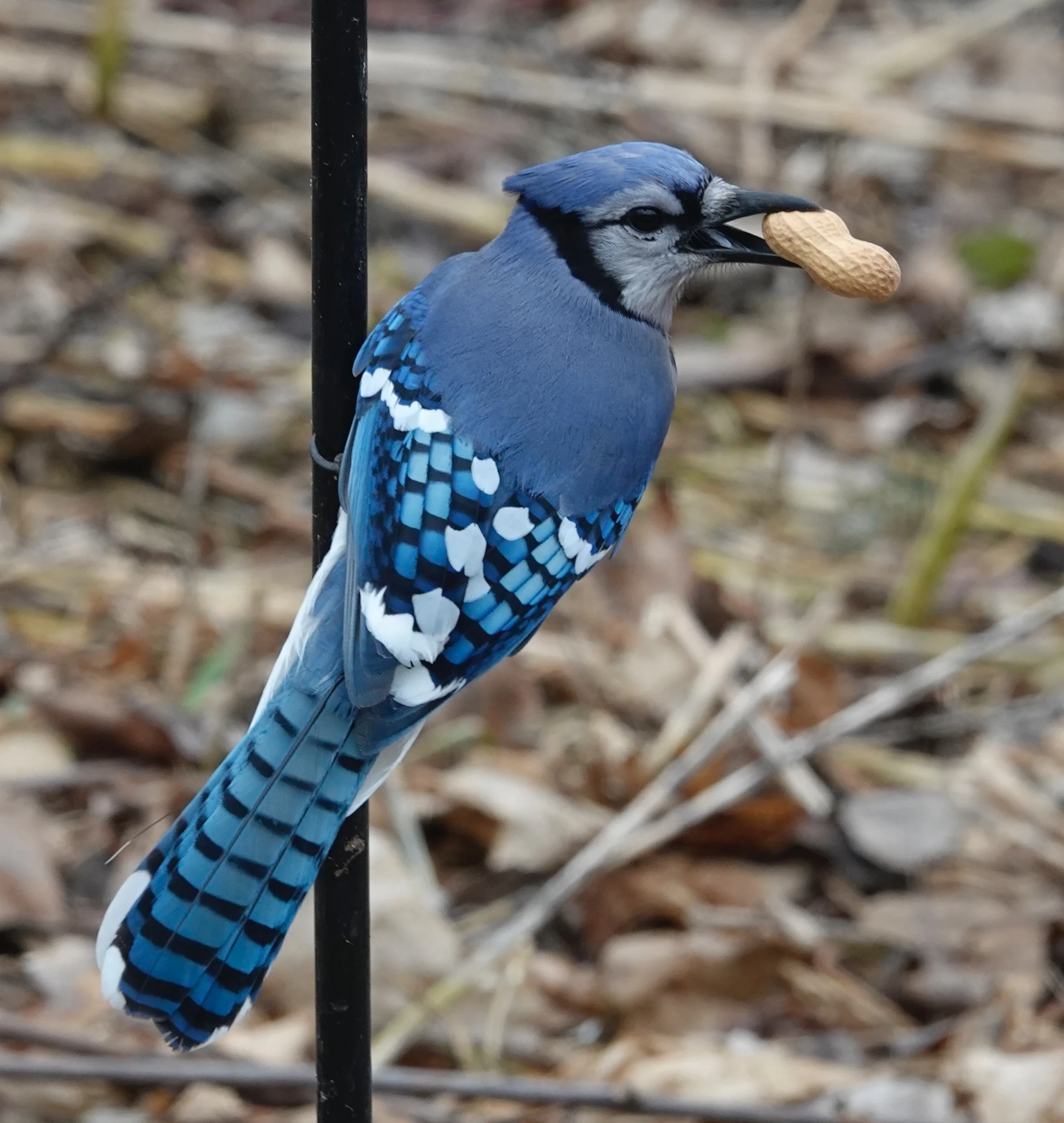
A blue jay believes that a peanut a day keeps the Cooper’s hawk away.
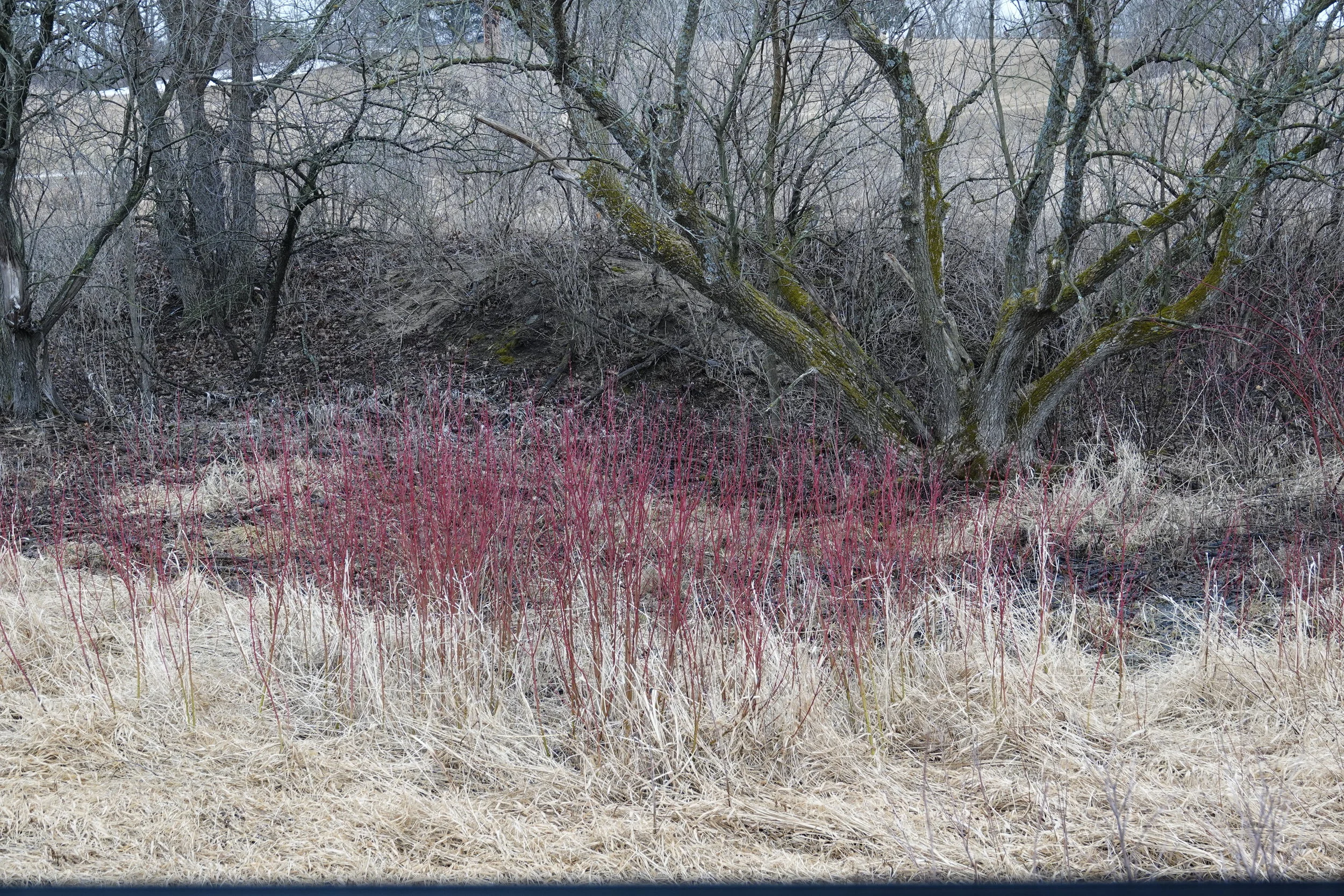
Red-osier dogwood provides the red veins of spring.
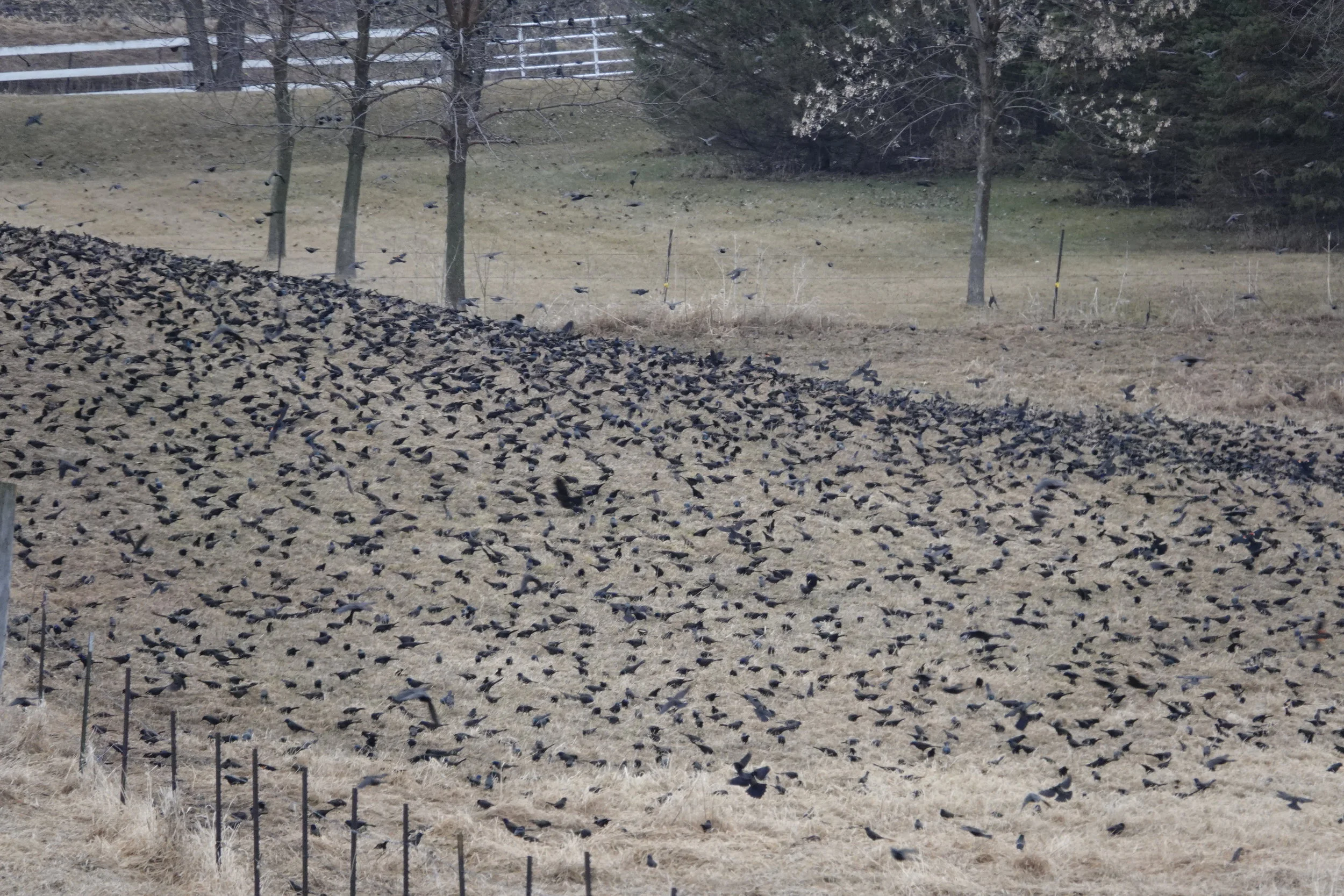
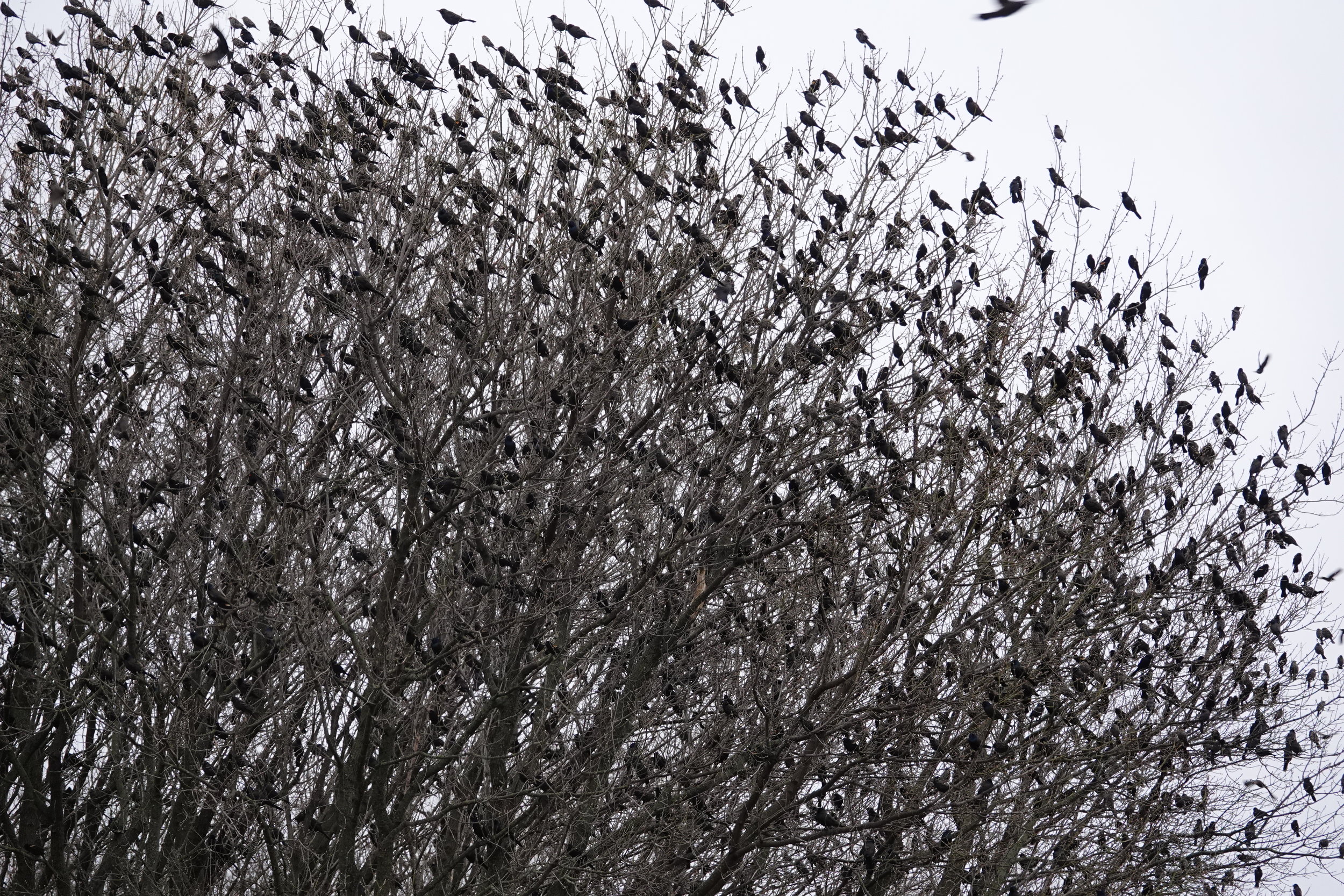
Birds seasoned the day like pepper flakes.


Anne Murray sang “Snowbird.” It was a hit, but was she singing of a junco or a snow bunting?
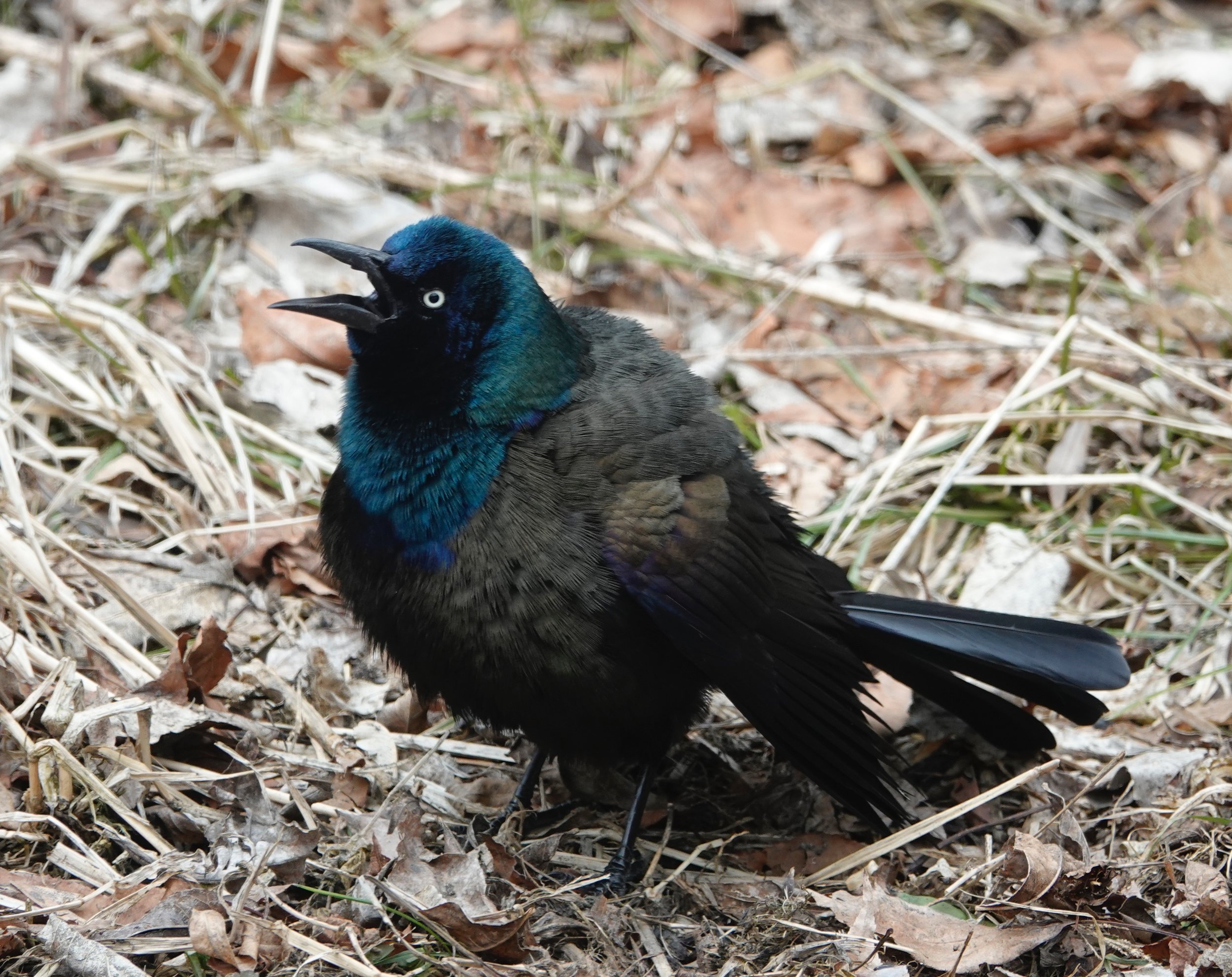
A common grackle puts a lot of effort into singing like a common grackle.

This grackle isn’t nesting in an odd place. This is how a one-legged grackle forages.

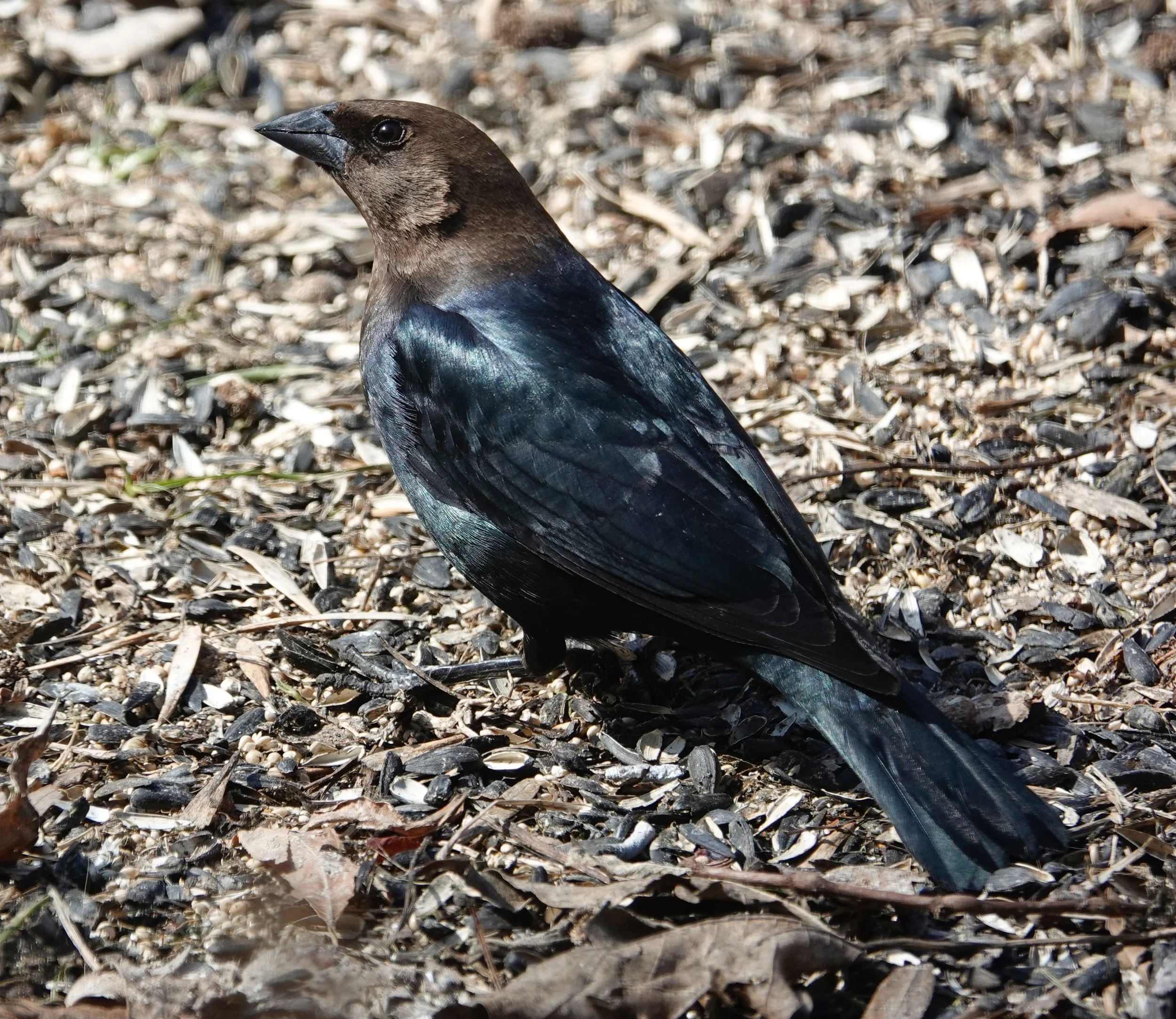
This cowbird is all feathers and no cattle.

The cardinal is the state bird of seven states: Illinois, Indiana, Kentucky, North Carolina, Ohio, Virginia and West Virginia. Even so, this female seems very nice.

The head of the billing department at the Grackle Company.
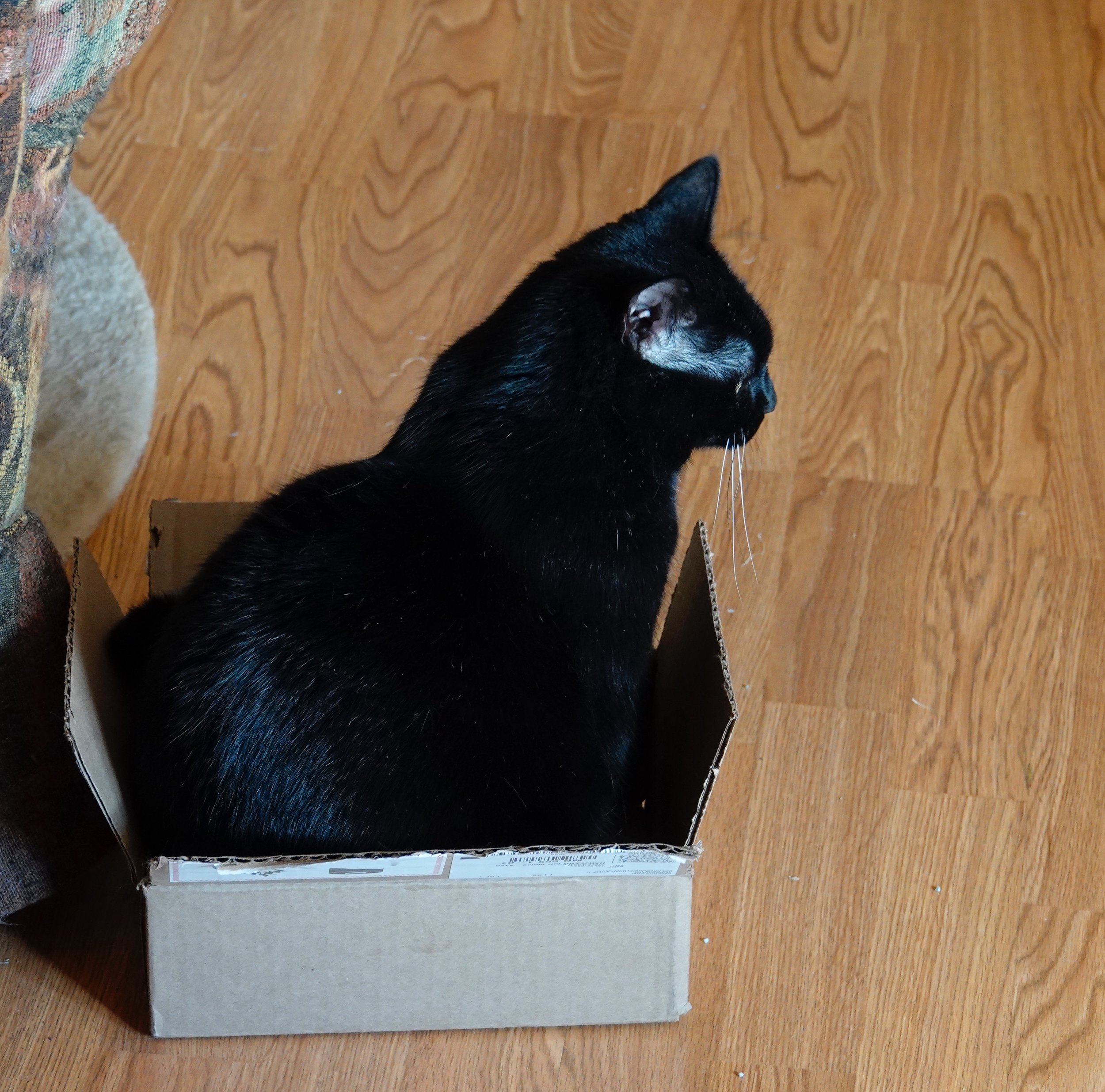
Purl, the cat who never leaves our house, is thinking of moving up a size in her cardboard box wear.
By Al Batt
Published 9:00 am Saturday, March 30, 2019
Al Batt of Hartland is a member of the Albert Lea Audubon Society. Email him at SnoEowl@aol.com.
The guy from just down the road
My neighbor Crandall stops by.
“How are you doing?” I ask.
“Everything is nearly copacetic. There’s some old guy living in my mirror and I need a suit of armor for the big toe of my right foot that I’m always stubbing, but Peeps are in season, so life is good. One of my cousins retired. I didn’t even know he’d ever had a job. Every family has one of those guys. I need to go shopping. I’m so hungry it’s clouding my mind or it might be flashbacks from all those Pop Rocks I’ve eaten. I need breakfast cereal and milk. This morning, I had Cap’n Crunch dust in orange juice. Everyone else set their clocks ahead an hour. Not me. I need more sleep. I set mine back an hour. I just have to remember to be two hours early for everything. It’s a grand life if you can outsmart it.”
Naturally
Hal Borland wrote, “No winter lasts forever, no spring skips its turn.”
The Farmers’ Almanac says our spring will be chilly and showery. It’s nice to see temperatures without a minus sign in front of them.
The smell of spring was in the air, compliments of a skunk.
Spring was in the air in the flight of migrating birds. On my walk, I encountered robins that had migrated back to Minnesota. I could tell because they were skittish and vociferous. The robins that wintered here are hushed and reserved in comparison. The wintering robins are too beaten up to be thrilled about anything. The killdeer were stirred, calling out their name excitedly. There were grackles galore. I once played the part of the mayor of a make-believe city named Grackle Junction, leaving me with a soft spot for the birds. Greg Bartsch of Geneva told me of the many eagles on Geneva Lake. Only food could cause that many bald eagles to congregate like that. They enjoy a fish buffet.
I saw tiny, black flecks sprinkled in the melting snow around the base of a tree. They were springtails called snow fleas.
Chipmunks chipped. Chipmunks hibernate, but don’t enter deep hibernations like ground squirrels. Chipmunks rely on food they’ve cached in their burrows. It’s good to see the little animals in the spring, but some individuals become active on warm, sunny, winter days.
Wild turkeys gobbled. A red-tailed hawk carried nesting material. This raptor’s nest is a tall pile of sticks. As I watched the hawk, I thought of Aeschylus, an Ancient Greek playwright, who has been described as the father of tragedy. He died in Sicily, in the city of Gela, in 456 or 455 BC without having given a thought to Tesla or Twitter. Valerius Maximus wrote that Aeschylus was killed by a tortoise dropped by an eagle or a lammergeier or bearded vulture (which do feed on tortoises after dropping them on hard objects). It was written that the bird had mistaken the bald head of Aeschylus for a rock suitable for shattering the tortoise’s shell. Pliny, a Roman scholar and naturalist, wrote that Aeschylus had received a prophecy that he’d be killed by a falling object, so things worked out. This story may be mythical.
I’m happy spring is taking its turn.
Q&A
“What bird builds the biggest nest in Minnesota?” The bald eagle constructs the largest nest of any North American bird. It gathers sticks, grass and cornstalks, often reusing nests and adding to it each year. A nest can weigh a ton and be over 9 feet across. The “Guinness Book of World Records” lists a Florida bald eagle nest as being the largest at 9.5 feet across, 20 feet deep and weighing 4,409 pounds.
“What is the mast of a tree?” Mast typically refers to the nut crop of a tree, but it also includes seeds and fruit of trees and shrubs. Hard mast is nuts and seeds. Soft mast is fruits and berries. The definition of mast can be expanded to buds and catkins. Mast is an important provider of food for wildlife.
Customer comments
Glen Shirley of Farmington sent this (edited): The Bluebird Recovery Program invites you to our 40th annual Expo at Cannon Falls High School on April 6. Presentations include: How to increase bluebird fledging, Lyme disease and Bluebird monitoring made simple. In addition, all-time favorites Jim Gilbert, “WCCO Nature Notes,” and Al Batt, southern Minnesota naturalist/storyteller, return. More information at www.bbrp.org.
Thanks for stopping by
“Everything has its wonders, even darkness and silence, and I learn, whatever state I may be in, therein to be content.” — Helen Keller
“There are two kinds of people, those who do the work and those who take the credit. Try to be in the first group; there is less competition there.” — Indira Gandhi
Do good.


Our yard has a number of bird feeders with furry tails.

This squirrel did a spit take with sunflower seeds.
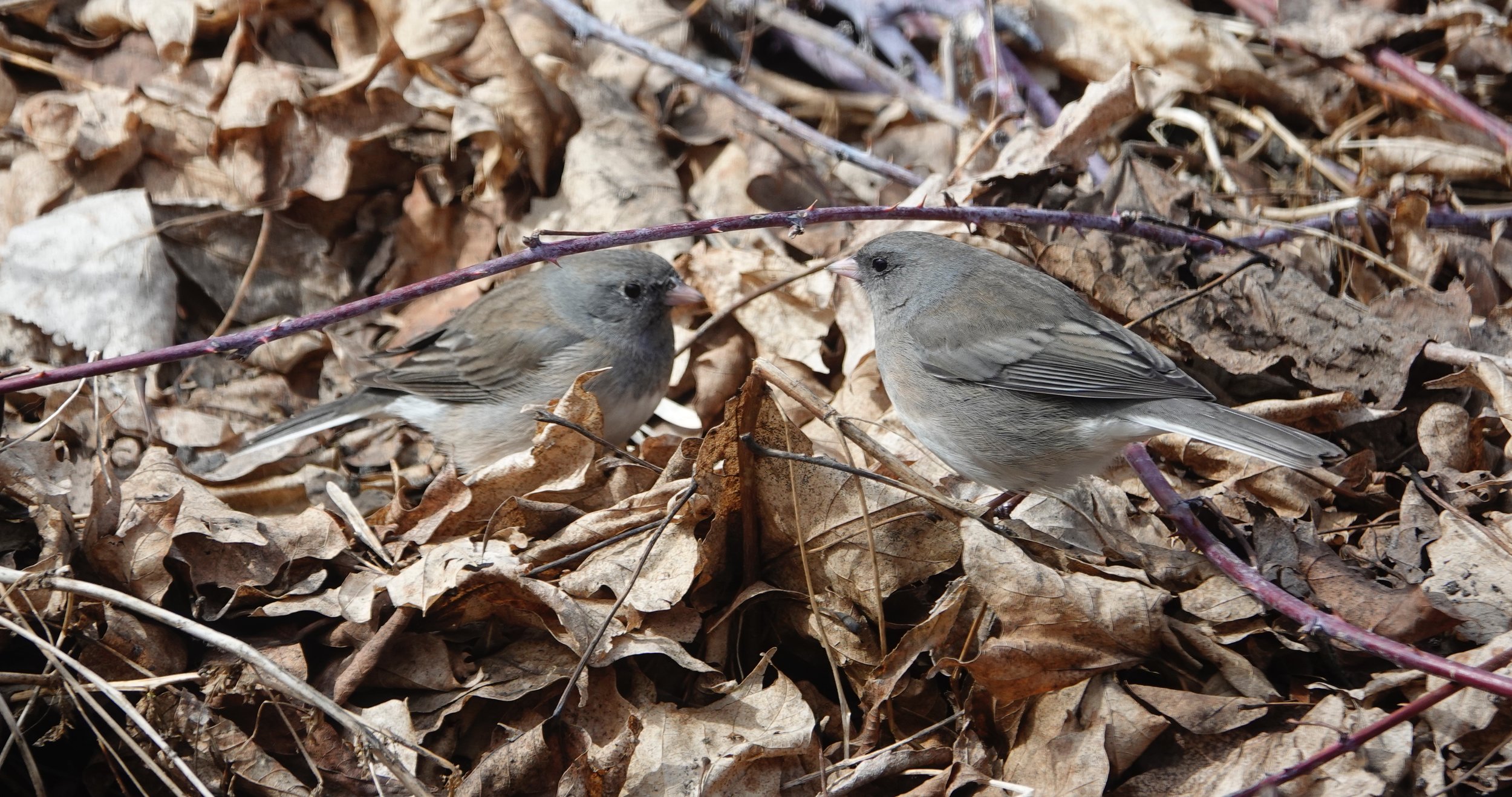
Dark-eyed juncos engaging in a staring contest.


A chipmunk’s driver’s license photo.

The fox sparrow sees things of which I can only dream.

A junco looks as if it would be Felix Unger neat.


A starling’s yellow bill points to spring.
Robert Louis Stevenson wrote, “A birdie with a yellow bill
Hopped upon my window sill,
Cocked his shining eye and said:
"Ain't you 'shamed, you sleepy-head!"

The fox sparrow is a lovely bird that hops forward and then hops back in a double-scratching process of searching for food in leaf litter.

Did we get enough snow this past winter? This was my birthday present, so I think we did.


A red squirrel and a man-made midden.

a snowy, hairy woodpecker.

The junco of winter approaches spring.

I am saddened by the death of Bill Thompson III last night. This wonderful editor/publisher of Bird Watcher’s Digest was a friend I will dearly miss. The birds could not have had a better friend or a more influential voice on their behalf.
byAl Batt,m.albertleatribune.com
March 23, 2019 09:00 AMA Al Batt/Albert Lea Tribune
Al Batt of Hartland is a member of the Albert Lea Audubon Society. Email him at SnoEowl@aol.com.
The guy from just downthe road
My neighbor Crandall stops by.
“How are you doing?” I ask.
“Everything is nearly copacetic. No matter how bad the weather gets, we’re not satisfied. This wet weather is good for my fancy footwear. If not kept at the proper humidity, snakeskin boots shed their skins a couple of times every year. Each day, I’m getting another garden catalog in the mail. I enjoy getting them and I’ve been planning this year’s vegetable extravaganza. I recall my Cousin Chucky planting his first garden. He couldn’t take the sun. I told him to plant on cloudy days. Chucky told me he couldn’t do that because it said on the seed package to plant in full sun.”
Naturally
Looking out the window is always worth the effort. It framed a white landscape. Snow hasn’t been elusive this winter. February was particularly generous with its snow. The DNR says January is our snowiest month on average, followed by December, March, November, February and April.
I shoveled snow as I listened to a male cardinal sing his spring song. “What-cheer, cheer, cheer, birdy, birdy, birdy, birdy.” A black-capped chickadee whistled, “Spring’s here,” “Sweet-ie,” “Love you,” or “Fee-bee.” A white-breasted nuthatch celebrated the increasing day length by giving voice to “Wha-wha-wha.” Drumming woodpeckers provided a percussive accompaniment.
I heard a house sparrow cheep. I’ve heard them called cheap birds. In India, the Nature Forever Society has tried to rally conservation interest by declaring March 20 World Sparrow Day and naming it the state bird of Delhi. The Society’s president said, “The house sparrow is one bird which is seen by everyone, by kids, by adults, by people from various socioeconomic strata. It is a bird of the common man.” The house sparrow is the default little brown bird we see in parking lots and yards, on street corners and sidewalks, and on farms.
Raccoons raided my feeders. The deep snow has given the rascals the height needed to get to the feeders. One of them stole a suet feeder that I cannot locate.
Winter had been a beast, but a friend told me of a silver lining. He said the weather brought more cardinals than ever before to his feeders. Snow melts first at the base of trees because the dark color of trunks absorbs energy from the sun. This heat energy is absorbed by the snow around the base causing it to melt.
I strolled around the campus of Bethany Lutheran College in Mankato in early March and found myself mesmerized by robins and red-winged blackbirds. The birds were the ones flying, but they lifted me.
The vernal equinox was on March 20. When spring comes, can winter be far behind? We need a change of scenery, but we get an in-between season called sprinter.
Q&A
“How often do snakes shed their skins?” Snakes shed their skin to allow for further growth and to remove parasites attached to their old skin. The average snake sheds its skin two to four times per year. This varies with age and species. Young snakes that are actively growing may shed their skin every two weeks. Older snakes might shed their skin twice each year.
“How can I tell a male robin from a female?” It can be difficult to tell male and female American robins apart, but the males are slightly darker in color. Young robins have dark spots on their breasts. Robins are considered harbingers of spring, but many robins spend winter in their breeding range.
“Why don’t I see robins at my feeders?” Robins are infrequent visitors to bird tables because they have never taken the training required to become certified as a feeder bird. Feeders don’t typically offer a fare favored by robins.
“I replaced an old bird feeder with a new one, but the birds don’t seem to like it. What can I do?” If you put it in the same place and are feeding the same thing, it is odd. You could put the old feeder back up and let it go empty while keeping food in the new feeder nearby.
“How long does a mourning dove live?” The oldest known mourning dove was a male at least 30 years, 4 months old when he was shot in Florida in 1998. He’d been banded in Georgia in 1968. The mourning dove is the continent’s most popular game bird.
“At what temperature does an outdoor insect become active?” It varies according to the insect, but most become active when their body temperatures hit 50 to 60 degrees. This is the ambient temperature influenced by sunlight.
Thanks for stopping by
“Wherever life plants you, bloom with grace.” — French proverb
“The ideals which have lighted my way, and time after time have given me new courage to face life cheerfully, have been kindness, beauty and truth.” — Albert Einstein
Do good.

Red-winged blackbird singing in the rain. Photo by Al Batt

A black-capped chickadee does a few chin-ups.

The Hay Bale Family seems happy.
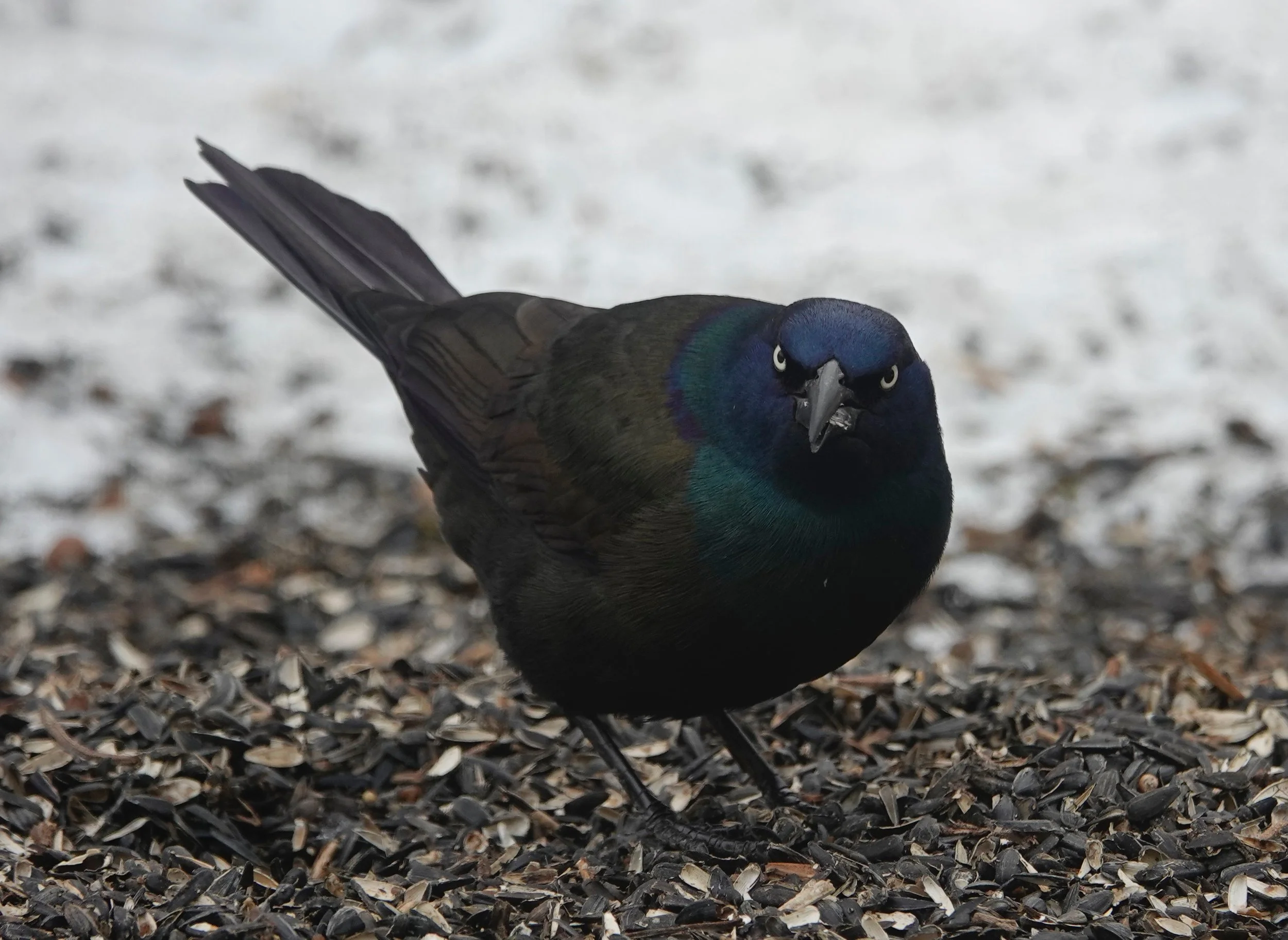
The common grackle found something to eat, but it didn’t look happy.

This starling waited patiently for me to replenish the suet.

This common grackle looks as if it had coffee with its breakfast seeds.

A common grackle proclaims spring’s arrival.

A song sparrow wearing camouflage.

When winter arrives, can spring be far behind.

I love the two-toned bill of the American tree sparrow. They are singing now of their plans to fly northward.

A junco’s icy feet might be an encouragement for it to trill about traveling. This bird’s trilling is as much of a spring sign as is the smell of skunk in the air.#spring

Ice fishing bald eagles on Geneva Lake.
Bluebird Recovery Program of Minnesota Annual EXPO takes place on April 6, 2019
Looking for a wonderful spring activity? Here is an opportunity that will bring joy and satisfaction for everyone. The Bluebird Recovery Program of MN (BBRP) invites you to attend our 40th annual EXPO. Learn to be successful in attracting bluebirds to your yard and trail. The date is Saturday April 6 at the Cannon Falls High School, 820 East Minnesota Street Hwy 19, Cannon Falls MN.
The program features speakers presenting: How to increase bluebird fledging. Lyme disease. Bluebird monitoring made simple. In addition, all-time favorites, Jim Gilbert, “WCCO Nature Notes,” and Al Batt, Southern Minnesota naturalist/writer/humorist/storyteller, return.
Learn how to help the environment and improve your bluebird trail. Get detailed information on registration at www.bbrp.org.

When I was a boy, every hawk was called a chicken hawk. This red-tailed hawk has never bothered any of my chickens. Of course, it helps that I no longer have any chickens.

Soon, spring will bring us gold in the feathers of the American goldfinch.

Winter by yard light.

A red squirrel uses a snow umbrella.