
Roses are red. Violets are blue. But not as blue as this bird.
There’s gold in them thar trees! American Goldfinch.

Roses are red. Violets are blue. But not as blue as this bird.

There’s gold in them thar trees! American Goldfinch.

A Blue Jay works for peanuts.

A young Baltimore Oriole contemplates the vastness of the universe. Or maybe not.
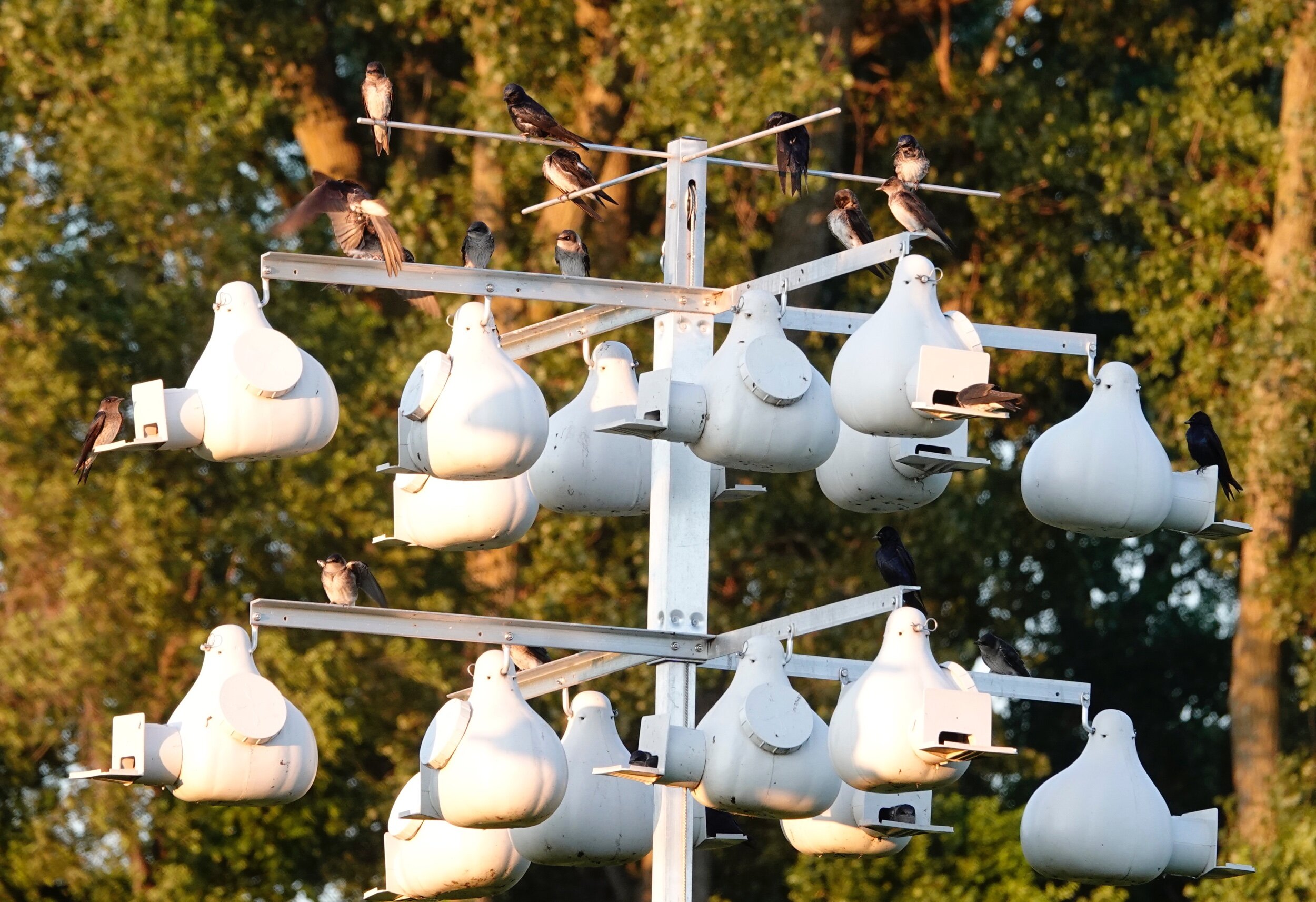
Some of these Purple Martins are out of their gourds.

The dude abides. A fox squirrel at one with an avocado.

My wife feeds an avocado to a hand-reared fox squirrel.

This Snow Bunting photo from February takes the mind off the heat.

My people aren’t always good with hot weather, so we build big fans outdoors.

The pencil points to toad poop. American Toads are incredible creatures in other ways, too.
By Al Batt for the Caledonia Argus
For the Birds
Echoes from the Loafers’ Club Meeting
When I was a kid, there were always a couple of never-going-to-run-again junker cars in our yard.
Did that bother you?
You bet. Most of the neighbors had twice as many.
Driving by Bruce’s drive
I have a wonderful neighbor, named Bruce. Whenever I pass his drive, thoughts occur to me, such as: When I was a dear boy, parents told their children, “I told you to go before we left home, but go if you can’t wait. But don’t touch anything.”
It took strength, courage and a flashlight to use a gas station bathroom in those dark days. They were grotesque things with overflowing toilets, locked doors to keep in the overpowering smell and a key attached to an anvil the size of a Gopher linebacker. It was impossible not to touch something.
My father drove up to visit me when I lived in Minneapolis — once. He was just as proud of how few miles he had on a car as he was of how many one carried. He was more attuned to driving on gravel roads than in the big city.
He told me that traffic had been backed up for miles and every car was honking. I learned later that all those vehicles had been behind him. He was a stranger in a strange land.
Thoughts while trying not to touch my face
Why does patience take so long?
“There are a lot of weird people here,” thinks everyone shopping in a store.
A clean desk is a sign of full desk drawers.
Nature notes
A deer’s coat provides thermoregulation and camouflage. Summer coats are reddish and thin, allowing deer to cope with heat stress. Hormonal changes turn that coat into a two-layered, faded gray or brown winter coat with hollow and stiff, outer guard hairs. The inner layer is soft and dense, equipping the animal with insulation. Coat color tends to be darker in forested areas and lighter in agricultural lands.
“You carrot chompin’, flop-eared, bob-tailed rabbit! I hope your innards turn to outards and your ears go visey-versey! I hates rabbits!” Yosemite Sam said that. I wonder if he had a garden? I don’t hate them, but I yell at the rabbits. I’m unable to wave them away.
Milkweed and wild parsnip bloom. Wild parsnip was brought to North America by European settlers and grown as a root vegetable.
It escaped from cultivation and is now common throughout the U.S. It grows 4-6 feet tall with compound leaves arranged in pairs, with sharply toothed leaflets that are shaped like mittens. Yellowish green flowers form umbrella-shaped clusters.
Umbels are 2-6 inches wide and contain many small, five-petaled flowers that bloom from June through August. Wild parsnip is highly invasive and replaces native plant habitat. Its sap contains toxic chemicals activated by sunlight and can cause serious burns and blisters to skin after contact.
A catbird tossed out a bunch of random notes it had slapped together. It sounded as if the bird had a good attitude. Red-winged blackbirds, song sparrows, indigo buntings, red-eyed vireos (singing “Here I am, where are you?” repeatedly) and common yellowthroats all still sing. The yellowthroat’s is a galloping tune and I heard a bobolink sounding like R2-D2 over-caffeinated. Birdsong is a sign of normalcy.
If I’d have named the characters on “Gunsmoke,” Marshal Dillon would have been Marshal Peregrine, Miss Kitty would have been called Miss Daylily (I’m not sure why), and Festus would have been Festus.
Ask Al
“What is a large flock of crows called?” Velcrows. They stick together.
“What do you call someone who has lived in your small hometown for 50 years?” A tourist.
“What bird puts in the longest days?” The cuckoo. It works around the clock.
In local news
The mystery book section disappeared from library. Police have no leads.
Grilled chicken admits to crime.
The Lazy Man’s Gym specializes in the diddlysquat.
Man surprised to learn that he’s color blind. The diagnosis came like a bolt out of the yellow.
Q&A
“My grandmother told me peonies need ants to bloom. True?” That’s an oft-repeated myth. The relationship between peonies and ants is a type of mutualism in which peony flowers provide food for ants and in turn, ants protect the plants from harmful insects. Peony nectaries secrete nectar composed of sugars, amino acids, lipids, and other organic compounds that are a food source for ants.
“How many bald eagles live a year?” The first year of a fledged eagle’s life is perilous with the mortality rate of eaglets during that period being over 50%.
“How do ants find food?” A scout ant searches for food by walking randomly until it finds some. It takes a tiny piece of the eats back to the nest, leaving a trail of a scent-emanating pheromones for other ants to follow.
I wonder
Most injuries in the home happen in the bathroom. Would we be safer in an outhouse?
Why are bad commercials the most memorable?
When did we start pulling pork apart?
Thanks for stopping by
“I meant to do my work today — but a brown bird sang in the apple tree and a butterfly flitted across the field, and all the leaves were calling me.” – Richard Le Gallienne
“If ant hills are high in July, the coming winter will be hard.” – Proverb
Meeting adjourned
If you can count your blessings, you are blessed. Be kind.
Do good.
© Al Batt 2020

Great crested flycatcher Photo by Al Batt

Fort Benton, Montana, commemorates the dog who four times a day for 5.5 years returned to the train station where he’d witnessed his master’s casket being carried away. He waited for the man’s return. I spent a long time here. Waiting.
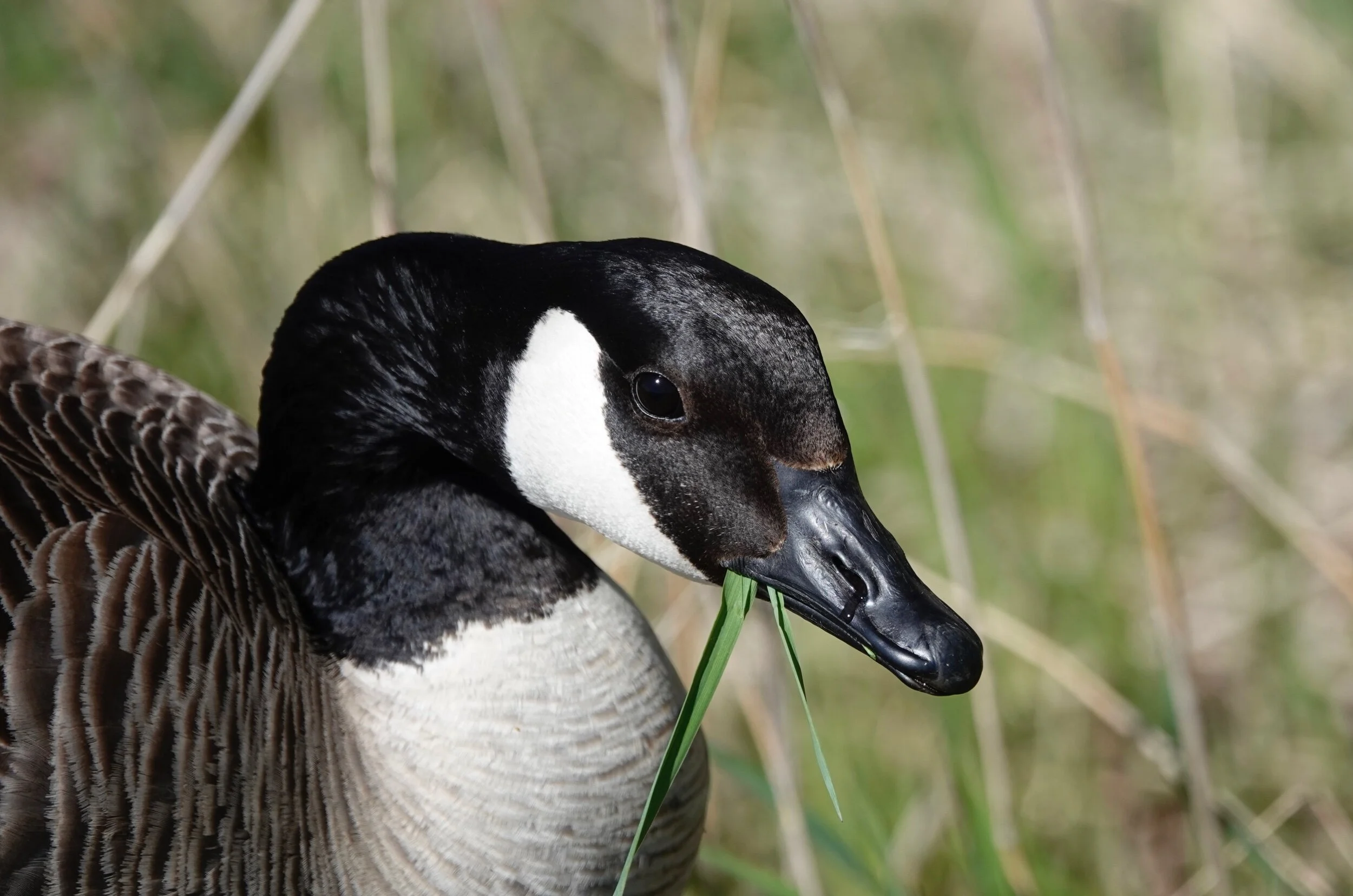
Our new lawn mower — a Canada Goose.

Mallard drakes have yellow bills. Hens and juveniles sport orange-and-brown bills.

I nearly have my ducks in a row.

All birds are great. This one is a Great Egret.

And change your oil regularly and floss daily. You’ll get by.

There is always an eyewitness. In this case, it’s a Red-tailed Hawk.

I spotted this in the Michigan’s UP. It was incredibly accurate.

This replica of a Bald Eagle nest, 12 feet tall and 8.5 feet wide, is at a Lorain County Metro Park by the Carlisle Raptor Center in LaGrange, Ohio.

This gray treefrog is pretending it’s a green treefrog. It found my forefinger a comfortable perch.

Daisies seem happy to see everyone.

Japanese Beetles team up on a rose. I hand-picked on the flower’s behalf.

The Great Golden Digger Wasp. Its name says it all, other than it paralyzes grasshoppers, crickets and katydids for larval food.


I’ve been to Primghar, Iowa, but not this year.

A bouquet grows.

The Japanese Beetle and I aren’t pals. The adult beetle feeds on more than 300 species of plants.

The Yellow-headed Blackbird is a stunning mustard head.

This bird on the wire is a Dickcissel. It sings “dick-dick-cissel” repeatedly.

A raven expresses a worry that it might be too cool for the rest of the world.

The raven resembles some of those who have given themselves haircuts.
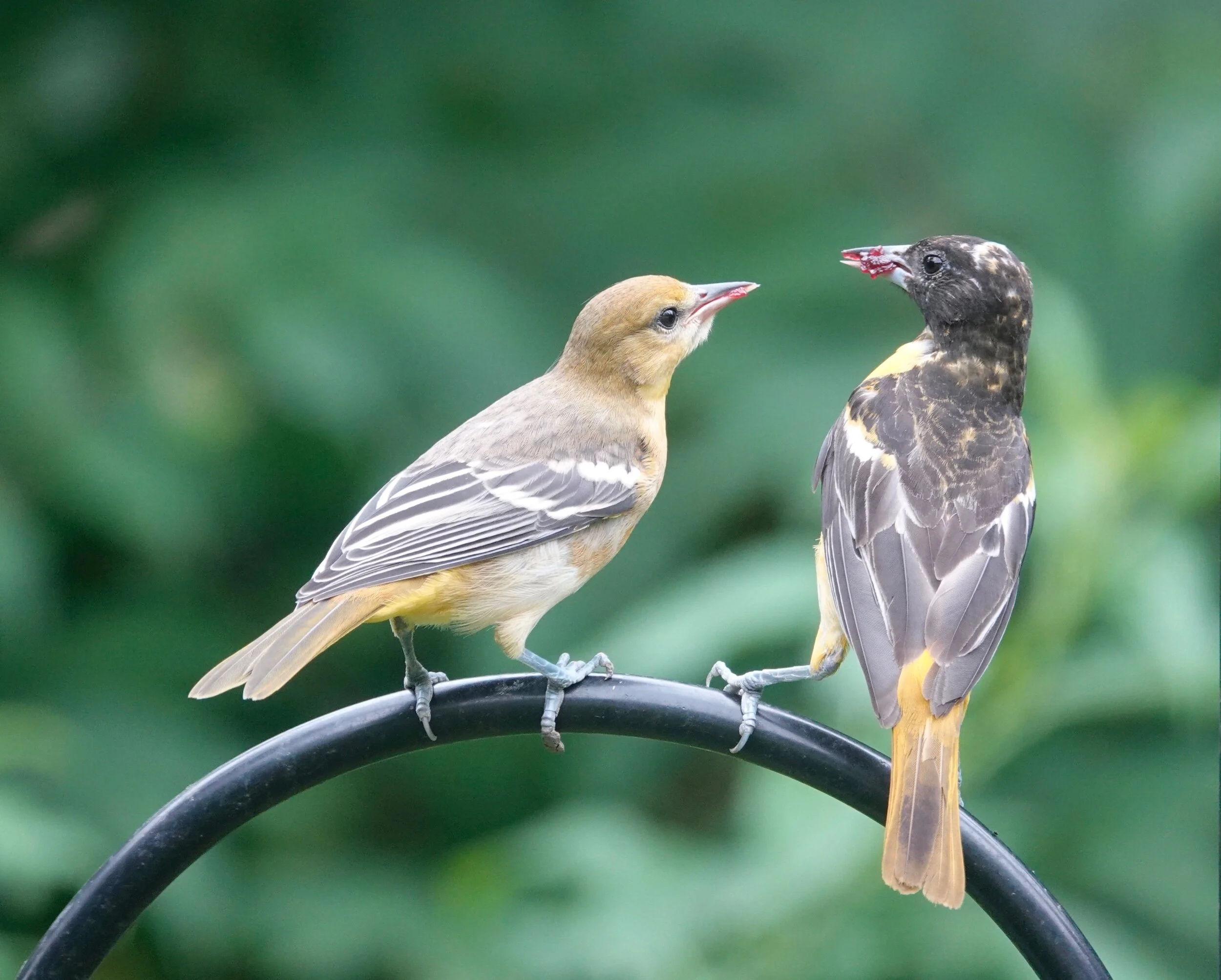
“Which one of us was supposed to bring the napkins?” said one Baltimore Oriole to another.

A Tree Swallow egg gone bad in a deserted nest.

The food is never fast enough for everyone.

When I was a dear boy, I called the Painted Lady a “thistle butterfly.” Thistles are host plants for the caterpillars.

The Red Admiral butterfly feeds on tree sap, rotting fruit and bird droppings. Its caterpillar eats nettles. This makes them nearly impossible to cook for.

A mother is a mother. Rose-breasted Grosbeaks.

One flower is smiling. I think the other one is laughing.

An Ebony Jewelwing — a deluxe damselfly.
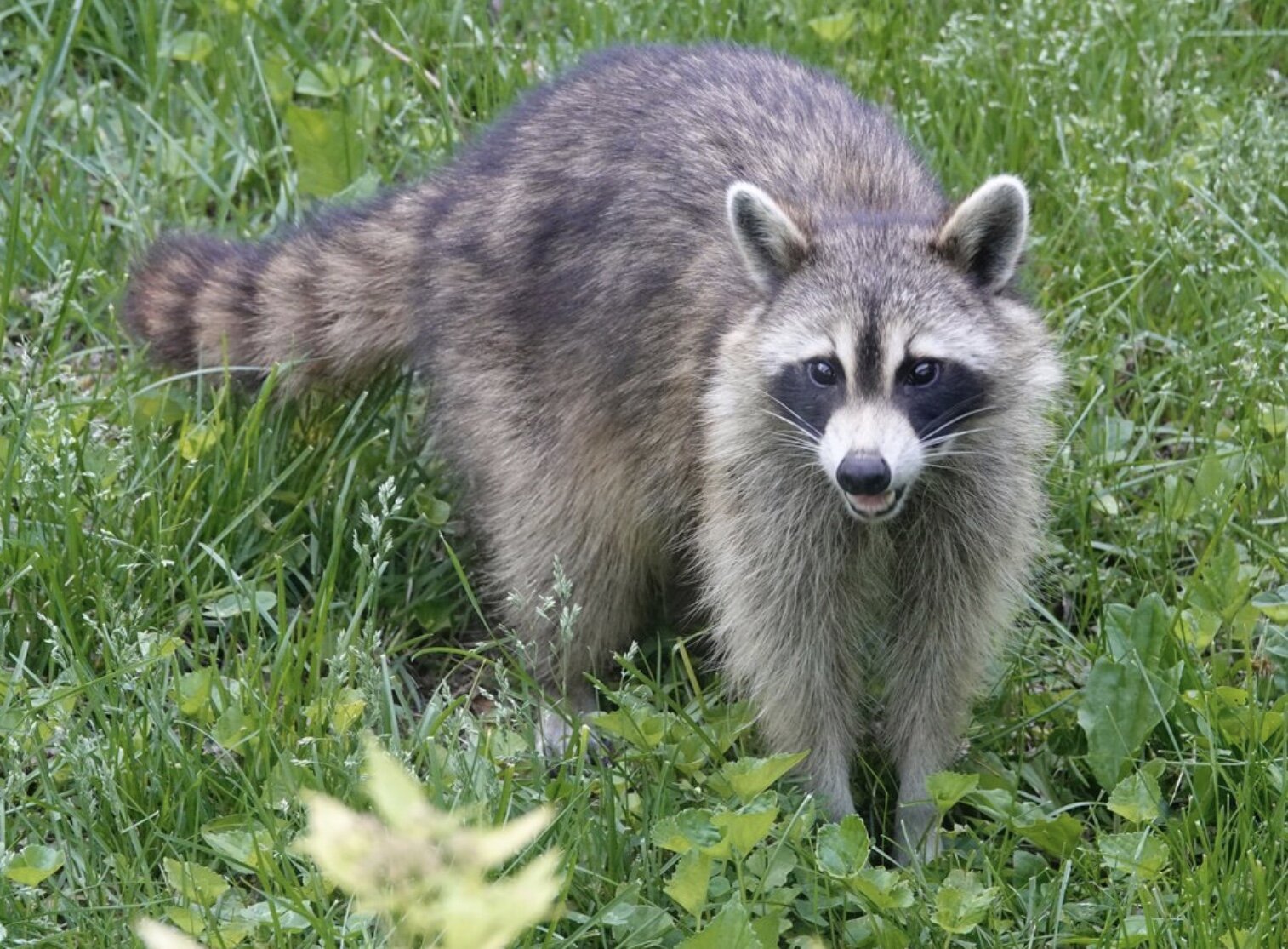
This is a spokesmodel for the raccoon mentioned here. A kit grabbed a couple of fireflies out of the air with its paws and snapped another from the air in one bite. It ate them with relish. Or it may have been onions. I've read many mammals find fireflies distasteful, but not this young'un.

A young robin dipping a toe in the water of being a flyer. OK, it’s dipping toes in that water.

It was a dark and stormy night — wind and 1.1” rain. It wasn’t really night. It was a dark and stormy late afternoon. Then the day took a deep breath and looked like this. It had been a towering storm.

A White-breasted Nuthatch checks under the hood of a bird feeder.
By Al Batt
For the Birds in the Caledonia Argus
Echoes from the Loafers’ Club Zoom Meeting
I was having a great day until it happened.
What happened?
My good luck horseshoe fell and hit me on the head.
Driving by Bruce’s drive
I have a wonderful neighbor, named Bruce. Whenever I pass his drive, thoughts occur to me, such as: My wife gave me some smoked almonds, books and two underarm deodorants for Father’s Day — Old Spice original scent and Dove Clean Comfort. I had eight of those deodorants before the recent gifts, not counting the seven I’d shared with family members. All of the deodorants had been gifts from my bride. I’ve gotten the hint.
From one clinic to another
People wandered by. Fancy footwork was required to keep a social distance from other patients. I was at a big clinic, one of my regular haunts. Someone asked me, “What do you wear to an enema?” No one admitted to having had chicken soup or milk toast. A doctor threatened to give me an apple to keep me away. I was poked and prodded.
In the oncology department, I saw a guy wearing a “Repaired in Rochester” T-shirt. I have one of those. I met friends there. I’m always happy to see them, but wish it were elsewhere. They were in good spirits, which was uplifting.
I had a dental visit a few days later. I had to do that in person, too. My dentist doesn’t do Zoom appointments.
Nature notes
I saw fledged starlings, pale brown to the point of appearing gray. I think starlings are beautiful. An eye can find beauty in most things. I visited with Lyanda Lynn Haupt, author of “Mozart’s Starling.” Her book explores the remarkable bond between bird and human. Lyanda has a pet starling, just as Mozart did. Lyanda’s bird is named Carmen, from the Latin word for song. Starlings are amazing mimics.
Stable flies attacked my ankles. They look like small house flies and have bayonet-like mouthparts used to pierce skin and suck blood. They’re sometimes called dog flies because of an appetite for canine blood. Their bites (both sexes bite) cause cattle to stamp their feet. Stable flies breed in moist, decaying organic matter.
The Minnesota goodbye
An Irish goodbye refers to a person ducking out of a social gathering (Remember social gatherings?) without bidding farewell. A Minnesota goodbye is different. Once I decide to leave, I visit for an hour before walking to the front door, where we talk forever before walking and talking to my car where my hosts talk to me through my car window for another hour. When I do finally drive off, I yell goodbye to my hosts who shout in return, “Come back when you can. Watch for deer.”
Naturally
The signs spoke of rain. If birds fly low, then rain we shall know. The local atmosphere had sprung a leak. I moved under a large tree in an attempt to stay dry. I shifted slowly around the trunk as the rain tracked my current location. The mosquitoes were tolerable.
A red-eyed vireo sang incessantly. In 1952, Louise de Kiriline Lawrence counted the number of songs sung by a single red-eyed vireo on territory north of Toronto. He sang 22,197 songs in 14 hours. The “preacher bird” either repeatedly asks and answers its own question, counts the leaves, or says “look-up, over-here, see-me, up-here.”
A red-bellied woodpecker fed on a feeder. The first confirmed sighting of this species in Minnesota was in the late 1800s.
A Eurasian collared-dove fed below the feeder. This dove was introduced to the Bahamas in the 1970s, made its way to Florida by the 1980s, and then rapidly colonized most of North America. It has prominent white patches on the tail, dark-tipped wings, a black collar at the nape of the neck, and is chunkier than a mourning dove. The collared-dove’s mournful koo-KOO-kook call is shorter and more frequent than the mourning dove’s. The Eurasian collared-dove’s species name, decaocto, comes from Greek mythology. Decaocto was a servant girl transformed into a dove by the gods to escape her unhappy treatment. They like millet. Studies on interactions between collared-doves and other species haven’t yet shown a negative impact on populations of mourning doves.
Baby robins were on the lawn. Females build the nests and incubate the three to five eggs for 12-14 days. The male has no brood patch. The nestling stage is 13 days and they’re able to fly in 14-16 days.
They have two or three broods each year. They typically build a new nest, but if the first nest was successful, she’ll often build a new floor for that nest to raise another brood.
Q&A
“What do hummingbirds feed their young?” Tiny insects and spiders. They also feed nectar and pollen to the young birds.
“When can I expect to see baby mud turtles?” Painted turtles begin laying eggs in late May into early July. The eggs hatch in 72-80 days (late August into September). Some of the hatchlings overwinter in the nest and emerge next spring. Studies have shown that about 80% of the nests are destroyed by predation and only 5% of turtle eggs hatch.
“I saw a great blue heron kill and eat a chipmunk. Is this common?” I’ve seen them eat chipmunks, pocket gophers and a young muskrat. Their diet could be described as “varied.” An interesting aside on that heron, when one catches its limit of fish, it has to stand on one leg. It’s a requirement of its fishing license.
“How many birds are there in Minnesota?” There are 313 regular species, those seen here 9 out of 10 years. Around 240 species nest here and the total number of species documented in the state is 446.
Thanks for stopping by
“Just as it is important to listen to one another, it is important to listen to the birds.” — Al Batt
“99 percent of all statistics only tell 49 percent of the story.” — Ron DeLegge II
“All men’s miseries derive from not being able to sit in a quiet room alone.” — Blaise Pascal
Meeting adjourned
“Peace begins with a smile.” —Mother Teresa. Be kind.
Do good.
©Al Batt 2020

The American Goldfinches love this feeder with its limited seating when the special is a mix of nyjer, sunflower chips and millet. Bon appetit.

If a tree is about to fall in the forest and there are only two birders around to hear it, which one gets to take the photo?

Not a Wisconsin badger. It’s a Nebraska badger.

The policeman asked me to look at the lineup and see if I could identify which squirrel had raided my bird feeder.

I know the feeling. I brought the wrong uniform to a basketball game once.

As the beaver said, “It’s been nice gnawing you.”
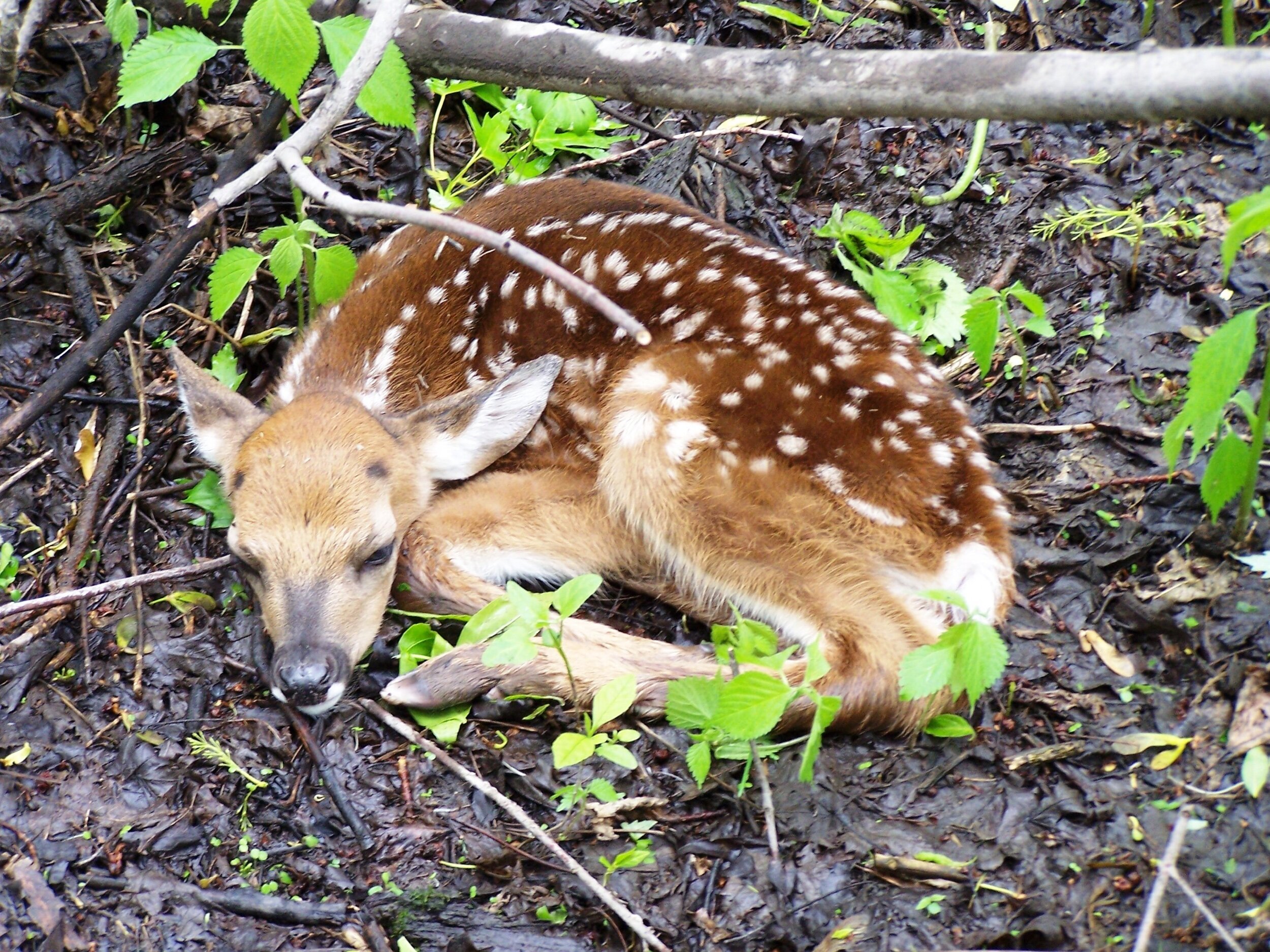
A dear little deer.

A comfortably handsome Cedar Waxwing hunting midges along Freeborn Lake.

A comfortably handsome Cedar Waxwing hunting midges along Freeborn Lake.

A Turkey Vulture practicing patience.

This is no place to be a fish.

A Gray Catbird tossed out a bunch random notes it had slapped together. It sounded as if the bird had a good attitude.
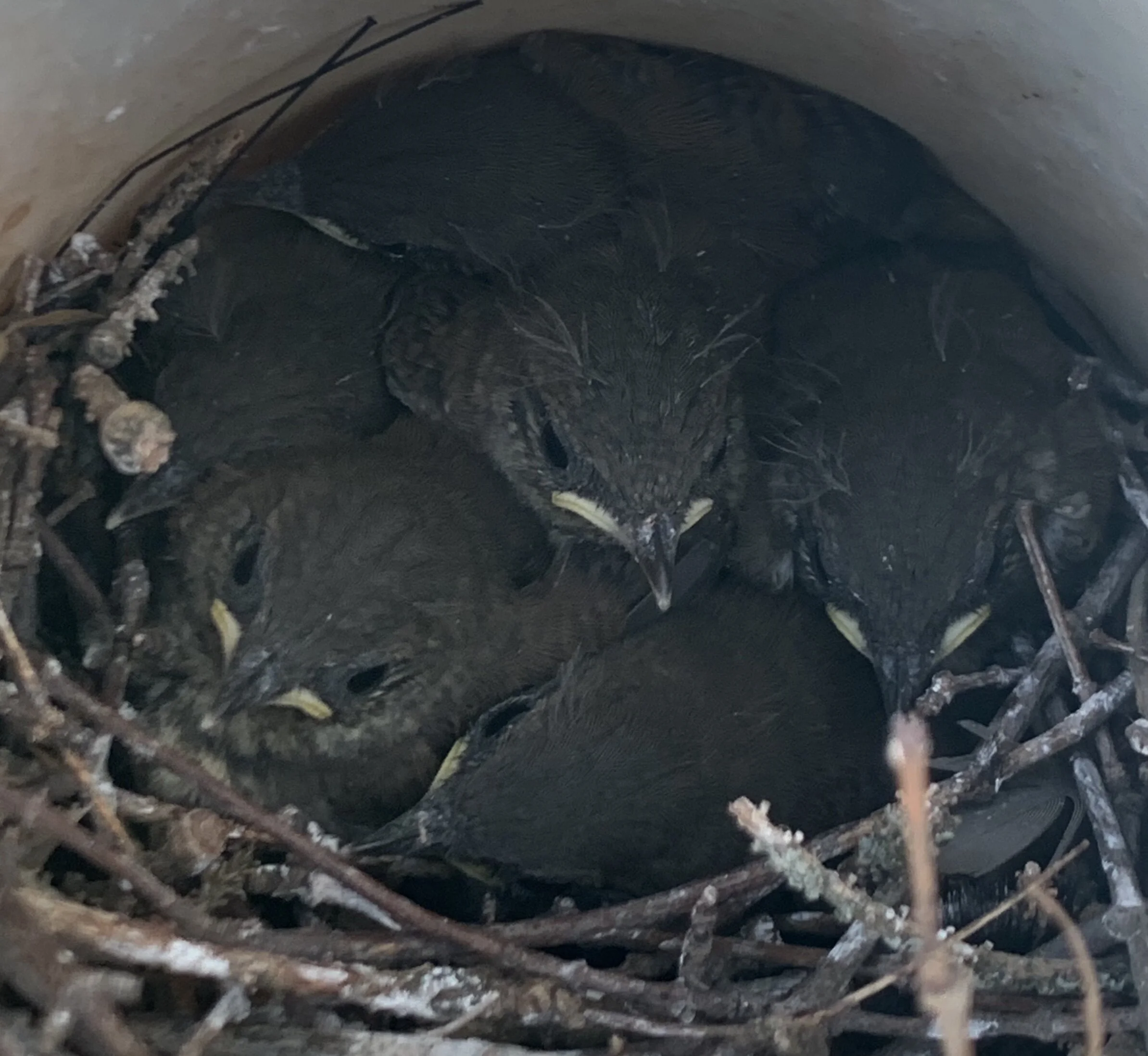
Six young House Wren siblings; not one of which has its own room.

A young groundhog hits the salad bar.

The grape jelly pull is rather popular at the Oriole Annual Picnic.

Baltimore Orioles learning how to share.

The Albert Lea Seed House promoted me to one of the head birds.

I asked this Steller’s Jay how it was doing. It replied with a piercing “sheck sheck sheck.” I hope that means it’s doing well.

Horned Grebes I saw in April. One of them might have been named April, but I doubt it.

American White Pelicans in the height of spring fashion. Nuptial tubercles on the bills telling the world (or at least other pelicans) that they are ready for a meaningful relationship.
Naturally
The signs spoke of rain. If birds fly low, then rain we shall know. The local atmosphere had sprung a leak. I moved under a large tree in an attempt to stay dry. I shifted slowly around the trunk as the rain tracked my current location. The mosquitoes were tolerable.
A red-eyed vireo sang incessantly. In 1952, Louise de Kiriline Lawrence counted the number of songs sung by a single red-eyed vireo on territory north of Toronto. He sang 22,197 songs in 14 hours. The "preacher bird" either repeatedly asks and answers its own question, counts the leaves, or says "look-up, over-here, see-me, up-here."
A red-bellied woodpecker fed on a feeder. The first confirmed sighting of this species in Minnesota was in the late 1800s. A Eurasian collared-dove fed below the feeder. This dove was introduced to the Bahamas in the 1970s, made its way to Florida by the 1980s, and then rapidly colonized most of North America. It has prominent white patches on the tail, dark-tipped wings, a black collar at the nape of the neck, and is chunkier than a mourning dove. The collared-dove’s mournful koo-KOO-kook call is shorter and more frequent than the mourning dove's. The Eurasian collared-dove’s species name, decaocto, comes from Greek mythology. Decaocto was a servant girl transformed into a dove by the gods to escape her unhappy treatment. They like millet. Studies on interactions between collared-doves and other species haven't yet shown a negative impact on populations of mourning doves.
Baby robins were on the lawn. Females build the nests and incubate the three to five eggs for 12-14 days. The male has no brood patch. The nestling stage is 13 days and they're able to fly in 14-16 days. They have two or three broods each year. They typically build a new nest, but if the first nest was successful, she'll often build a new floor for that nest to raise another brood.
Gunnar Berg of Albert Lea said he didn't remember seeing so many gray squirrels when he was growing up in Clarks Grove
and asked if his memory was faulty. Gray squirrel numbers have increased due to several things. The suburban sprawl in some areas and the squirrels' frequent visits to backyard bird feeders. Gray squirrels thrive where houses break up natural woodlands. They have proven to be adaptive and may have been helped by people who fostered squirrel populations by releasing them in public places.
Karen Wright of Mankato asked about the life cycle of toads. Female American toads lay up to 20,000 eggs which normally hatch within a week. Large schools of tiny, black tadpoles feed together along the edge of shallow wetlands, emerging as tiny toads in approximately six weeks. Maturity occurs in 2-3 years. During the winter, the American toad burrows beneath the ground (usually in sandy soils), typically just below the frost line.
"What do hummingbirds feed their young?" Tiny insects and spiders. They also feed nectar and pollen to the young birds.
"When can I expect to see baby mud turtles?" Painted turtles begin laying eggs in late May into early July. The eggs hatch in 72-80 days (late August into September). Some of the hatchlings overwinter in the nest and emerge next spring. Studies have shown that about 80% of the nests are destroyed by predation and only 5% of turtle eggs hatch.
"I saw a great blue heron kill and eat a chipmunk. Is this common?" I've seen them eat chipmunks, pocket gophers and a young muskrat. Their diet could be described as "varied." An interesting aside on that heron, when one catches its limit of fish, it has to stand on one leg. It's a requirement of its fishing license.
"How many birds are there in Minnesota?" There are 313 regular species, those seen here 9 out of 10 years. Around 240 species nest here and the total number of species documented in the state is 446.
Customer comments
Todd and Kelly Bram of Rushford heard an unusual and beautiful song outside on their porch. The unexpected visitor was a Carolina wren singing, “teakettle, teakettle, teakettle."
Brenda Kotasek of St. Peter took photos of a leucistic house finch in Ottawa. Leucism is an abnormal condition of reduced pigmentation that is marked by pale color or patches of reduced coloring caused by a genetic mutation which inhibits melanin and other pigments from being deposited in feathers. The finch had white feathers where it typically would have darker ones.
Thanks for stopping by
"Just as it is important to listen to one another, it is important to listen to the birds." — Al Batt
“99 percent of all statistics only tell 49 percent of the story.” — Ron DeLegge II
"All men's miseries derive from not being able to sit in a quiet room alone." — Blaise Pascal
Do good.
©Al Batt 2020

A Carolina Wren photo by Al Batt

I suspect raccoons are good at talking trash.

My wife found a lawn whale in Sitka, Alaska. They both seem nice.

It takes many wind turbines to produce a proper amount of wind.

The beaches are crowded.
By Al Batt
For the Birds The Caledonia Argus
Echoes from the Loafers’ Club Masked Meeting
I believe it’s good luck to hold my breath when an ambulance goes by.
I never heard of doing that.
Are you going to start?
No, I think it’d be better luck if I held my breath when a hearse went by.
Keeping a lawn story short
The lawn mower was invented in 1830 by Edwin Beard Budding, an English engineer. What did people do about lawns before then? Ignored, ate or used a scythe on them. Had no lawn or grazed livestock. Our riding lawn mower is dilatory, inclined to delay or waste time. In other words, it doesn’t work. We’ve had it repaired several times, but it refuses to go back for mower.
Naturally
Robins, a significant part of the yard squad, worked the lawn, looking and listening for earthworms. Rose-breasted grosbeaks sang like robins in a good mood and brought joy to an active listener. I haven’t seen any tent caterpillars on the home front this year. They are a food staple for cuckoos. An eastern kingbird flew overhead. My mind flashed to a canoe trip I did on the Missouri River in Montana. I camped where the Lewis & Clark Expedition had. Each morning vociferous western kingbirds woke me.
Raccoon carcasses act as mile markers or speed bumps on our roads. They appear to be losing the battle against vehicles.
Barn swallows reminded me I was in Vienna once. When my mother had to be gone at mealtime, my father’s specialty was a can of Vienna sausages and toast, so I felt at home in Vienna. I crossed streets while dodging Smart car taxis and stopped to admire the statues of famous composers — Mozart, Schubert, Brahms and Strauss. But the first music I there heard was that of crows and barn swallows. That swallow is the national bird of Austria.
Everyone looks good when bending over in a garden
Gardening is no bowl of cherries. It’s not even a bed of roses. Or maybe it is a bed of roses, complete with thorns. We’re all in this together. That includes rabbits, deer, chipmunks, squirrels, slugs and a dazzling array of worms and insects. The rabbits have been eating well this year. Apparently, the rabbit economy needed a stimulus package. The secret is to raise only onions. Rabbits aren’t fond of them.
Q&A
Matt Maras of Albert Lea asked about a bald cardinal. I typically see bald birds in July and August. It’s normal for some birds (usually cardinals and jays) to go through an abnormal molt with an odd replacement of feathers. They’re OK with that cool look and that’s why there is no Hair Club for Birds or Feather Club for Birds.
“Can pigeons be rabid?” Birds, snakes and fish aren’t mammals, so they can´t get rabies or give it to you.
“How can I help a turtle cross the road?” Hiding in a shell hasn’t proven to be a good defense against automobiles. Never pick a turtle up by the tail, remember that snapping and softshell turtles bite, don’t put yourself in danger when prodding a turtle along, and always push them with a blunt object in the direction they were headed. Thanks for caring.
“What eats slugs?” Firefly larvae, toads, salamanders, snakes, shrews, moles, raccoons, opossums, chickens, ducks and songbirds, such as the robin.
Driving by Bruce’s drive
I have a wonderful neighbor, named Bruce. Whenever I pass his drive, thoughts occur to me, such as: I owned a 1959 Rambler Six Custom Sedan when I was a teen. It had a radio and rust. I decided to scrape off the rust. I had yellow paint and no money, so I covered the scraped spots with yellow paint. You can’t be a true idiot without experience. The result was a polka-dotted car. That made it easy to find in a parking lot. To give the car an elegance, I bartered for three used baby moon hubcaps.
A friend, Jim Finseth, said his father (Ken) had worked at Pop Moon’s in New Richland. That was a Phillips 66 gas station before gas stations became convenience stores. Pop sold gas and to supplement the family income, he sold alcohol (Moonshine?) during Prohibition. He was caught and fined.
In 1934, he sold the station and moved to California to escape his notoriety and winter’s cold. Pop bought a restaurant there, which became Moon’s Cafe. His son Dean started Moon Automotive and in 1954 produced a spun-aluminum wheelcover called the Moon Disc.
The business later became Moon Equipment and made baby moon hubcaps that turned my polka-dotted 1959 Rambler Six Custom Sedan into a boss hot rod.
Nature notes
Female buffalo gnats (turkey gnats or black flies) bite chunks from my skin and feed on the blood. They punch above their weight and cause intense reactions and painful itching. The end of May and early June is prime time for these insects that breed in moving water. I’m happy I can the see gnats, but I’m never happy to see them.
An indigo bunting sang “Fire; fire; where? where? here; here; see it? see it?” This bird nests in brushy and weedy habitats on the edges of farm fields, woods, roads and railroads. I see nests in raspberry thickets and on corn and ragweed plants.
A red-headed woodpecker stores insects, nuts and seeds under bark, in cracks in fenceposts, under shingles, etc. It catches flying insects and forages on the ground. It occasionally drills holes in dead trees searching for wood-boring larvae, but flying insects are more important to its diet.
I watched a groundhog (woodchuck or whistle-pig) eating mulberry leaves in a tree. It also enjoys Dutch clovers and dandelions.
Toni and James Perschbacher of Albert Lea are being visited by a banded pigeon. The bands indicate the racing pigeon’s organization, club and its hatch year. I get many reports of lost pigeons and have found most owners aren’t interested in recovering a poor performer, so enjoy its company.
Meeting adjourned
“Kindness, like grain, increases by sowing.” — English proverb
©Al Batt 2020

A widow skimmer is a dragonfly you might be able to talk into eating a few mosquitoes.
Photo by Al Batt

“You carrot chompin', flop-eared, bob-tailed rabbit! I hope your innards turn to outards and your ears go visey-versey! I hates rabbits!” Yosemite Sam said that. I wonder if he had a garden?

The yard’s mulberry trees tremble as if they have a keen understanding of the world’s situation. Birds feed on the berries. I watched robins, orioles, cardinals, Blue Jays, Great Crested Flycatchers, thrashers, catbirds, and grackles feed. I ate a few berries myself.

If I could have named the characters on “Gunsmoke,” Marshal Dillon would have been Marshal Peregrine, Miss Kitty would have been called Daylily (not sure why), and Festus would have been Festus.

If anosmia (the loss of the sense of smell) is an early symptom of COVID-19, I've learned I’m OK.