
I delight in feeding peanuts to Blue Jays. I think it makes them happy, too.
Even though I was a long ways away, I still managed to take a lousy photo of a handsome Snowy Owl.

I delight in feeding peanuts to Blue Jays. I think it makes them happy, too.

Even though I was a long ways away, I still managed to take a lousy photo of a handsome Snowy Owl.

Nags Head, North Carolina.

I hope an American Kestrel in the hand is worth a million in the wild.

The Red-winged Blackbird males sing of spring. It’s their thing.

A House Sparrow tries to get its head around daylight saving time.
Naturally
I survived the stretch of -20° weather and it looks as if you did, too. That's good news. Those kinds of temperatures are the ones we'll be telling someone about this summer.
I hear little about March coming in like a lion and going out like a lamb or vice versa. Maybe it comes in like a cardinal? There were four cardinals in a hawthorn tree in my yard. I'm still celebrating. I've seen more than that in a tree before, but never at my place.
I saw robins. The vast majority of robins move south in the winter. However, some stick around — and move around. Fruit is the robin's winter food source. As the ground thaws in the spring, they switch to earthworms and insects. While robins may arrive when the average daily temperature isotherms reach 37°, it's because their food becomes available, not because the robins need warm temperatures. Because some overwinter here, they might not be a true harbinger of spring, but I do enjoy seeing them bob, bob, bobbing along.
I spotted a muskrat doing a walkabout. Perhaps it had run out of food and was forced to venture from its house. Muskrats aren't rats and they (2 to 4 pounds) are much smaller than beavers (30-70 pounds).
I looked at a garden catalog that came in the mail and pictured the birds a garden brings with it. It seems as if every garden has a song sparrow to keep it company. E. B. White wrote, "The song sparrow, who knows how brief and lovely life is, says, Sweet, sweet, sweet interlude; sweet, sweet, sweet interlude."
A sign of spring is the sight of a killdeer. Killdeer are shorebirds that don't need a beach. They call out their names. Another sign is the return of the red-winged blackbirds. I love hearing the males singing "Look-at-meee" from a preferred, prominent perch. Their songs remind me of Simon & Garfunkel's "Homeward Bound," "Home where my thought's escaping. Home where my music's playing. Home where my love lies waiting, silently for me." And the females are silent because they generally return later than the males.
I rarely see gray or Hungarian partridges near my home anymore. Once a year is about average. Sometimes they're in my yard. Years ago, there was a chukar, an escapee from a game farm, in my yard following a pair of gray partridges around. The chukar isn't a native to North America and the other partridges were the closest things to itself that it could find. I named it Chubby Chukar. I had to.
I filled the seed dispensary units with sunflower seeds. These small vending machines dispense bird food when in the company of a bird. Native Americans domesticated the sunflower around 1000 BC. About 75% of the North American sunflower seed is produced in North Dakota, South Dakota and Minnesota.
Sad news
The number of monarch butterflies at their winter roosting grounds in central Mexico decreased by about 26% this year after many trees were lost to illegal logging, drought and other causes. The butterflies’ population covered 5.2 acres in 2020, compared to 6.9 acres in 2019 and 14.95 acres in 2018. Monarchs cluster densely in pine and fir trees, making it easier to count them by area than individually. Scientists estimate 15 acres of forest canopy is needed to sustain the monarch population.
Q&A
"Do voles come into houses?" Voles want to stay outside, prefer eating plant materials and don't do well indoors. They rarely enter houses.
"Why are they called ruffed grouse?" The name "ruffed" came from the long, shiny, black- or chocolate-colored neck feathers most prominent on the male.
"Does a bird have a voice box?" A bird has a syrinx, a sound-producing organ, that's the equivalent of a voice box. It's at the junction of the two bronchi or air tubes leading to the lungs. This gives the syrinx two potential sound sources, one in each bronchus. The separate membranes on each bronchus produce independent sounds, which can be mixed to produce a variety of sounds.
"Why are the squirrels removing bark from a tree in my yard?" Squirrels strip the bark from thin-barked trees because that bark is easier to remove than thick bark. The squirrels might use the bark to line their nests. Bark removal exposes a tree's cambium layer, which holds nutrients and sugars produced by the tree. That provides food for hungry squirrels in winter and early spring when other food sources are less readily available. Chewing on the bark of a tree helps keep squirrels' teeth in good shape.
Thanks for stopping by
"The naked, silent trees have taught me this, the loss of beauty is not always loss!"
– Elizabeth Drew Stoddard
"Laws are like cobwebs which may catch small flies, but let wasps and hornets break through." — Jonathan Swift
Do good.
©Al Batt 2021

I hope the sight of this robin brings you good luck. Photo by Al Batt

Dark eyes and yellow bill on a Barred Owl. Sorry, Shakespeare fans, it’s not a bard owl. It’s nicknamed hoot owl, eight hooter, rain owl, laughing owl and crazy owl.

A Fox Squirrel notices his smartwatch is missing.

Eastern Screech Owls always look surprised.

Except when they are asleep.

The second robin of spring.

This is one powerful Downy Woodpecker. Trees tremble in his presence and rightly so.

A Red Fox, identified by the white tip of its tail, skulks through the yard.

A Downy Woodpecker female is pumping iron.

Spring has sprung, the grass has riz. I know where the birdies is. #birds
March 1 is the beginning of meteorological spring to these starlings.

An American Tree Sparrow and its Bird Banding Laboratory code ATSP.

The Horned Lark knows how to look good when it’s windswept.
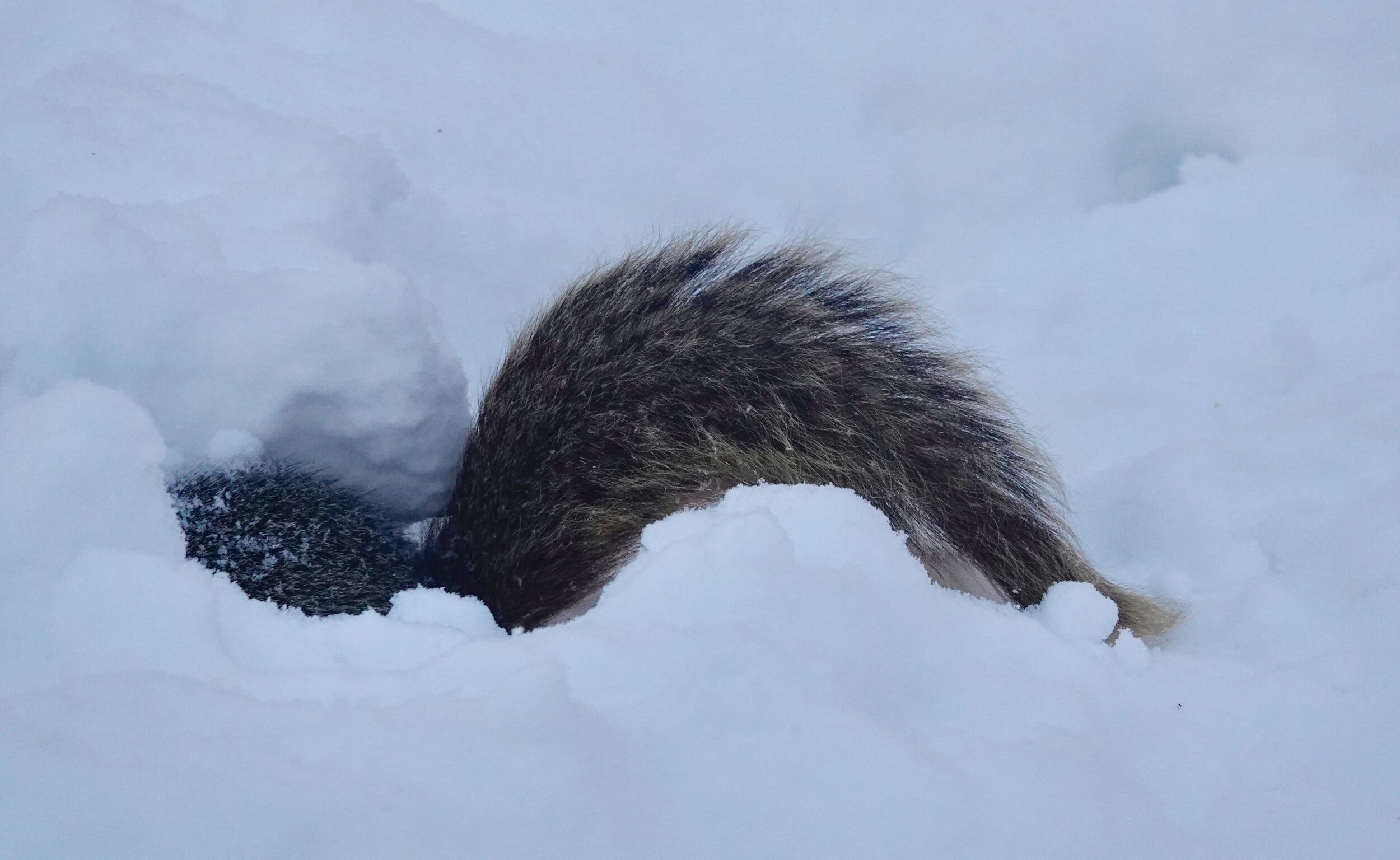
The squirrel found looking for a kernel of corn in the snow was like searching for a needle in a haystack.

A Red Squirrel believes in letting a tail be its umbrella.

A nuthatch stalking the wild goober peas. White-breasted Nuthatches, Black-capped Chickadees and Blue Jays love peanuts. If goober peas need to be boiled to be goober peas, these are not goober peas.

I told this American Goldfinch that meteorological spring began today. It was stunned by the news.

A nuthatch regularly caches seeds in bark crevices and local community banks.

An LBJ or an LBB?
This Little Brown Job or Little Brown Bird is a Lincoln’s Sparrow.
Naturally
Another day of snow and tell. When it’s frigid, birds become puffier. It helps to be fluffy. Watching birds is a fabulous experience. The wonders of the universe unfold before my eyes. The birds enjoy curbside service. I filled feeders and a chickadee checked out the vending machines. A hairy woodpecker put sunflower seeds into the bark of a tree and hammered them open. This activity attracted the interest of a blue jay curious to see what the woodpecker was up to. It's like one of our species back when we filled restaurants. We looked around to see what looked good going into other people's mouths.
I have window feeders. They are great for birds and for folks prone to stir-craziness. They adhere to the window via suction cups. The window needs to be clean and it helps the suction if the glass is warm. Spread vegetable oil lightly on the suction cup rims to enhance adherence. I have a heated birdbath, a recycled dog food dish. Birds can use snow and ice as a source of water but it expends precious energy to convert it to water. Heated birdbaths don't create warm water, but keep it from freezing. If you don't have a heated birdbath, you could offer fresh water in the early morning and right before dark. Those are the popular times birds want water.
A ring-necked rooster pheasant found something to crow about. The roosters crow throughout the year. I've been grounded like everyone else, but I've been fortunate to speak at birding things in Alabama, Connecticut, Alaska, Iowa, Minnesota, Wisconsin, etc. via Zoom because roosters need to crow.
A mourning dove pair fed on fallen safflower seeds under the feeders. In ancient Greek mythology, Aphrodite, the goddess of love, was depicted by doves. Early European superstition held that the devil and witches could turn themselves into any bird shape except the dove. In Hinduism, the dove is an emblem of the spirit and its infinite capacity for love. Ancient Aztecs believed Xochiquetzal, the mother of humanity, arrived as a dove after the great flood. Native Americans associated a dove with the Great Spirit. In the Old Testament, Noah released a dove after the great flood to search for land. It returned with an olive branch to show that the Biblical flood had receded.
At this moment in Minnesota, great horned owls are incubating eggs. A parent, typically the female, must keep them warm to prevent them from freezing. This early nesting
gives the owlets a head start in the spring and extra time to learn how to be a good great horned owl. The young aren't free of parental care until in October. Great horned owls have the most diverse diet of all North American raptors. Their principal prey items are rabbits, mice, voles, hares and coots, but their menu is substantial. They occasionally hunt in broad daylight and may walk on the ground to stalk small prey.
Nature news
Railroad crews used explosives to provoke small avalanches in British Columbia when an onlooker noticed an elk engulfed in a wave of white. The man and a friend went to help the elk and found its face peering out from the snow, immobilized by the weight of the avalanche. The men dug the elk free and it walked away. No tip was requested.
A two-headed bird (a ruffed grouse) was spotted in Cape Breton, Nova Scotia. The bird eats with both beaks and can fly.
The world’s oldest known wild bird is a mother once again. Wisdom, a Laysan albatross, hatched a chick on Feb. 1 on Midway Atoll. Wisdom is approximately 70 years old and has hatched 30-36 chicks.
Q&A
Jay Gregerson of Albert Lea sent a photo of a house finch with an elongated bill and wondered about the cause. Many factors have been implicated in causing bird bills to grow abnormally — disease, parasites, nutritional deficiencies, genetic defects, extreme heat, environmental contaminants and structural damage caused by a collision or other trauma.
"Do feeders help birds survive winter?" Stanley Temple, a University of Wisconsin professor studied this (1982-85) and found, on average, 69% of banded chickadees with access to a feeder survived the winter (October through April) compared to 37% without supplemental food.
"There is a downy woodpecker that appears to be healthy but sometimes remains motionless at the suet feeder or on the trunk of a tree. What's it doing?" Woodpeckers aren’t the fastest flyers, which means the downy’s best defense is to freeze in place to escape an accipiter's notice.
Thanks for stopping by
"The mind that is not baffled is not employed. The impeded stream is the one that sings." — Wendell Berry
"When the whole world is running towards a cliff, he who is running in the opposite direction appears to have lost his mind." — C.S. Lewis
Do good.
©Al Batt 2021
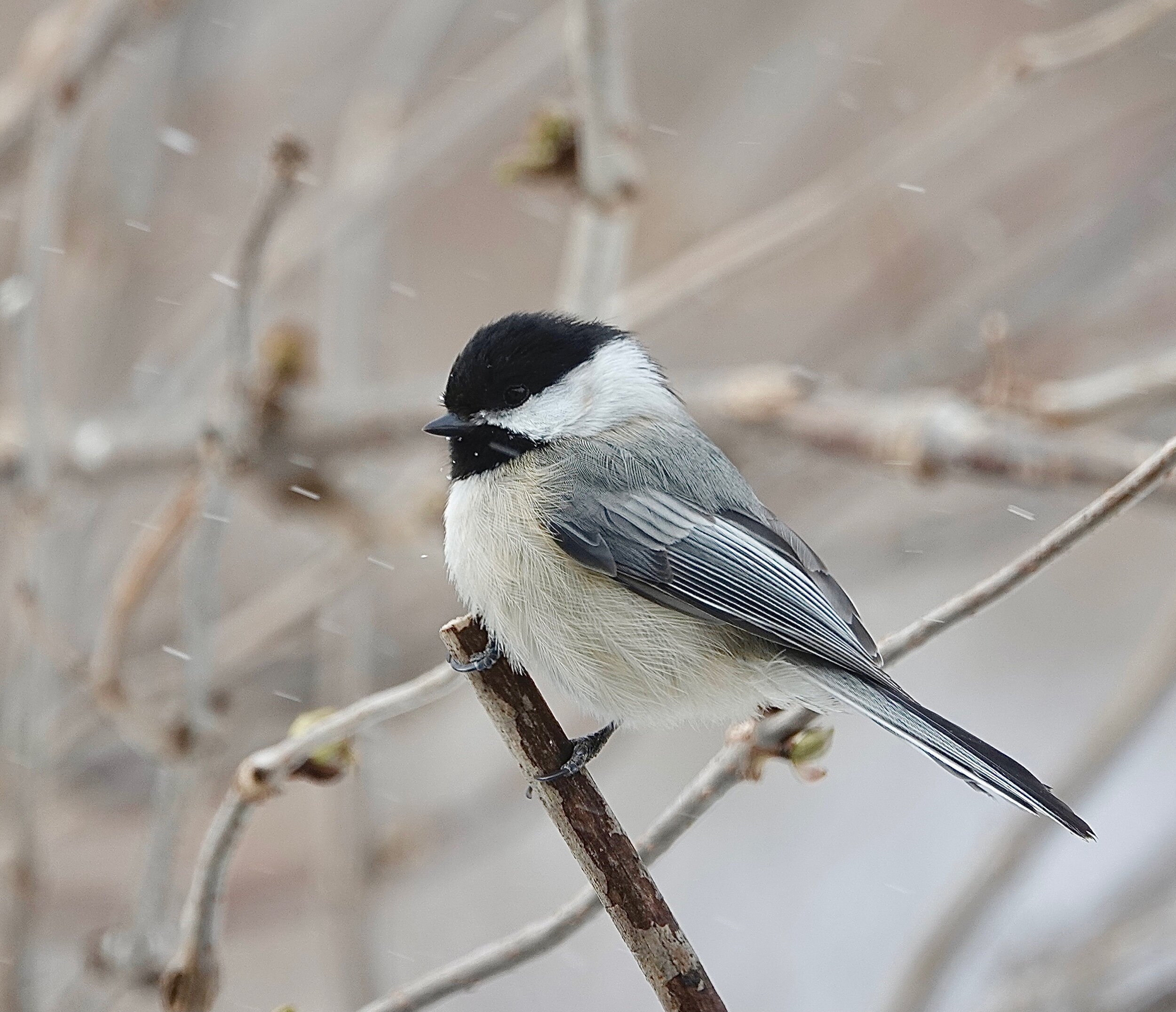
Sometimes I look at a chickadee and I feel good about everything. Photo by Al Batt

The House Finch’s song often ends in a slur as if the bird was asking a question or had forgotten its song.

The rooster pheasant crows all year, which has to be exhausting.

Growing up, I wasn’t the black sheep of the family. I was the black squirrel of the family.

The weeds of winter.
If a weed is a plant growing where it isn’t wanted, these aren’t weeds.

A bad photo of a good bird — as all birds are. Horned Larks.

A terrible photo of a wonderful bird — they all are. A Snow Bunting.

The perfect perch for an eagle that dislikes crowds.

Eating corn on the cob in the winter.

The nuthatch was me-watching.

A Pine Grosbeak in the snowfall.

If you visit Hibbing, Minnesota, you can see Bob Dylan Drive without seeing Bob Dylan drive.

“The long and winding road
That leads to your door
Will never disappear
I've seen that road before.”
If The Beatles had been driving this road, it would have been the long and snowy road.

In the opossum world, this is a social climber.

A Pine Grosbeak is a mighty fine grosbeak.

A leaf tries to blend in with the snow.
Naturally
Birds are meant to invoke awe and wonder. A love of birds is a reason to go outside. I'm constantly amazed as I watch birds trying to make a living. No bird carries a wallet or a purse. They survive without a credit card. It was -19° and the house sparrows were chirping merrily. It invigorated this listener. When I was a lad, hawks were called chicken hawks, including the beautiful red-tailed hawk. I ate more chickens than any red-tailed hawk ever did. The hawk's diet varies with availability, season and location, but mammals such as voles, mice, rats, rabbits and ground squirrels are major prey items. Tree squirrels and chipmunks are less important prey to this hawk, which is generally brown above and whitish below.
I watched a strange cat sneak through the yard at -19° with a windchill I didn't want to know. Cats want to be outdoors. Humans want to use hard drugs, eat too much and drive too fast. Being outdoors is as bad for a cat as those other things are for us.
I saw an American kestrel on a utility wire. The mourning dove-sized bird had slate-blue wings that identified it as a male. The female's wings are rusty. A kestrel often bobs its tail while perched.
The news had a couple of odd nature-related things. A call to save an injured goose on the Raisin River in Detroit caused a fire rescue crew to suit up and crawl onto the treacherous ice. Once close, they discovered the goose was a decoy. Officials considered it an unexpected training session.
Gray squirrels are an invasive species in the UK and the government there is trying to lure the squirrels into feeding boxes with small pots containing hazelnut spread spiked with an oral contraceptive. Prince Charles played a key role in setting up the UK Squirrel Accord, which aims to manage the negative impacts of invasive gray squirrels in the UK.
I watched the fox squirrels in my yard. They survive our cantankerous winters because they keep working at it.
Q&A
"What does beaver scat look like?" Beaver scat isn't often seen because beavers typically defecate in the water. Beaver scat is predominantly wood material. Their feces disintegrate quickly in water because they're mostly wood pulp in either a round or elongated pellet up to an inch in diameter. The scat resembles wood chips or sawdust glued together and is usually a light brown to tan color. The Beaver Institute says the preferred tree species of beavers include alder, aspen, apple, birch, cherry, cottonwood, poplar and willow. Aspen, poplar and cottonwood are their favorites. If the supply of their preferred trees is low they will harvest oaks and maples. Conifers are their least favorite. I see them gnawing on ash trees and enjoying the bark of willows.
"Why don't the feet of birds freeze?" Bird feet are little more than bone, sinew and scale, with few nerves. A countercurrent heat exchange system means the arteries that transport blood to the legs lie in contact with the veins that return blood to the bird’s heart. The warm arteries heat the cooler veins. Because the veins also cool the arteries, the bird’s feet are closer to the environmental temperature and don’t lose as much heat as they would if they were at body temperature.
This system isn’t as effective in mourning doves and their feet are prone to freezing. Pigeons and chickens suffer frostbite. Frostbitten feet on other birds aren’t an impossibility. On a barely related note, the rock pigeon, the pigeon we see in farm and city, was trained for communication by the United States Army Pigeon Service or Signal Pigeon Corps. During WWII, this force consisted of 3,150 soldiers and 54,000 pigeons. Over 90% of Army messages sent by pigeons were received. The pigeon named G.I. Joe received the Dickin Medal for gallantry that saved at least 1,000 lives. From 1917 until 1957, the US Army Pigeon Breeding and Training Center was based at Fort Monmouth, N.J.
"Do raccoons wash their food before eating?" They aren't germaphobes. It's a myth. When they find something that might be food, they roll it around in their front paws to determine what it is. If a raccoon encounters a likely item at a distance from water, they will roll it around in their paws without involving any water. Research has determined that wetting the paws increases their sensitivity. Their scientific name, Procyon lotor, means "washing bear." Raccoons typically weigh 14 to 40 pounds, sometimes more. If raccoons had opposable thumbs, they might be our overlords.
Thanks for stopping by
"You were made and set here to give voice to this, your own astonishment." — Annie Dillard
"When a man is wrapped up in himself he makes a pretty small package." — John Ruskin
Do good.
©Al Batt 2021

A fox squirrel hard at work making a living during the winter. Photo by Al Batt

It’s a beautiful winter day when the blue pops out of the white.

I would love to meet the Badger from The Wind in the Willows by Kenneth Grahame. This is not that badger.

One of the many places I didn’t make it to in 2020 was Sitka, Alaska, for their wonderful Whale Festival. I need more whale tail tales.

Each humpback whale fluke is like a fingerprint and can be used to identify a whale.
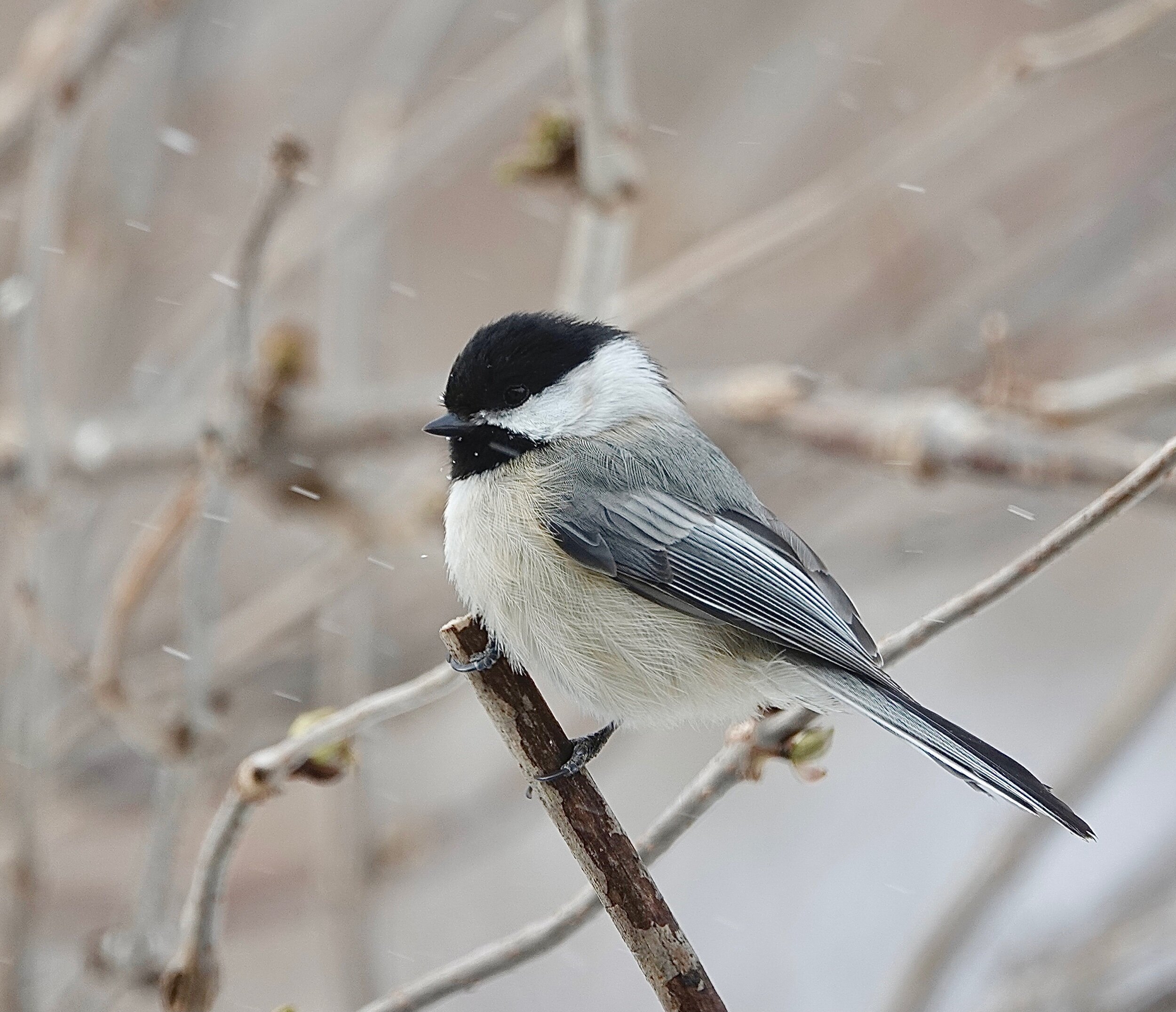
Some days, I look at a chickadee and I feel pretty good about everything.

When it’s frigid, it helps to be fluffy.

When the weather drops below 20 degrees below, putting a foot into the feathers is a fine thing for a House Sparrow to do.

When the weather drops below 20 degrees below, putting a foot into the feathers is a fine thing for a House Sparrow to do.

It was an isolated snowstorm, limited to a Blue Jay’s bill.

The starling’s bill is yellowing. Spring must be right at the tip.