When weasels fly

Naturally
What’s all the yellowing about? It’s about American goldfinches. They are turning a brilliant yellow.
Dandelions are spring to some folks. The yellowing of spring. Is a group of dandelions called a pride? Mark Twain said, “In the spring, I have counted 136 different kinds of weather inside of 24 hours.”
It’s good to see turkey vultures back and checking the expiration dates of roadkill.
I am in awe of the feeder birds in the April snow. I make it a cardinal rule to look at every cardinal. A red-tailed hawk soaring high caused me to think of the line from “Oklahoma,” “We sit alone and talk and watch a hawk making lazy circles in the sky.”
European starlings were introduced into this country by Shakespeare enthusiasts in 1890. Their population is declining in the UK and North America. The Harris's sparrow is named after Edward Harris, Audubon's pal and a horse breeder. The breeding range of this sparrow is all in Canada.
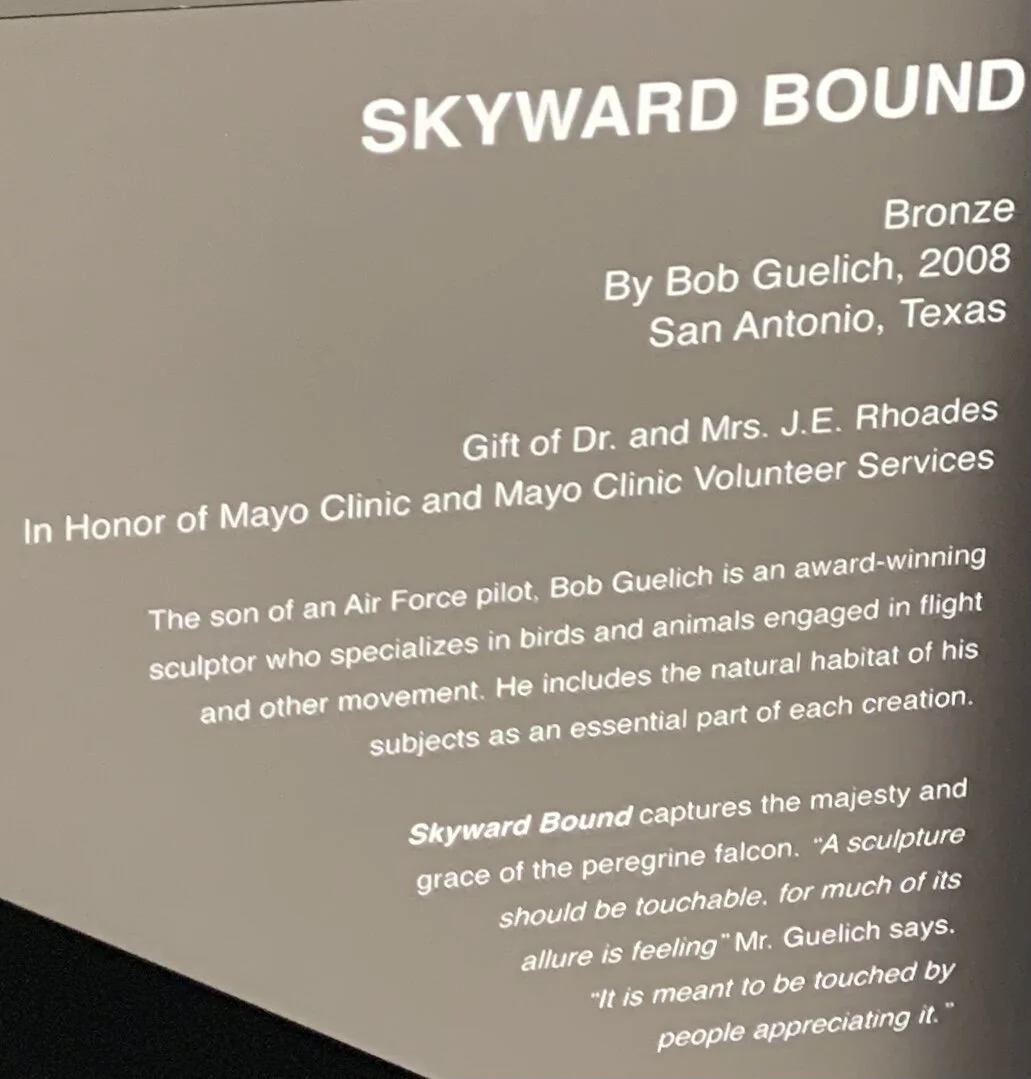
The crow-sized peregrine falcons return in February to nest on the roof of the Mayo Building in Rochester. In early April the female lays 3-4 eggs that hatch 35 days later in early to mid-May. The nestlings are given names by patients, staff and visitors.
Telling tales out of stool
I was in a state park when poop rained down upon my car. Bacteria in the bird’s gut break down the uric acid, giving it the white color before exiting the bird’s cloaca. Birds mainly eating fish like bald eagles, cormorants, great blue herons, gulls or osprey produce mostly white poop. I’m not sure what birds targeted my car, but their accuracy was amazing.
No one is a dodo
Dodos were flightless birds on the island of Mauritius in the Indian Ocean. After Dutch sailors landed and settled on the island in 1598, the dodo’s population rapidly declined. The dodo was easy to catch and was hunted by sailors for food, but the introduction of pigs, dogs and rats with a taste for dodo eggs and the ability to outcompete the dodos for food was devastating. The Oxford University of Natural History sources said dodo meat wasn’t tasty.
When weasels fly
I enjoy the writings of Annie Dillard. Her book “Pilgrim at Tinker Creek” is exquisite. I read her essay (“Living Like Weasels”), which mentioned author and wildlife artist Ernest Thompson Seton’s report of someone shooting an eagle and finding the skull of a weasel attached to the raptor’s throat. He guessed the eagle had swooped down and grabbed the weasel. The would-be-prey chomped onto the throat of the eagle and never let go. The eagle carried a reminder of that day for the rest of its life.
Q&A
“I’ve heard about declining bird populations. Are some bird species doing well?” The number of birds in North America has fallen by 29% since 1970. Bald eagles are thriving, peregrine falcon populations have grown and waterfowl numbers are on the upswing.
“Where do the red-winged blackbirds spend the winter?” Most blackbirds breeding in the northern U. S. migrate to the southern states for the winter.
“When do bucks drop their antlers?” Most bucks in Minnesota shed their antlers between December and March. Declining day length causes a decrease in testosterone, which results in antler shedding. Look for sheds in places where deer sleep, where they feed and the trails between those two places. Concentrate on southern exposures.
“When are white-tailed fawns born?” May or early June are prime times as they allow the fawns to grow during warm days and nights while missing the cold of early spring.
“When do juncos leave here?” I see them here as late as in May every year.
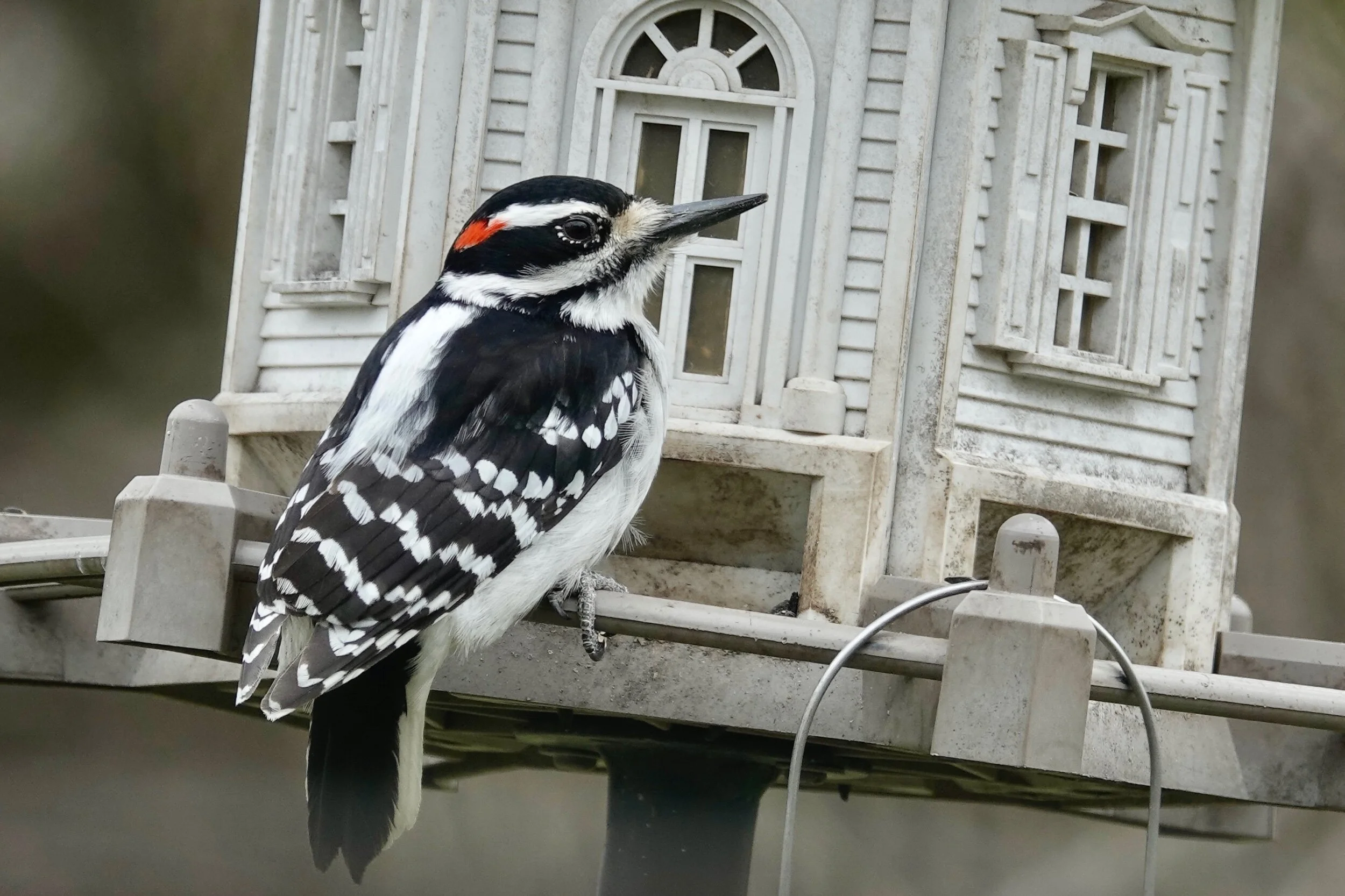
“What else other than orioles eats grape jelly from feeders?” Catbirds, tanagers, robins, house finches, woodpeckers (downy, hairy, red-bellied), brown thrashers, rose-breasted grosbeaks, cardinals, starlings, Cape May warblers, yellow-rumped warblers, orange-crowned warblers, chipmunks and squirrels are all possibilities.
“There were branch tips on the ground under my spruce trees. What caused that?” The damage is usually the work of a hungry red squirrel. It feeds on newly formed buds at the end of a twig by snipping off 3 to 6 inches of new growth, eating the bud and dropping the rest. This occurs when there is little other food available to them.
“Why do blue jays carry away several peanuts in their mouths and throats?” It’s because they don’t have pockets. It saves them trips to the feeder.
Thanks for stopping by
"Whoever you are, no matter how lonely, the world offers itself to your imagination,
calls to you like the wild geese, harsh and exciting - over and over announcing your place in the family of things." — Mary Oliver
“If you want others to be happy, practice compassion. If you want to be happy, practice compassion.”—The Dalai Lama.
Do good.

©Al Batt 2021
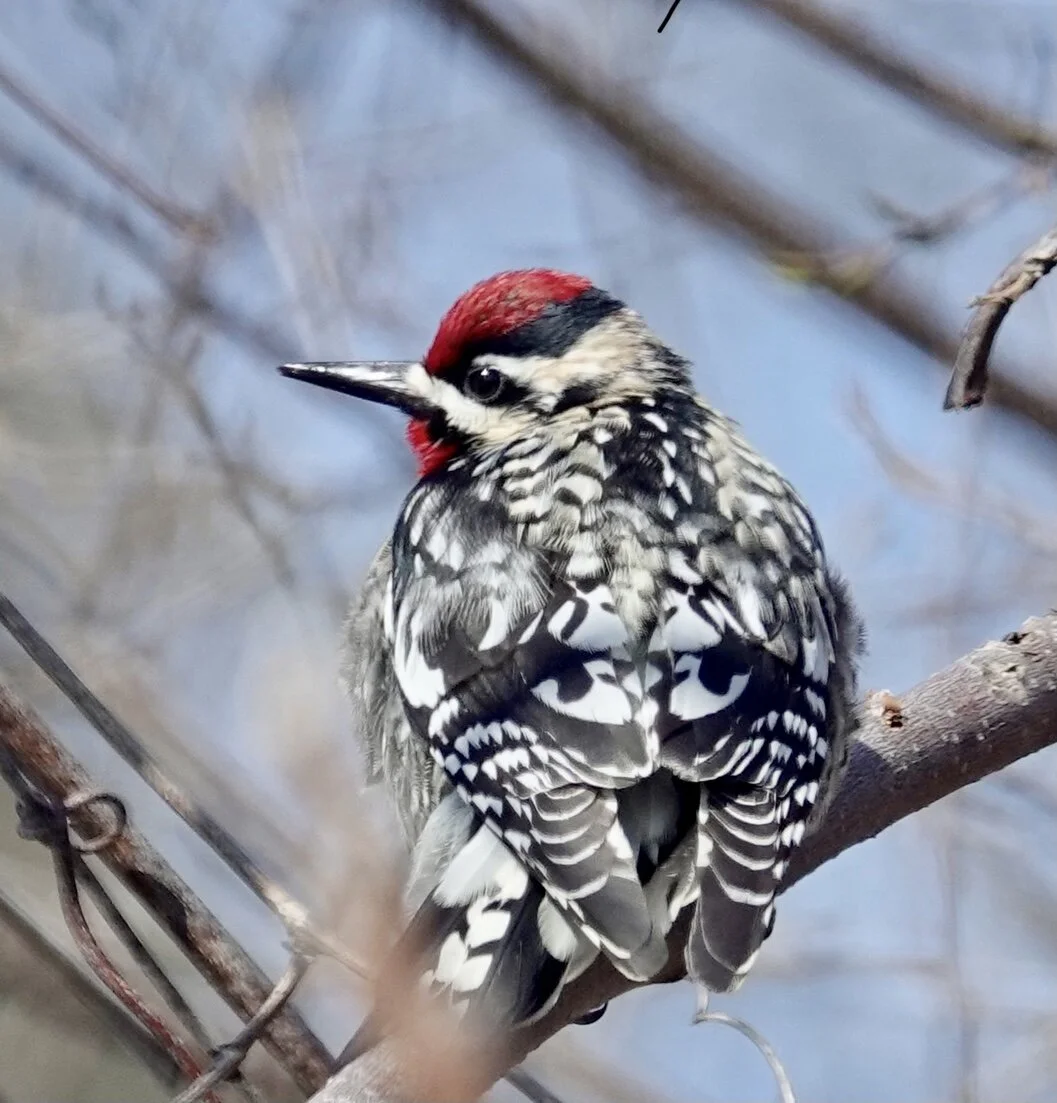
A yellow-bellied sapsucker searching for yellow-bellied sap. Photo by Al Batt
A yellow-bellied sapsucker searching for yellow-bellied sap. Photo by Al Batt
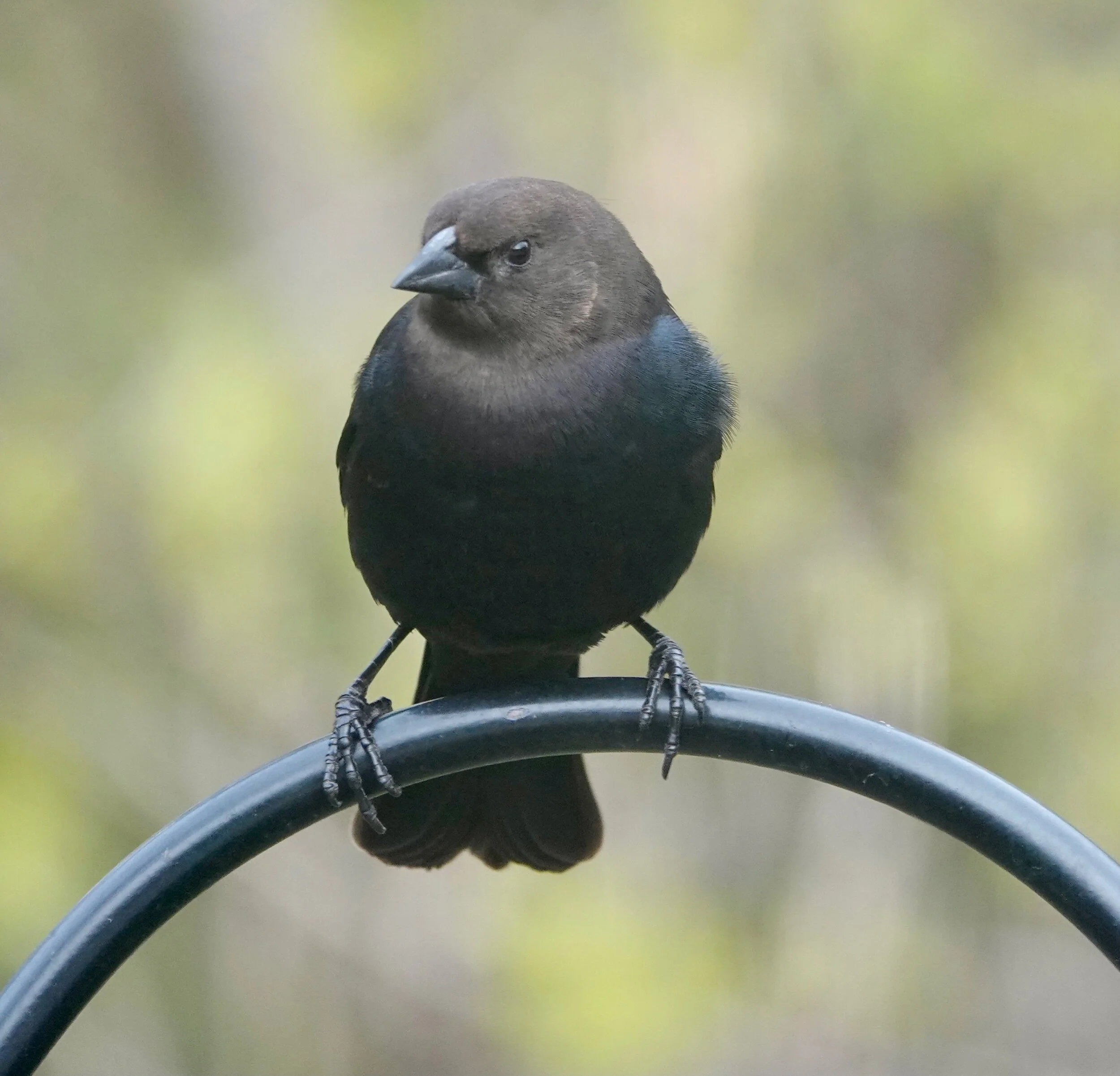
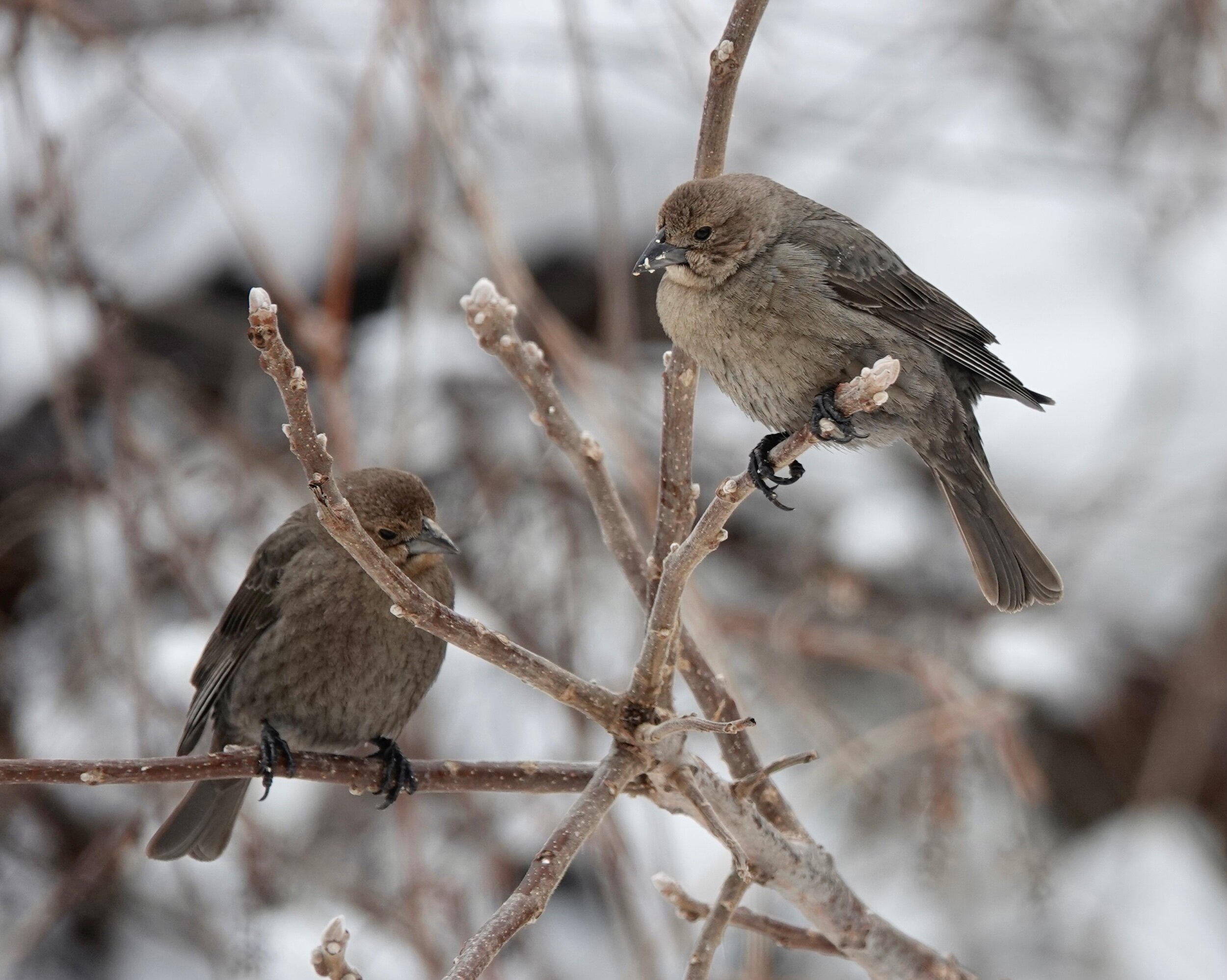
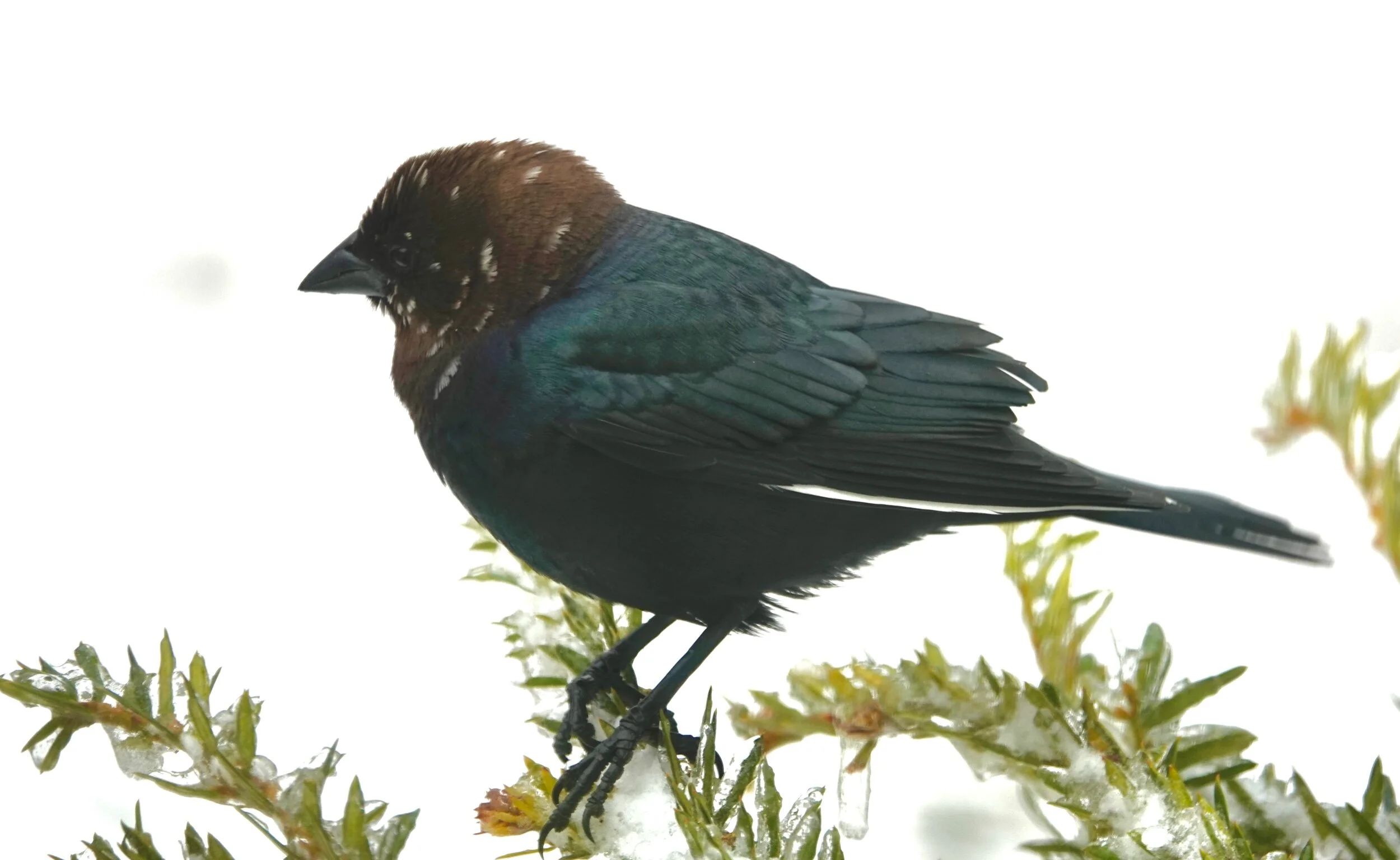
A female Brown-headed Cowbird lays as many as 40 eggs in the nests of other birds in a year. This male cowbird lays no eggs in the nests of other birds.

A female Brown-headed Cowbird lays as many as 40 eggs in the nests of other birds in a year. This male cowbird lays no eggs in the nests of other birds.

A female Brown-headed Cowbird lays as many as 40 eggs in the nests of other birds in a year. This male cowbird lays no eggs in the nests of other birds.

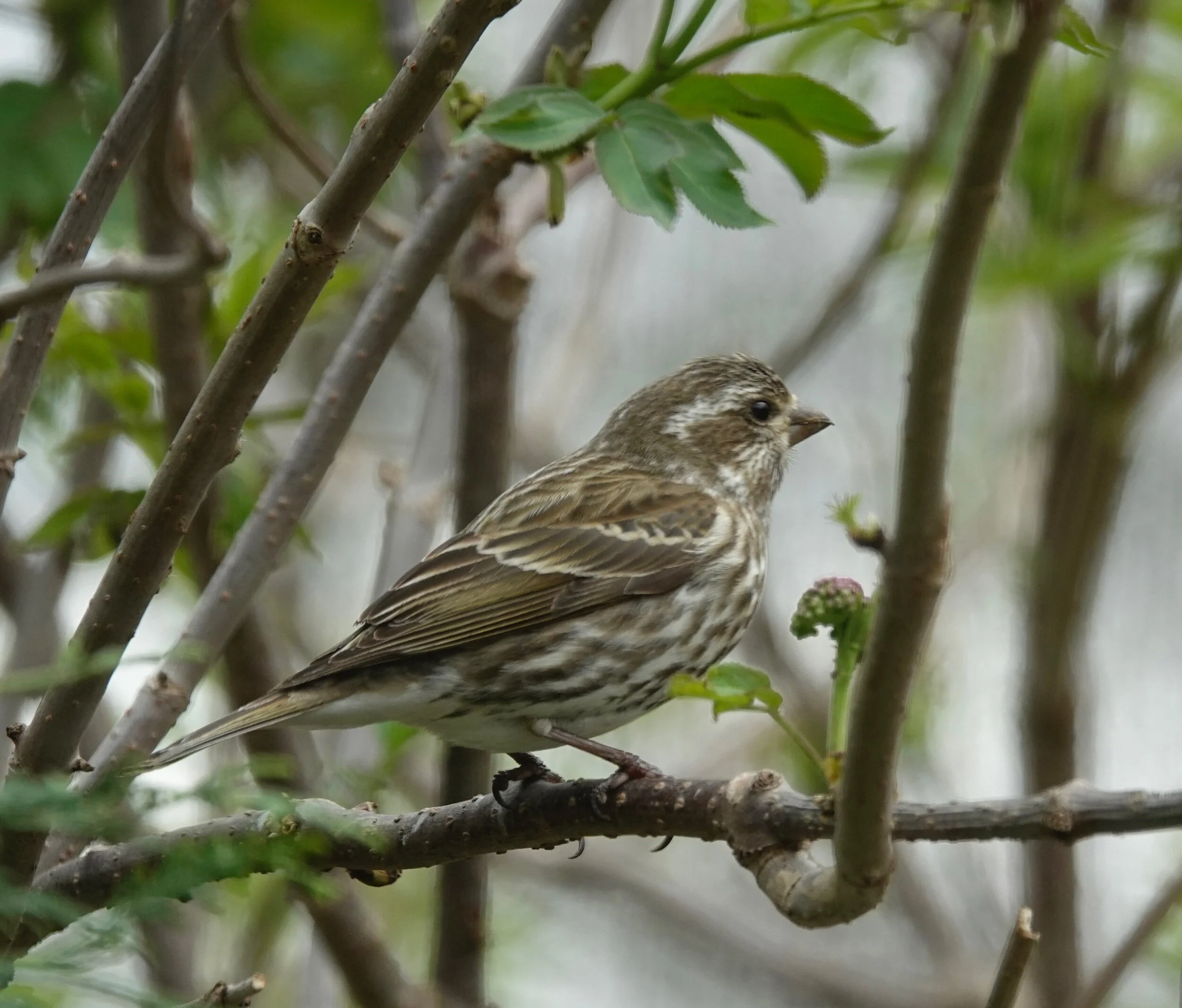
The female Purple Finch has a white streak over the eye. This is lacking on the female House Finch.

The female Purple Finch has a white streak over the eye. This is lacking on the female House Finch.

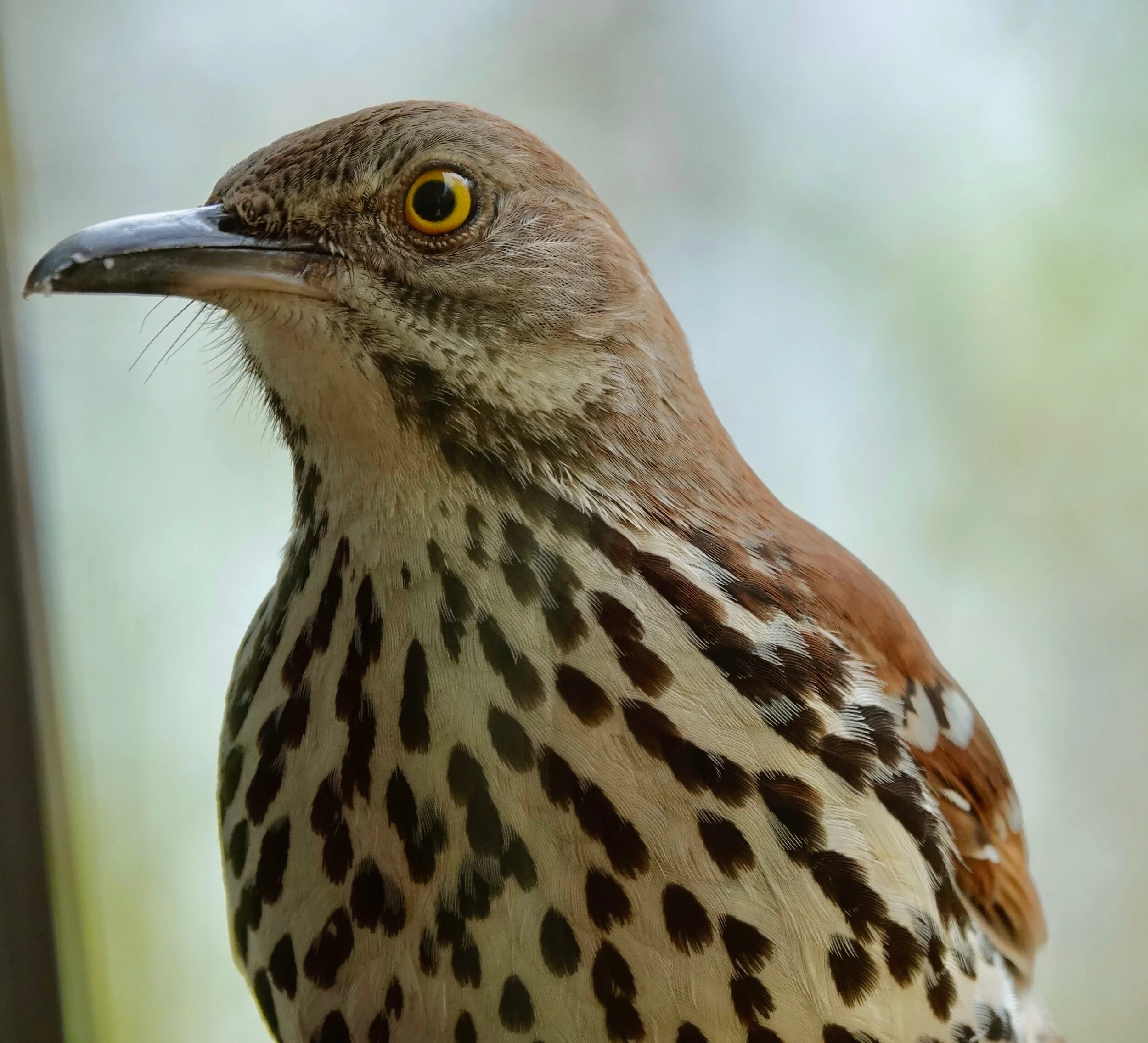
Brown Thrashers are mimics with more than 1,100 song types in their repertoires.

Brown Thrashers are mimics with more than 1,100 song types in their repertoires.

Flicka, flicka, flicka

Naturally
I walked to the intersection of birds and me, hoping to discover new things. There were songs in the trees. They made me want to join the band.
A great blue heron lumbered through the air. It’s about the size of a sandhill crane, each about 4 feet from tip of beak to tip of tail and they have similar wingspans. The heron weighs 5 pounds and a crane could be double that.
An insect hatch provides a food crop of caterpillars for upcoming warbler arrivals. I watched a brown creeper on the trunk of a tree, looking as if it were a piece of animated bark. A flicker called, “Flicka, flicka, flicka.” I didn’t grade any of the birds. I merely marked them present.
I watched a ring-billed gull looking as if it were landing on top of a hooded merganser on the water. The merganser dived out of the way. The gull repeated the behavior several times. I suspect it was an attempt to steal any fish the diving duck might have caught.
I saw a pair of trumpeter swans. I recalled a time I stood along a river on the foggiest of days. Two swans emerged from the fog, their white color enhanced by the contrast. They made no vocalizations as they flew over my head, but I heard their wings. I knew it was a cool experience because the hair on my arms stood up and a shiver ran up my spine. It was a glorious moment.
European starlings imitated meadowlarks, peewees, robins, cowbirds and house sparrows. I loved seeing horned larks paired up on nesting territories and a stunning brown thrasher, enjoyed the beautiful songs of house finches and western chorus frog practices. Confrontational red-winged blackbird males called into the cattails. I walked around the Mayo Clinic Campus in Rochester while watching a peregrine falcon flying overhead. It was a superb aerialist. Amazingly, I bumped into neither post nor person. The strong winds blew the nyjer seeds from a feeder. It was a thistleblower.
It’s we over me. Multi-colored Asian lady beetles overpowered me with their numbers.
Q&A
Donna Swenson of Waseca found wood duck eggs under a nest box and wondered what happened. Egg carrying by female ducks has been reported for several species, including wood ducks, but I’d think they’d carry them away. Raccoons are prime predators, and their paws are capable of remarkable things. Fishers are notable predators in parts of the state. Several bird species and squirrels damage eggs. Starlings try to usurp boxes.
“Can you tell a female blue jay from a male?” I can. The female is the one that lays the eggs. Male and female blue jays look the same. This is called sexual monomorphism. The males are slightly larger.
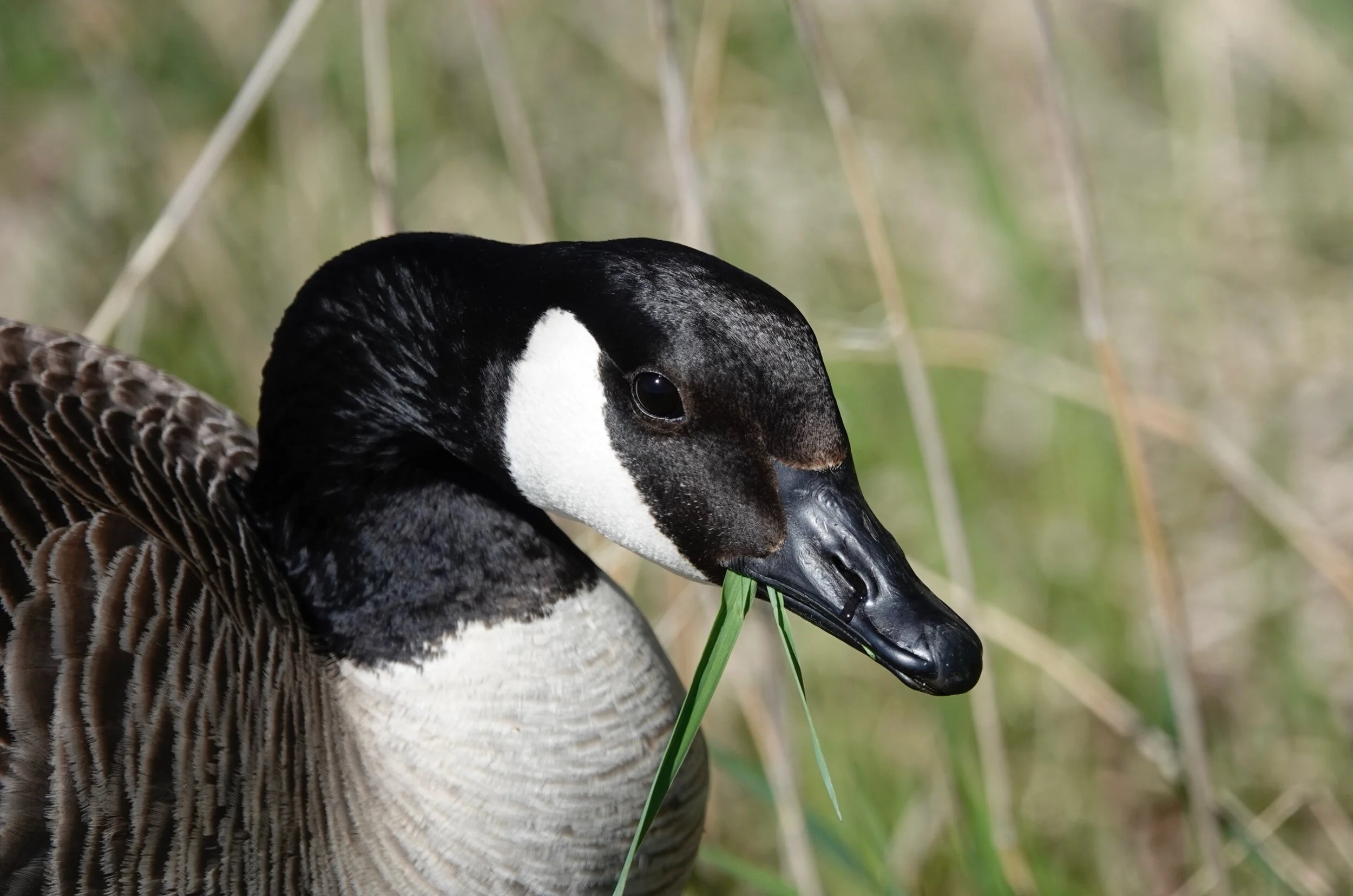
“Do geese poop in flight?” Geese are less likely to defecate when flying than when grazing on the ground, and they tend to discharge droppings upon takeoff. A strange incident occurred at Disneyland in 2017 when flying geese pooped on 17 people near the Sleeping Beauty Castle. Police and a hazmat crew responded. They found no crime had occurred.
“Why does it rain cats and dogs?” No one is certain. One suggestion is the phrase derives from mythology. Dogs were attendants to Odin, the god of storms, and sailors associated dogs with rain. Witches took the form of cats and rode the wind.
“How many bird species hybridize?” Of the 10,446 species, at least 16.4% do. Waterfowl are notorious for hybridizing.
“How many female birds sing?” A study at the University of Maryland Baltimore County found 70% of female birds sing.
The Book Club
“The iPhone Photography Book” by Scott Kelby aims to get professional images using the camera you always have with you. Here are a few of the book’s ideas. Keep the flash off, hold the camera still, silence the shutter by muting the phone and get close to the subject. Optical zoom is the good zoom. Tap the 2X lens at the bottom of the screen to get it. Pinch-and-zoom (digital zoom) is the bad zoom. Light makes good photos and direct sunlight can be problematic. Shoot outdoors when the sun is low or on cloudy days. A photo of three things is more likely to be liked than photos of two or four. Hold your phone high and aim down while you look up for selfies. Focus on the eyes in portraits and don’t leave too much space above the subject’s head, which should be moved forward and tilted down slightly. Shoot flowers from a low angle, not down at them. This 250-page book is filled with helpful hints.
Thanks for stopping by
“It's surprising how much memory is built around things unnoticed at the time.”—Barbara Kingsolver
“Conscience is the inner voice that warns us somebody may be looking.”―H. L. Mencken
Do good.

©Al Batt 2021

This great blue heron landed a lunker. Photo by Al Batt

This great blue heron landed a lunker. Photo by Al Batt

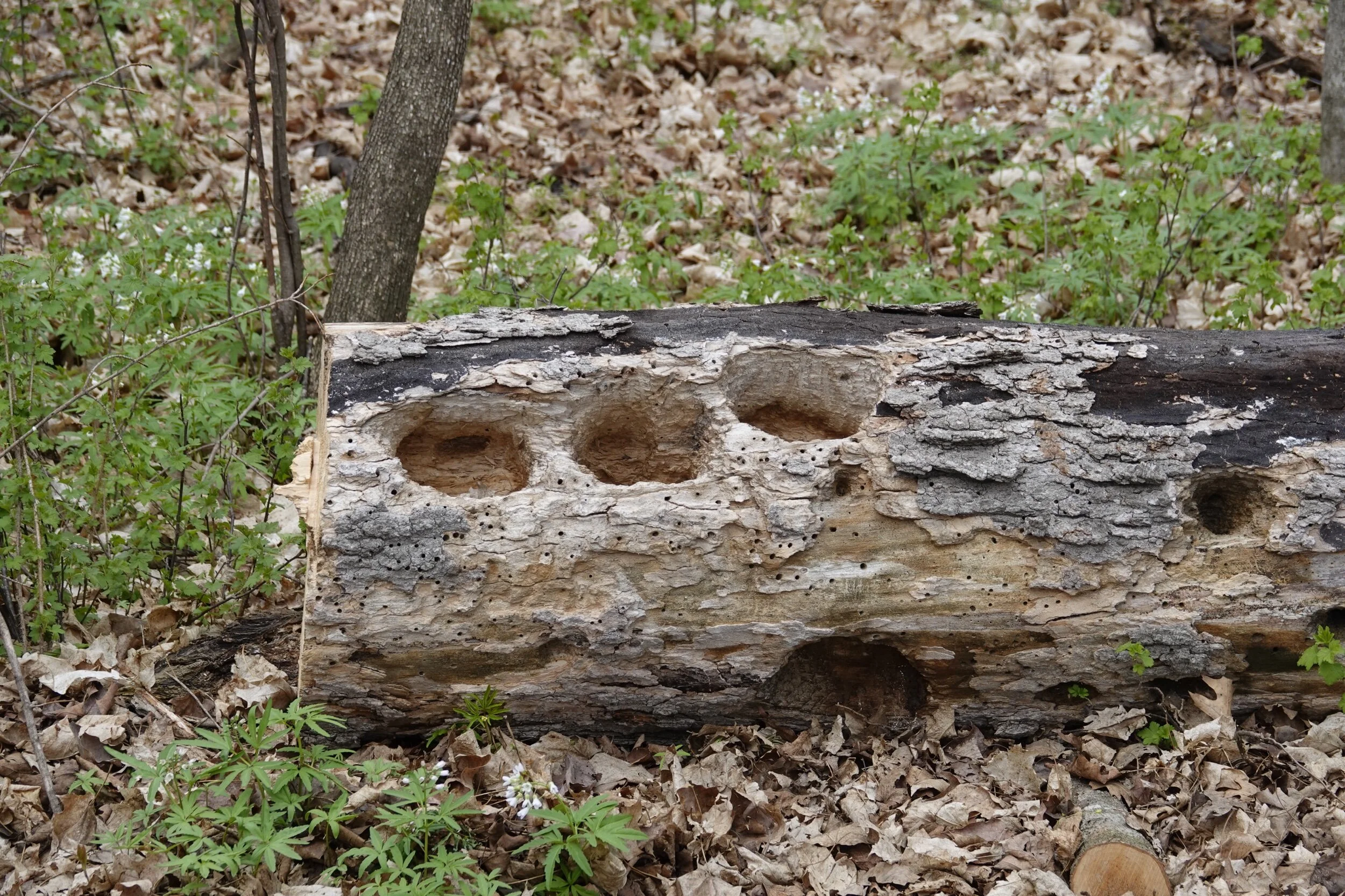
A woodworking project completed by a Pileated Woodpecker.

A woodworking project completed by a Pileated Woodpecker.

A woodworking project completed by a Pileated Woodpecker.

A woodworking project completed by a Pileated Woodpecker.

A woodworking project completed by a Pileated Woodpecker.

The yellowing of spring. Is a group of dandelions called a pride?

The yellowing of spring. Is a group of dandelions called a pride?

A Blue-winged Teal falls prey to a nap attack.

A Blue-winged Teal falls prey to a nap attack.

The red juice from the underground stem of Bloodroot was used by Native Americans as a dye and an insect repellent.

The red juice from the underground stem of Bloodroot was used by Native Americans as a dye and an insect repellent.

4-16-21 Al Batt-Talk of the Town with Lisa Kaye

What’s all the yellowing about? American Goldfinches are changing colors.

What’s all the yellowing about? American Goldfinches are changing colors.

What’s all the yellowing about? American Goldfinches are changing colors.

This is a cautionary tale.  They shut out the sunshine. One flock was purported to be 1 mile wide and 200 miles long. A flock could take three days to pass.  The Passenger Pigeon is extinct.

This is a cautionary tale.

They shut out the sunshine. One flock was purported to be 1 mile wide and 200 miles long. A flock could take three days to pass.

The Passenger Pigeon is extinct.

An estimated 136 million Passenger Pigeons nested over 850 square miles in Central Wisconsin in 1871. The last one shot in Wisconsin was in 1899. The last Passenger Pigeon, Martha, died in 1914.

An estimated 136 million Passenger Pigeons nested over 850 square miles in Central Wisconsin in 1871. The last one shot in Wisconsin was in 1899. The last Passenger Pigeon, Martha, died in 1914.

The mafia hypothesis and onion snow

Naturally
The day was a stunner.
I followed a chickadee and liked it at every opportunity. Each chickadee is a prime symbol of the natural world. As I filled the feeders, a chickadee landed on my arm. I tried not to breathe.
Starlings cornered the yard. I was under a flock of countless starlings one day. It was a murmuration. They zoomed over me and I heard this incredible whoosh that was both thrilling and mesmerizing. It caused the hair on my arms to stand. It was a splendid gift.
Research by biologist Mark Miller in 1929 found that the first robin songs began about 45 minutes before sunrise, but modern neighborhoods flooded in artificial light cause robins to sing much earlier.
A birder in Cleveland, Ohio, discovered a banded 28-year-old ring-billed gull, the oldest individual of that species on record. This proves that a proper diet isn’t always important to longevity.
A report from the US Fish and Wildlife Service said bald eagles have quadrupled in population since 2009.
"Mutual of Omaha’s Wild Kingdom" has returned to television. It will air as two original episodes back-to-back each Sunday in its original time slot of 7 p.m. An owner of a trail cam told me his device is occupied with the filming of skunks and raccoons. It's his own Wild Kingdom.
Gee Whiz
The first whooping crane hatched at the International Crane Foundation in Wisconsin has died of natural causes. The crane, named Gee Whiz, was 38 years, 9 months old. A whooping crane’s average life expectancy in captivity is about 25 years. The oldest crane in captivity died at age 46, according to the foundation. Gee Whiz fathered 178 cranes and was known for his nasty disposition. Whooping cranes are the tallest birds in North America. The population has grown from fewer than 20 birds in the mid-1940s to around 850 birds today. The Foundation in Baraboo, Wisconsin, opens May 1.
The mafia hypothesis
I listened to biologist Sarah Winnicki speak about her interesting brown-headed cowbird research on a podcast. She found eight cowbird eggs in one dickcissel nest. She added there is thought that the dickcissels feed their babies more than they do the cowbird babies. Sarah mentioned the mafia hypothesis, which suggests hosts accept parasitism to avoid retaliation against their nestlings.
The NCAA is for the birds
The NCAA men's and women's tournaments have teams with bird nicknames. Some have won national championships — Stanford Cardinal, Louisville Cardinals, Marquette Golden Eagles, South Carolina Gamecocks and Kansas Jayhawks. The Oregon Ducks won the first NCAA men's basketball national championship in 1939. Other avian handles include the Iowa Hawkeyes (few teams are named after the body parts of birds), the Creighton Bluejays (should be Blue Jays) and the Virginia Tech Hokies (a manufactured sobriquet) with HokieBird, a turkey mascot.
Q&A
"What do killdeer eat?" They feed primarily on invertebrates — earthworms, snails, crayfish, grasshoppers, beetles and aquatic insect larvae. They will eat seeds left in agricultural lands.
"Where do the sandhill cranes seen in Nebraska in March nest?" The most numerous and smallest subspecies there is the lesser sandhill crane. The Canadian (intermediate in size) sandhill crane makes up about 15% of the birds staging along the Platte River and the greater sandhill crane comprises about 5%. Greater sandhill cranes nest in the Great Lakes and the Interlake region of Manitoba. The Canadian subspecies breeds throughout central Canada from the Hudson Bay west to the Rocky Mountains. Lesser sandhill cranes nest across the northern reaches of Canada and Alaska, with about 80,000 of the birds crossing the Bering Strait to nest in eastern Siberia. An individual crane spends about 29 days along the Platte where 90% of its diet is corn. Cranes stopping in Nebraska generally winter in Texas, New Mexico and Mexico. They arrive in Nebraska in February with their population peaking about the third week of March. Large numbers remain through the first week of April.
"Do polar bears hibernate?" Black and brown bears hibernate. Polar bears don't and only pregnant polar bears den. The female may lower her heart rate, metabolism and breathing rate, but never to the point of true hibernation.
"What is onion snow?" Onion snow is a term originated by the Pennsylvania Dutch and refers to a snowfall that occurs after the spring onions have been planted or is an indication it’s time to plant onions.
Thanks for stopping by
"If only the sun-drenched celebrities are being noticed and worshiped, then our children are going to have a tough time seeing the value in the shadows, where the thinkers, probers, and scientists are keeping society together." — Rita Dove
"What a pity flowers can utter no sound! A singing rose, a whispering violet, a murmuring honeysuckle oh, what a rare and exquisite miracle would these be!" - Henry Ward Beecher
Do good.

©Al Batt 2021

Holy cowbird! These brown-headed cowbird females don’t build nests. They parasitize the nests of over 220 other bird species. Photo by Al Batt

Holy cowbird! These brown-headed cowbird females don’t build nests. They parasitize the nests of over 220 other bird species. Photo by Al Batt

I walked while watching a Peregrine Falcon flying overhead. Somehow, I managed to avoid walking into either post or person.

I walked while watching a Peregrine Falcon flying overhead. Somehow, I managed to avoid walking into either post or person.

I walked while watching a Peregrine Falcon flying overhead. Somehow, I managed to avoid walking into either post or person.

I walked while watching a Peregrine Falcon flying overhead. Somehow, I managed to avoid walking into either post or person.

I walked while watching a Peregrine Falcon flying overhead. Somehow, I managed to avoid walking into either post or person.

I walked while watching a Peregrine Falcon flying overhead. Somehow, I managed to avoid walking into either post or person.

I walked while watching a Peregrine Falcon flying overhead. Somehow, I managed to avoid walking into either post or person.

How patients at the Mayo Clinic mark their territories.

How patients at the Mayo Clinic mark their territories.

A discount calendar.

A discount calendar.

IMG_1772.jpeg
IMG_1771.jpeg
Socks and shirt for the dudes.

Socks and shirt for the dudes.

Wobbly squirrel

Naturally
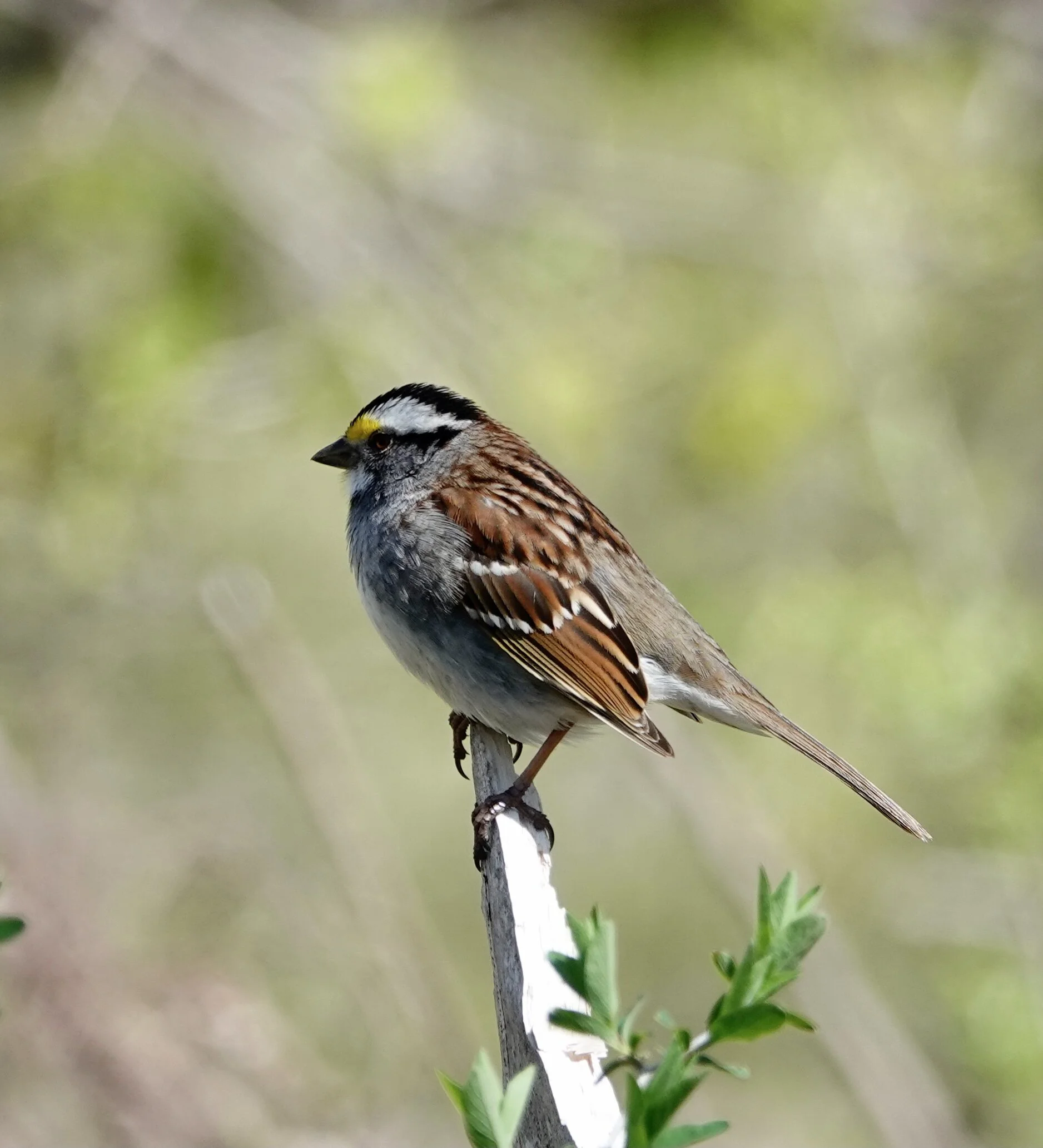
Two of my favorite birds are the fox sparrow I'm seeing now and the brown thrasher that I'll be seeing soon. I'm thrilled by their rufous-brown colors. White-throated and song sparrows decorate my yard with their presence.
I saw a small flock of ring-billed gulls in a parking lot. They're called seagulls, but that name is colloquial and not scientific. They could be more rightly called parking-lot gulls, landfill gulls or french-fry gulls. This gathering of gulls enjoyed fries.
A flock of birds is one enormous eye. And it looks in all directions. A murder of crows flew over a farm field. Their name is one of the most recognized collective nouns for birds. I enjoy seeing horned larks on roadsides, which gives me an opportunity to declare, "An exultation of larks." Other interesting group names are a murmuration of starlings, an unkindness of ravens, a parliament of owls (rarely seen in groups other than at nests) and a pitying of doves. I'm not sure of the legitimacy of the dove one. It's a book title. A murder of crows is the name of books, movies, TV shows, plays, albums and bands. An unkindness of ravens is the title of a novel.
There are many names for the full moon in March. The sugar moon or sap moon because March marks the time of year when the sap of sugar maple trees flows and the crust moon because of the crusty snow that results from thawing during the day and refreezing at night. The crow moon because of the cawing of crows at the end of winter and the worm moon because March is the time of year in which earthworms appear in the soil as the ground thaws.
Q&A
"When do crows nest in Minnesota?" They build a bulky bowl of dead twigs high in a tree. Crow nests are large, measuring 1.5 feet or more in diameter and 8 or more inches high, but well concealed. Crows lay 3-7 eggs. Nest construction begins in early March and could continue through June. I've seen active nests in April, May and June. It takes 1-2 weeks to finish a nest with a lifespan of about 9-10 weeks including 1-2 weeks building, 6 days of egg-laying, 20 days of incubating and 4 weeks (30-40 days) of nestlings. Crows use a nest once and fledge one brood a year. They will build on top of an old nest in areas where nest trees are sparse.
"Why do worms come to the surface when it rains?" In my childhood, I thought they did so to keep from drowning when water filled their burrows, but they can survive for a long time submerged in water. Scientists have theories about why worms engage in this behavior. One is that coming above ground when it rains allows worm tourism. Traveling across dry ground can be difficult for them. Worms might move toward the surface to escape a mole and move the same way when it rains, mistaking the vibrations caused by the rain for predators.
"How many eggs does a pheasant lay and how long does she sit on them?" A ring-necked pheasant hen lays 7-15 eggs and incubates them for 23-28 days, with most egg laying done in April and May.
"There is a wobbly squirrel in my yard. Is it injured?" Possibly, but it's more likely the
victim of raccoon roundworm, a disease spread by raccoon feces that can cause neurological problems. The roundworm is found in the intestines of raccoons and their eggs are shed in scat. If these eggs are ingested by an animal eating seeds, it can damage its brain. This can affect mice, woodchucks, rabbits, birds, chipmunks, ground squirrels, foxes, porcupines, dogs and squirrels. The most common symptoms exhibited by squirrels affected by this disease are balance problems, a strange lopsided stance and staggering. An infected squirrel might demonstrate a lack of coordination, an inability to walk or climb properly, and little fear of humans. It's rare in humans, but keep pets and children away from areas with raccoon fecal contamination (evidence of latrines).
The Book Club
I read "Walking my Dog, Jane" by Ned Rozell. It's about travel and a dog. What could be better? The author said, "I took my dog for a walk last spring and we didn't come home until fall." Ned and Jane, a chocolate Lab that had seen him through "three pickup trucks and seven girlfriends," walked 800 miles along the trans-Alaska pipeline beginning at Valdez and ending at Prudhoe Bay on the Arctic Ocean.
Thanks for stopping by
"Spring is when you feel like whistling, even with a shoe full of slush." — Doug Larson
"Too often I would hear men boast of the miles covered that day, rarely of what they had seen." — Louis L'Amour
Do good.

©Al Batt 2021

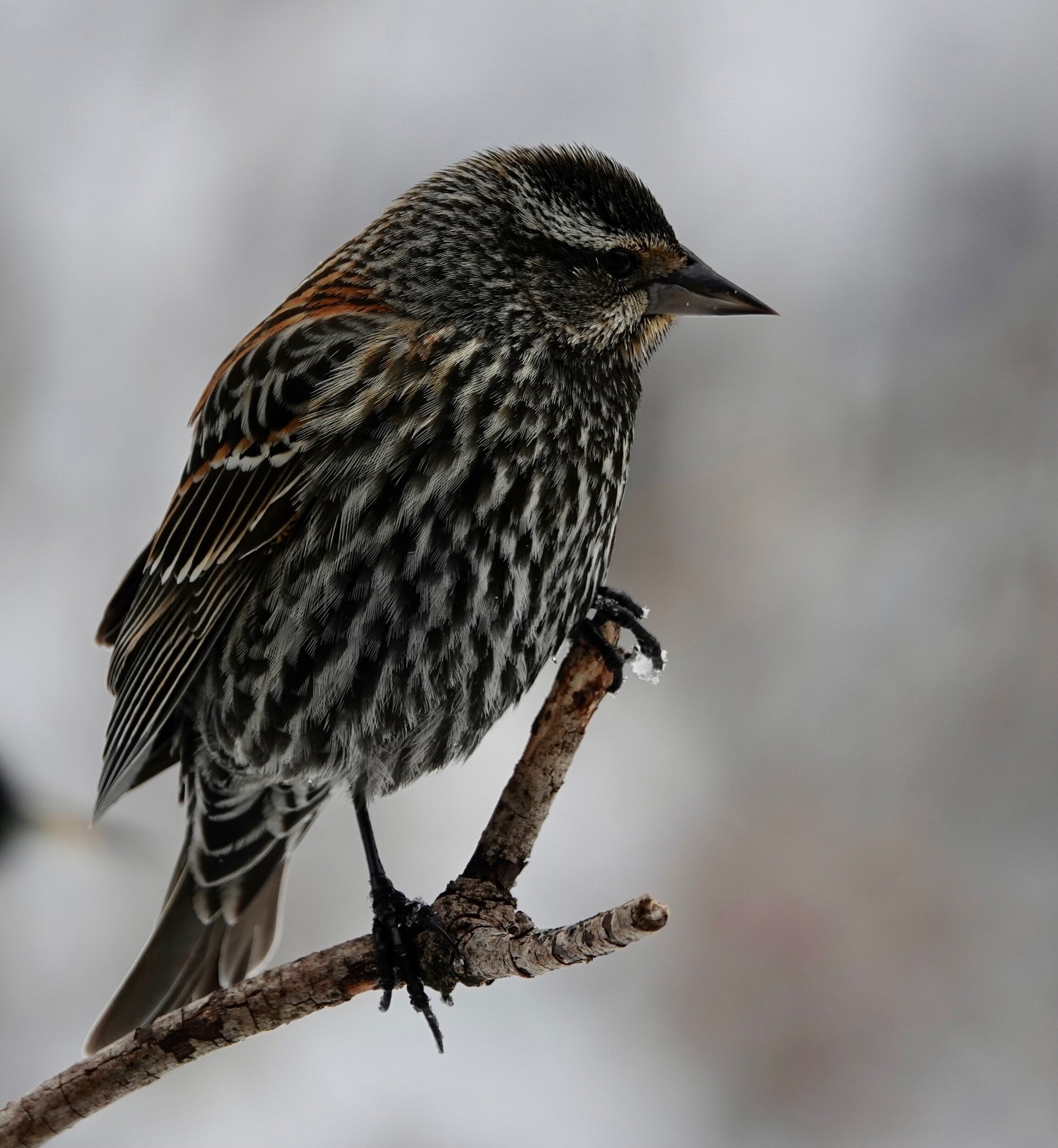
Female Red-winged Blackbird photo by Al Batt.

Female Red-winged Blackbird photo by Al Batt.

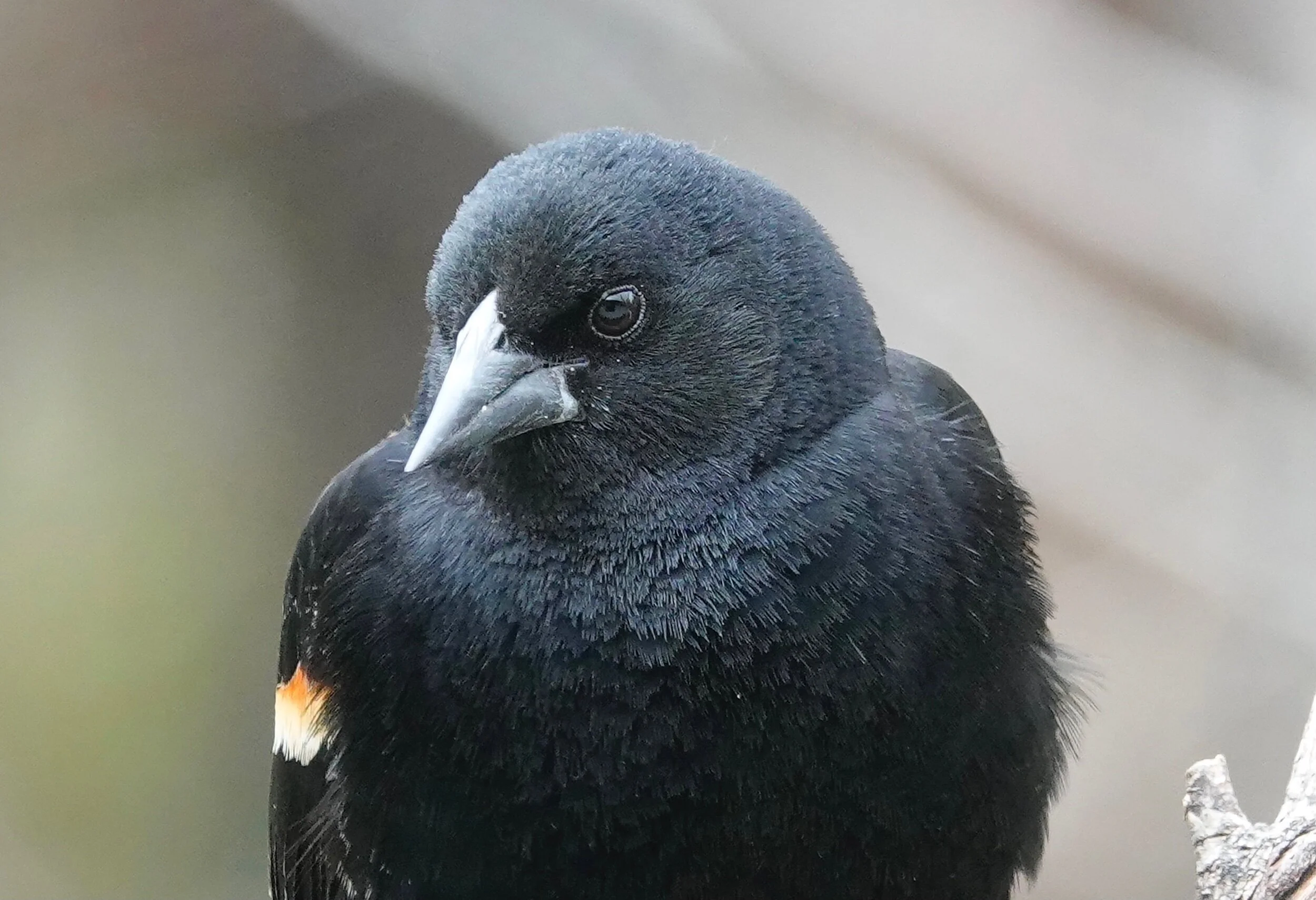
Male Red-winged Blackbird photo by Al Batt.

Male Red-winged Blackbird photo by Al Batt.