
Naturally
Never trust anyone who is too busy to look out a window at a bird. A window is a premium channel. Windows are windows to wonder. I watched crows and blue jays. Both species were up to something. I knew because both species are always up to something. They are corvids, which are intelligent, clever and curious birds. The Corvidae family includes crows, jays, magpies, choughs, nutcrackers, jackdaws, rooks and ravens. The collective noun for blue jays is a scold, a group of crows is a murder, it is an unkindness of ravens, a mischief or tiding of magpies, and a suite or jar of nutcrackers. In England, I mingled with other corvids—a chattering of jackdaws, a parliament of rooks and a chatter of choughs.
The fall shuffle consists of varied seasonal movements
In the fall, turkeys continue to walk farm fields in search of dropped corn, but many of the big birds shift to a menu of calorie-rich acorns. Flocks may move several miles to find acorn-rich environments. Hen turkeys live in flocks with their female offspring. Several hens and their offspring often merge into a single flock. Hens that weren’t successful in hatching chicks may form smaller flocks with other lone hens. Male turkeys (toms) form their own flocks, and, depending on population, these flocks might be segregated by age, with young male turkeys, commonly called jakes, banding together. Moles tunnel deeper into the ground to escape the frozen soil. Chipmunks hoard food for their winter torpor. Reptiles and amphibians seek suitable places to enter brumation. Brumation and hibernation are both states of dormancy used for survival, but brumation is for cold-blooded animals (reptiles and amphibians), while hibernation is for warm-blooded animals (mammals). Black bears chow down on acorns to prepare for hibernation. Young owls and other raptors may be chased off a territory by adults, including their parents. Bats either migrate or hibernate. Mice enter houses to keep us company. Squirrels gather food. Raccoons find dens. More than half of the over 650 species of North American breeding birds are migratory. They go where the food is. Immature ruffed grouse disperse. Starlings form large flocks or murmurations and congregate at dusk in trees, marshes or buildings, making a lot of noise before roosting. The birds find safety in numbers. More eyes help find food, upgrade protection from the elements and reduce predator risk. Crows gather in large communal roosts for the winter, often in urban areas. The roosts provide warmth, protection from predators, and food sources. Our feeder birds move about to take advantage of available food, suitable habitat and adequate shelter. Humans go to Texas, Arizona and Florida.
I’m sure it wasn’t an owl playing a saxophone
I listened to a stuttering serenade of a great horned owl before the clock struck midnight. I wonder what species of an owl Hoots the Owl is. Hoots was a jazz saxophone-playing owl on “Sesame Street.” His voice was modeled on Louis Armstrong’s, his band was the Owl-Stars, and they played at a jazz club called Birdland. I’ve heard the great horned owl and the barred owl called hoot owls, but Hoots wore a vest, something neither the great horned owl nor the barred owl does. One thing I can say for sure is the owl in my yard wasn’t playing a saxophone. Owls are zygodactyl, which means their feet have two forward-facing toes and two backward-facing toes. Owls can pivot one of their back toes forward to help them grip and walk.
Q&A
“You told me that most of the robins I see in the winter are males. Why is that?” Robins are a migratory species, but there is significant variation in where individuals spend the winter. Males are more likely to remain in the north than the females because a male's primary job in the spring is to find and defend a territory. It’s like a gold rush, and each male wants to be the first to make a claim.
“Do cedar waxwings nest in colonies?” Flocks break into pairs to nest, but they often nest in small colonies, with maybe a dozen pairs building nests in a few acres. The nesting birds may forage for food together. The breeding season for waxwings is late in the year, a reflection of their fruit-eating habits. Cedar waxwings are among the last birds to nest and may not start building nests until late June or even July.
Thanks for stopping by
“I realized that If I had to choose, I would rather have birds than airplanes. In wilderness I sense the miracle of life, and behind it our scientific accomplishments fade to trivia. Real freedom lies in wildness, not in civilization.”―Charles Lindbergh.
“It is perhaps a more fortunate destiny to have a taste for collecting shells than to be born a millionaire.”—Robert Louis Stevenson.
Do good.
©️Al Batt 2025
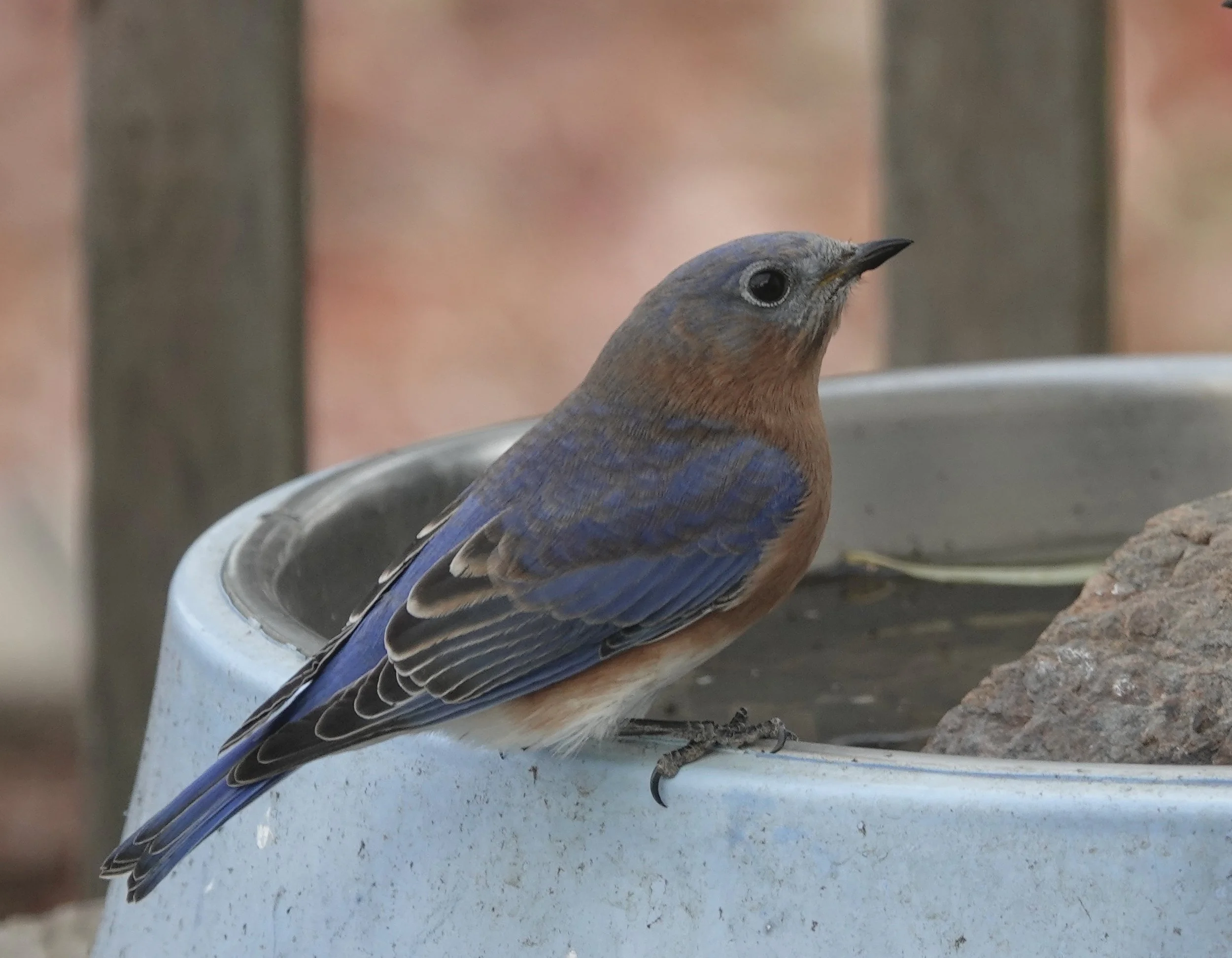
“As long as there are bluebirds, there will be miracles and a way to find happiness.”– Shirl Brunnel.
“How the waiting countryside thrills with joy when Bluebird brings us the first word of returning spring. Reflecting heaven from his back and the ground from his breast, he floats between sky and earth like the winged voice of hope.”– W. L. Dawson. Eastern bluebird photo by Al Batt. If a bluebird you see, happiness will be.

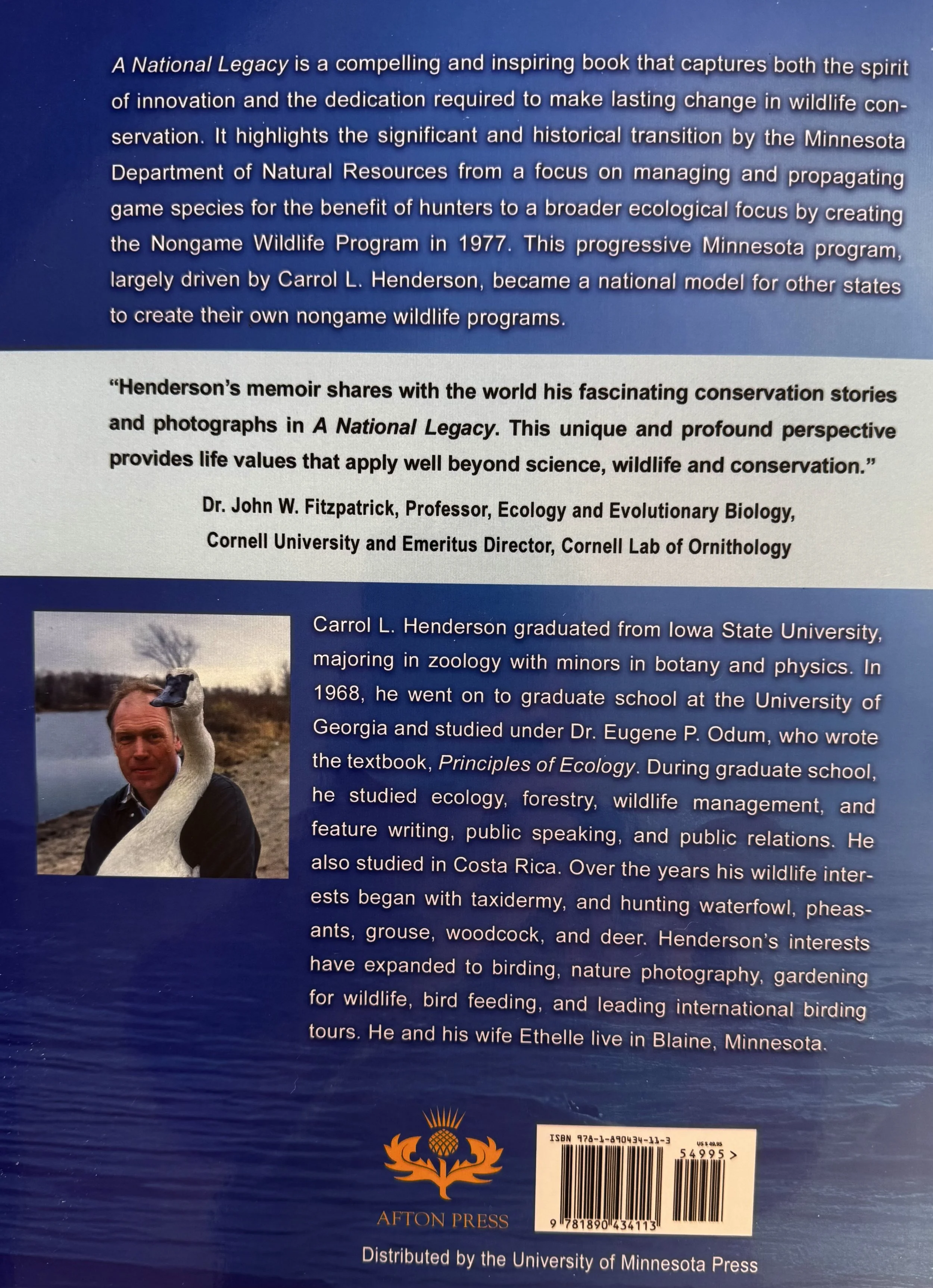
I enjoyed a publication titled “A National Legacy: Fifty Years of Nongame Wildlife Conservation in Minnesota,” an excellent book filled with touching stories and inspiring accounts written by a remarkable man, who is one of my heroes. For over 40 years, Carrol was the director of the Nongame Wildlife Program for the Minnesota DNR. He has authored a number of books and has been honored with awards from the Nature Conservancy, the U.S. Fish and Wildlife Service, the Minnesota Ornithologists’ Union, and The Garden Club of America.