Naturally
The snow muffled nearly every sound except the voice of the wind.
I watched a fox squirrel, with its face covered in snow, eat bright red thornapples, the berries of the hawthorn tree in our yard.
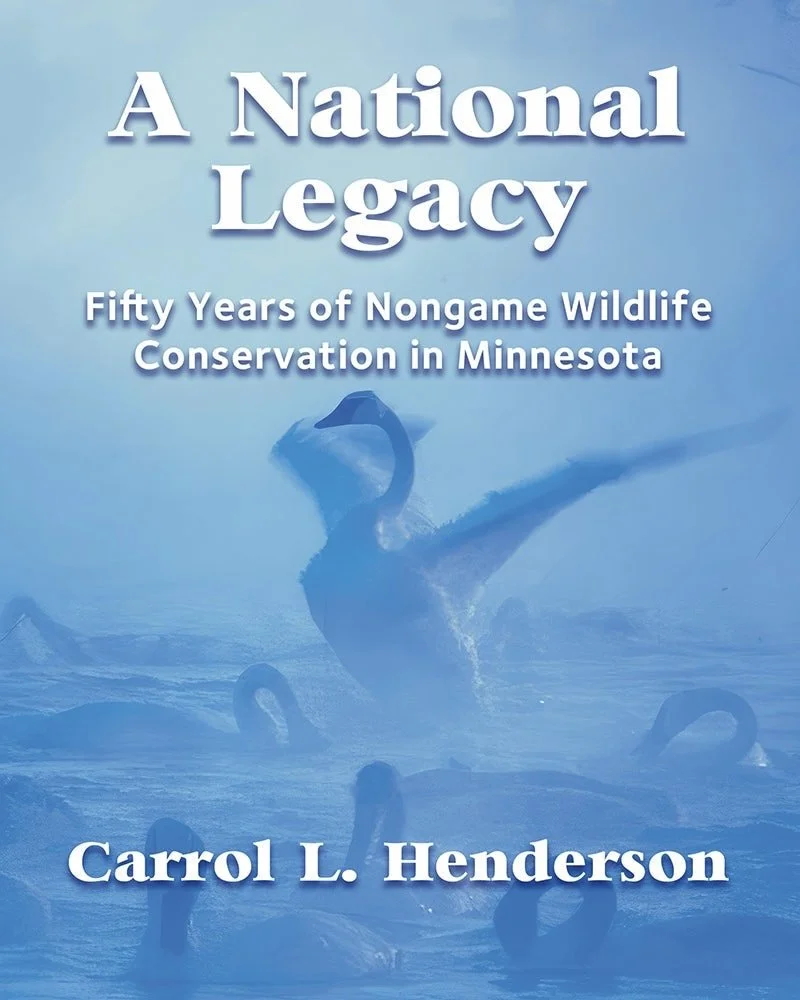
I enjoyed a publication titled “A National Legacy: Fifty Years of Nongame Wildlife Conservation in Minnesota,” an excellent book filled with touching stories and inspiring accounts written by a remarkable man, who is one of my heroes. For over 40 years, Carrol was the director of the Nongame Wildlife Program for the Minnesota DNR. He has authored a number of books and has been honored with awards from the Nature Conservancy, the U.S. Fish and Wildlife Service, the Minnesota Ornithologists’ Union, and The Garden Club of America.
My good neighbor Jared Knutson spotted a short-eared owl in late November. Short-eared owls are a special concern species in Minnesota due to a significant population decline and are found primarily in the state's grasslands. They nest in the northwestern part of the state, and can be seen in the southern half of Minnesota during winter and migration. This owl has small ear (feather) tufts that are barely noticeable. In winter, they roost communally in stands of trees near suitable hunting fields, where they feed on voles and other small rodents.
Costa Rica is a mecca for sloths like me
I spent a lot of time watching sloths. Birds of a feather flock together. Sloth is one of the seven deadly sins, and the two kinds of sloths in Costa Rica, the two-toed and the three-toed, are nobody’s deadly sin. No sloth has ever medaled in the Olympics because they are among the slowest-moving mammals in the world. On average, a sloth moves 41 yards per day. Sloths are folivores, meaning they consume leaves, twigs and buds exclusively, and they have four-chambered stomachs similar to the digestive systems of ruminants such as domestic cattle. When it needs to, a sloth creeps down a tree, and once on the ground, it digs a hole, defecates in it, and covers it with leaf litter. Then, it’s a sluggish climb back up the tree. Sloths appear mottled green due to algae growing in their fur. Sloths sleep in the trees and reportedly snooze 15-20 hours per day. It was believed that the sloths slept so much because they couldn't get Netflix in the trees, but studies have shown that sloths sleep only 8-10 hours a day.
Q&A
Eric Annexstad of St. Peter said he was the only one around for miles while finishing up his fall tillage when gulls showed up from nowhere. He wondered where they had come from and how they had found him. Gulls find farm fields by using a combination of senses and learned behaviors. Gulls have keen eyesight, good hearing and a powerful sense of smell. They can spot tractors from afar, they hear the distinct sounds of farm machinery at work, and they can detect the scent of disturbed soil that unearths worms, grubs, mice, insects and other food. Gulls are intelligent and observant, have excellent memories for farms and fields, and fly to fields offering promising activities. The gulls could be flying high in the sky when they spot one of their favorite tractors moving about. Gulls are opportunistic foragers and are attracted to parking lots and landfills where they can find discarded food, mice and insects. Gulls make themselves at home around humans. A few years ago, annoyed at gulls pestering its patrons, a restaurant in Perth, Australia, armed each customer's table with a water pistol to stop the cheeky birds from ruining the waterfront dining experience. The gulls congregated there, hoping that the patrons might toss them a bite of food or that the gulls could scavenge leftovers.
Lisa Kaye of Mankato asked, “Do all birds preen?” I believe they do, but they use different methods. Preening is a maintenance behavior. The uropygial gland, also called the preen gland or oil gland, is a structure at the base of a bird’s tail near the pygostyle, a fleshy structure commonly called the “pope’s nose” or “parson’s nose” by those carving a chicken or turkey. The uropygial gland produces oils that a bird can squeeze to get the oil it applies to its feathers. Some birds don’t possess a uropygial gland, and these include ostriches, emus, kiwis, rheas, cassowaries, pigeons, doves, some parrots and most woodpeckers. Instead of using preen oil, these birds maintain their feathers through methods like dust-bathing or special powder down feathers that disintegrate into a talc-like, waxy powder.
Thanks for stopping by
“Destroying species is like tearing pages out of an unread book, written in a language humans hardly know how to read, about the place where they live.”—Holmes Rolston III.
If I could save just one world, it would be this one.—me.
Do good.
©️Al Batt 2025
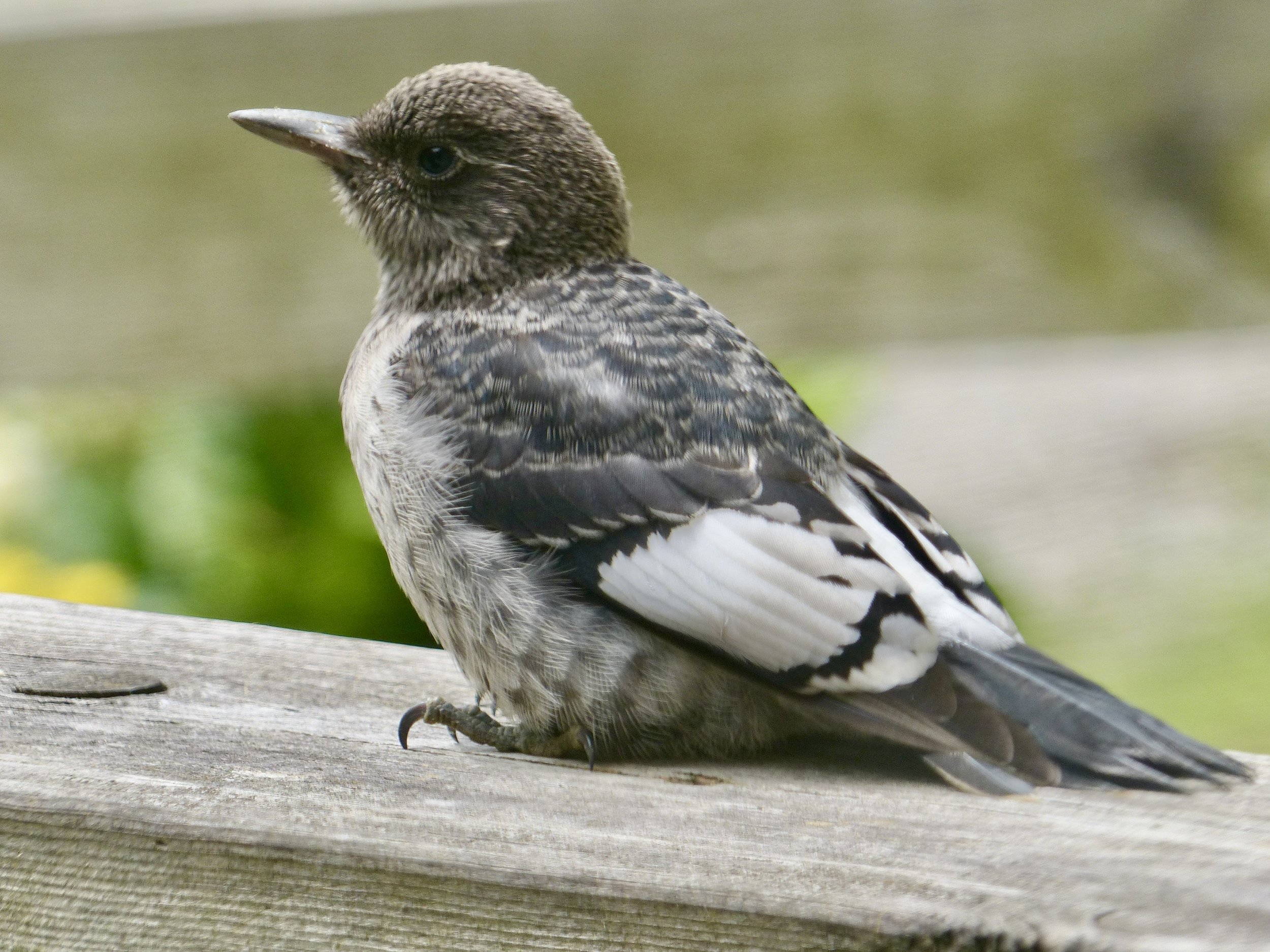
Vince Ciangiola spotted an immature red-headed woodpecker and asked when it’d get a red head. It’ll get that gradually during its first winter, but may not reach complete adult plumage until it’s over a year old. Young red-headed woodpeckers have a brown head, and a brown and blackish-brown plumage, which molts into the red, white and black adult coloration that earned the bird the “flying checkerboard,” “flag bird” and “jellycoat” nicknames. Photo by Al Batt.