
Naturally
It was cold, and it was colder. The birds were staying busy being birds. A good friend named Harvey Benson from Harmony reported his bird feeders were being swamped after a generous dumping of snow. He claimed to know only three kinds of birds: blue jays, cardinals and all the rest that he lumped under the name “birds.” Harvey is proof that you don’t have to identify birds to enjoy them. He loves to watch and feed his avian amigos. Birds cast a magic spell and change the way we see everything.
It was -12 degrees and I was wearing the perfect number of layers of clothing as I chugged along past some evergreen trees ribboned with snow in the yard. The needles can help if the trees refuse to identify themselves. The pine needles grow in bundles of two or more, whereas spruce needles are attached to a branch individually. I clicked the heels of my ruby slippers, but it was still -12 degrees. I continued to chug along.
That temperature isn’t conducive to spotting hummingbirds, but I’m grateful they keep me company when the temperature is more civilized. In eastern North America, the ruby-throated hummingbird is not only the star of the hummingbird show, it’s the only one with a part. The rubythroats are the only species of hummingbird known to breed east of the Mississippi River. Thinking of them warms me. I have peered at hummingbirds in Costa Rica, which is home to 53 or 54 species of hummingbirds. I’m glad my yard has at least one species.
Q&A
“How important are pollinators to our crops?” Very important. Grains like corn, wheat and rice are wind-pollinated and don’t rely on insect pollination. Most soybean varieties self-pollinate by design, but pollinating insects can improve pollination. Wheat and oats are primarily self-pollinated. Approximately 35% of the world's food crops rely on pollinators. Somewhere between 75% and 95% of all flowering plants need pollinators.
“How many different kinds of tree squirrels are there in Minnesota and is the black squirrel a separate species?” There are five kinds of squirrels: eastern gray, American red (pine squirrel, chickaree, boomer), fox, northern flying and southern flying. The black squirrels I see are gray squirrels even if they’re not gray. A few years back, the scientific journal BMC Evolutionary Biology had an article by British biologists about their discovery that the gene variant causing black fur (melanism) in eastern gray squirrels is identical to the gene variant causing melanism in fox squirrels. The authors believed that interbreeding between fox and gray squirrels allowed melanism to transfer to the gray squirrel population. An evolutionary geneticist reported that black-coated animals had an 18% lower heat loss and a 20% lower metabolic rate, which means a black-colored squirrel has a better chance of survival than a gray-colored squirrel during our winters. Black fur may offer a thermal advantage, but gray squirrels vary from all gray to reddish to bicolored to all black. A gray squirrel can have white ear tufts during the winter. A white squirrel that isn’t an albino is a variant of the gray squirrel. The fox squirrel is typically brown-grey to brown-yellow, with a brownish-orange underside.
“How many times does a woodpecker hit a tree with its bill?” Research published in the Journal of Experimental Biology found that woodpeckers can strike hundreds of times per minute at forces 20 to 30 times their body weights. Downy woodpeckers can strike and exhale as many as 13 times per second, with an inhalation between each blow. The data showed that the hip flexor and front neck muscles play a major role in propelling the beak forward and generating the force of impact. Supporting muscles at the base of the skull and along the neck brace the bird’s head, while the abdominal muscles stabilize the torso. Specialized tail muscles flex before impact and act as an anchor, stabilizing the bird’s hip and providing a solid fulcrum against the tree trunk.
“Where did the name ‘squirrel’ come from?” The ubiquitous squirrel, busily rushing about our yards, gardens, parks and cities, and swiping seeds from our bird feeders because they think they are squirrel feeders, has had its English name since the 14th century. The word squirrel is Greek in origin, coming from skiouros, from skia, meaning "shadow," and from oura, meaning "tail." The ancient Greek squirrel sat as our modern-day Minnesota squirrel does with its bushy tail raised against its back and over its head, casting shade as an umbrella might.
Thanks for stopping by
“Nature tops the list of potent tranquilizers and stress reducers. The mere sound of moving water has been shown to lower blood pressure.”—Patch Adams.
“It isn't the mountains ahead to climb that wear you out, it's the pebble in your shoe.”—Muhammad Ali.
Do good.
©️Al Batt 2025
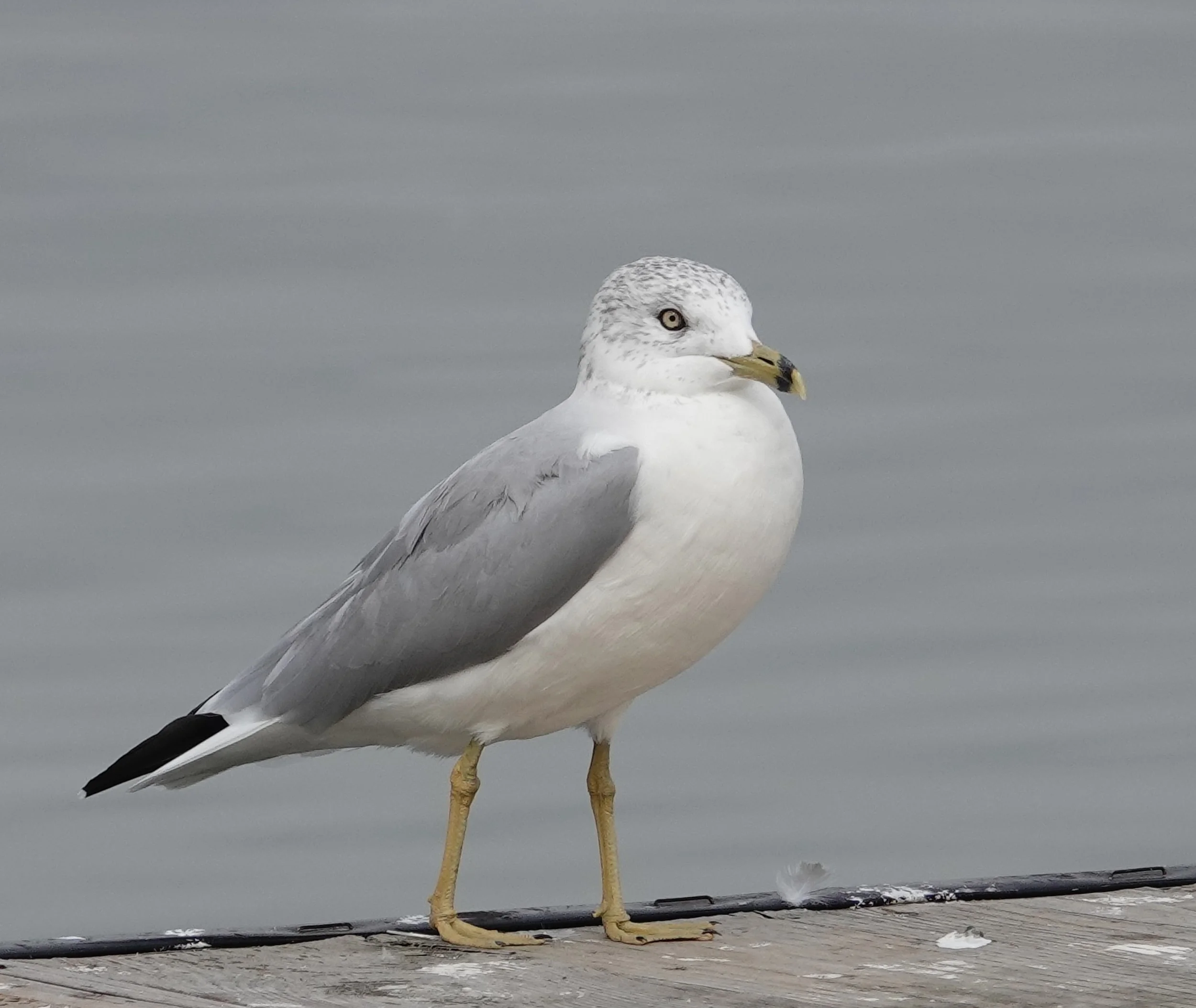
Gulls are worm charmers that perform a “rain dance” or a “worm dance,” wherein they stomp on the ground to hunt worms. Their foot taps mimic the vibrations of moles hunting worms underground, and/or the sounds and vibrations of raindrops, which entice earthworms into coming to the surface where the gulls can take them out for lunch. Photo of ring-billed gull by Al Batt.