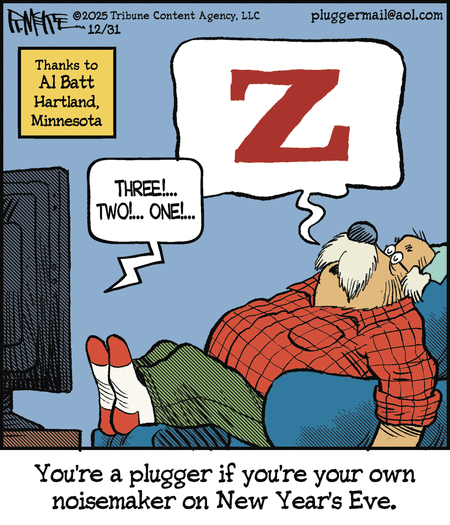
Naturally
I could do nothing about the weather, so I warmed myself by ringing the bells for the Salvation Army. I love it when that happens.
Leonard Cohen sang, “Ring the bells that still can ring. Forget your perfect offering. There is a crack, a crack in everything. That's how the light gets in.”
Christmas is good company. So are the birds of Christmas. On my walk from the car to my destination to ring the bells, I saw starlings foraging along the edge of the parking lot. Their bills were bright yellow in breeding season, with the base of the lower mandible blue in males and pink in females. I’m not making that up. However, research suggests that the blue/pink indicators are not definitive. More’s the pity. A starling’s bill darkens after the breeding season to a dark gray-brown or black, with few maintaining the yellow face swords. But that’s not for long as the bills of adult males begin to turn yellow in late December or January, followed by adult females, then first-year birds. The yellow appears first near the base of the lower mandible and progresses to the tip. The starlings I crossed paths with brought a thawing noise to a gelid winter’s day.
Leonard Cohen again, “The birds they sang at the break of day ‘Start again,’ I heard them say. Don't dwell on what has passed away or what is yet to be.”
I see multicolored Asian lady beetles in my house each day. Apparently, I’d signed a rental agreement. Scientists estimate that insects make up 80 to 90% of all animal species. The largest known order of insects is Coleoptera (beetles), with 300,000 to 400,000 species of beetle described to date. The multicolored Asian lady beetles, as their name hints, are beetles. I’m glad they haven’t invited all their relatives to come home fro the holidays.
I feed the birds all year, but I find a special joy in putting out peanuts in the shell for the blue jays and nuthatches around Christmas. It gives me a warm Christmas feeling on the coldest of days. Blue jays are amazing peanut detectors. Chickadees enjoy peanuts, too. Not even the nicest, smiling coffee shop provides the comfort of seeing a single chickadee at my feeder. A chickadee brings sunshine with it.
I wore a Detroit Lakes Festival of Birds sweatshirt as I went about my daily obligations and smiled at everyone I encountered. The garment was a way for me to let my birder flag fly. The sweatshirt advertised the Festival of May 1997 and carried a cracking good image of a golden-winged warbler. Yes, I’ve been wearing that sweatshirt since 1997. Not every day. Clothing needs a break to catch its breath. In my defense, 1997 was a great year for sweatshirts. Hats and shirts bearing a likeness of a bird or a pithy saying about birding don’t wear out. If they do become tattered and torn, I keep wearing them. It’s the birder way.
How many Christmas Bird Counts does a man have to do before you call him a birder? The answer is blowing in the wind—horned larks, snow buntings and Lapland longspurs—birds that feed and hang out where the wind has blown the ground bare. As long as they keep showing up for Christmas Bird Counts, so will I. I love it when that happens.
Q&A
“Do birds other than starlings create murmurations?” A murmuration is a mesmerizing flock of starlings that move together in a shapeshifting, coordinated cloud through the sky. A breathtaking sight for human eyes that provides the birds with safety in numbers. It makes it difficult for predators to zero in on a particular bird. A starling changes its position in a flock because it’s unwise to be at the flock’s edge for long, as that makes the bird more vulnerable to raptors. While murmuration is commonly associated with starlings, other bird species exhibit similar flocking behavior. However, the term “murmuration” is generally used specifically to describe groups of starlings. Their stunning aerial displays are elegant things for a mere, but fortunate human to see.
“How small a hole can a bat get through?” Bats can enter through holes as small in diameter as the size of a dime. That sounds unbelievable, but the bat likely holds its breath. Typical entry points to a house include through chimneys, vents and openings near pipes, wires, doors, windows or damaged exterior siding. Hardware cloth can be used to cover chimneys and vents. Caulk, weatherstripping, insulation materials, screening, steel wool or duct tape could be used to close these and other entry points. Leave the entry sites open until mid-August to allow young bats the time to leave and not be trapped.
Thanks for stopping by
"Christmas is doing a little something extra for someone."—Charles Schulz.
"Christmas is most truly Christmas when we celebrate it by giving the light of love to those who need it most."—Ruth Carter Stapleton.
Do good.
©️Al Batt 2025
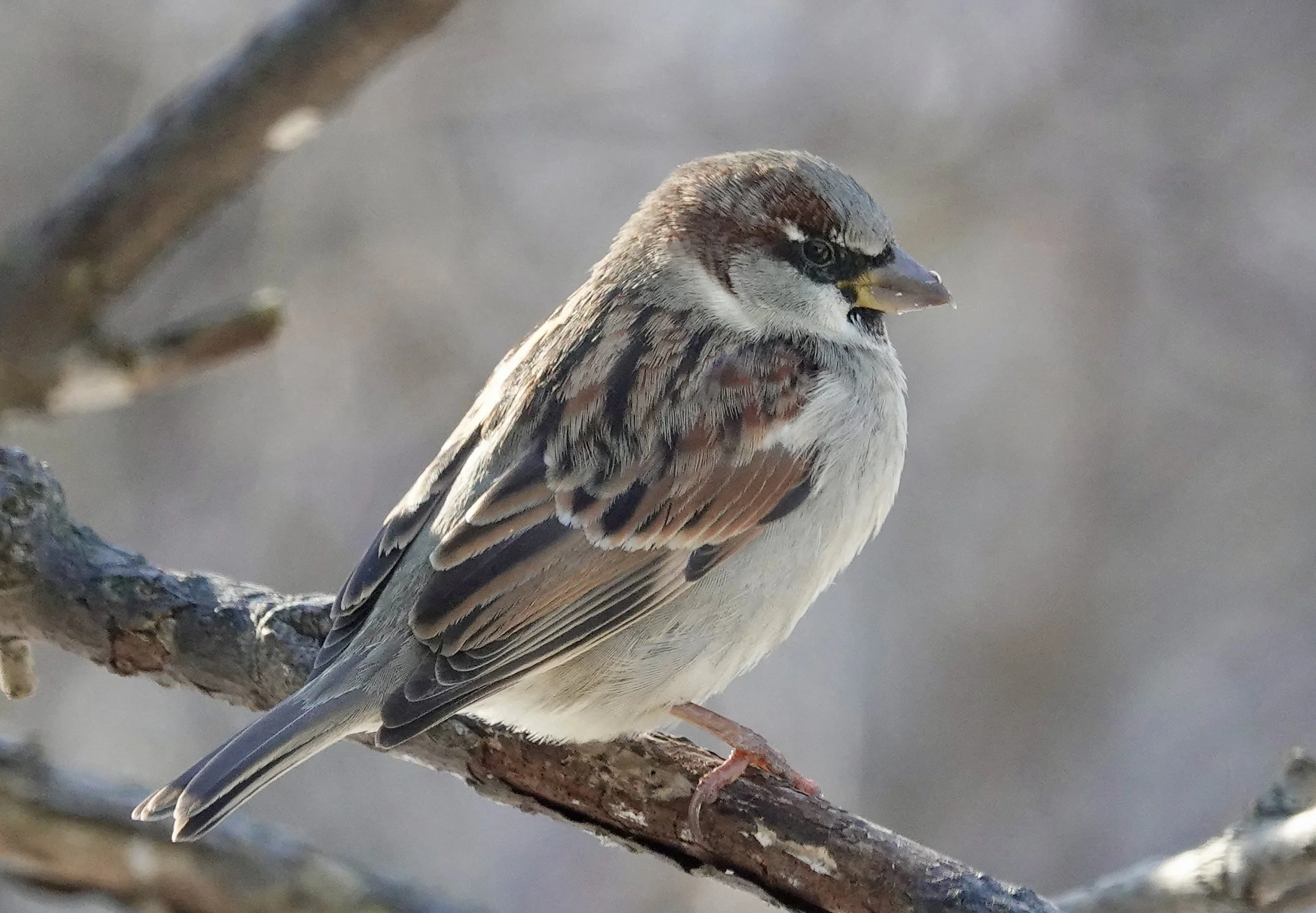
In my boyhood, they were called English sparrows. House sparrows are native to Eurasia and northern Africa, not to the United States. They were introduced in 1851-53 by Nicholas Pike, Director of the Brooklyn Institute, to rescue trees from caterpillars. More were released for pest control by other people in various parts of the country over the next 25 years. Photo of a male house sparrow by Al Batt.
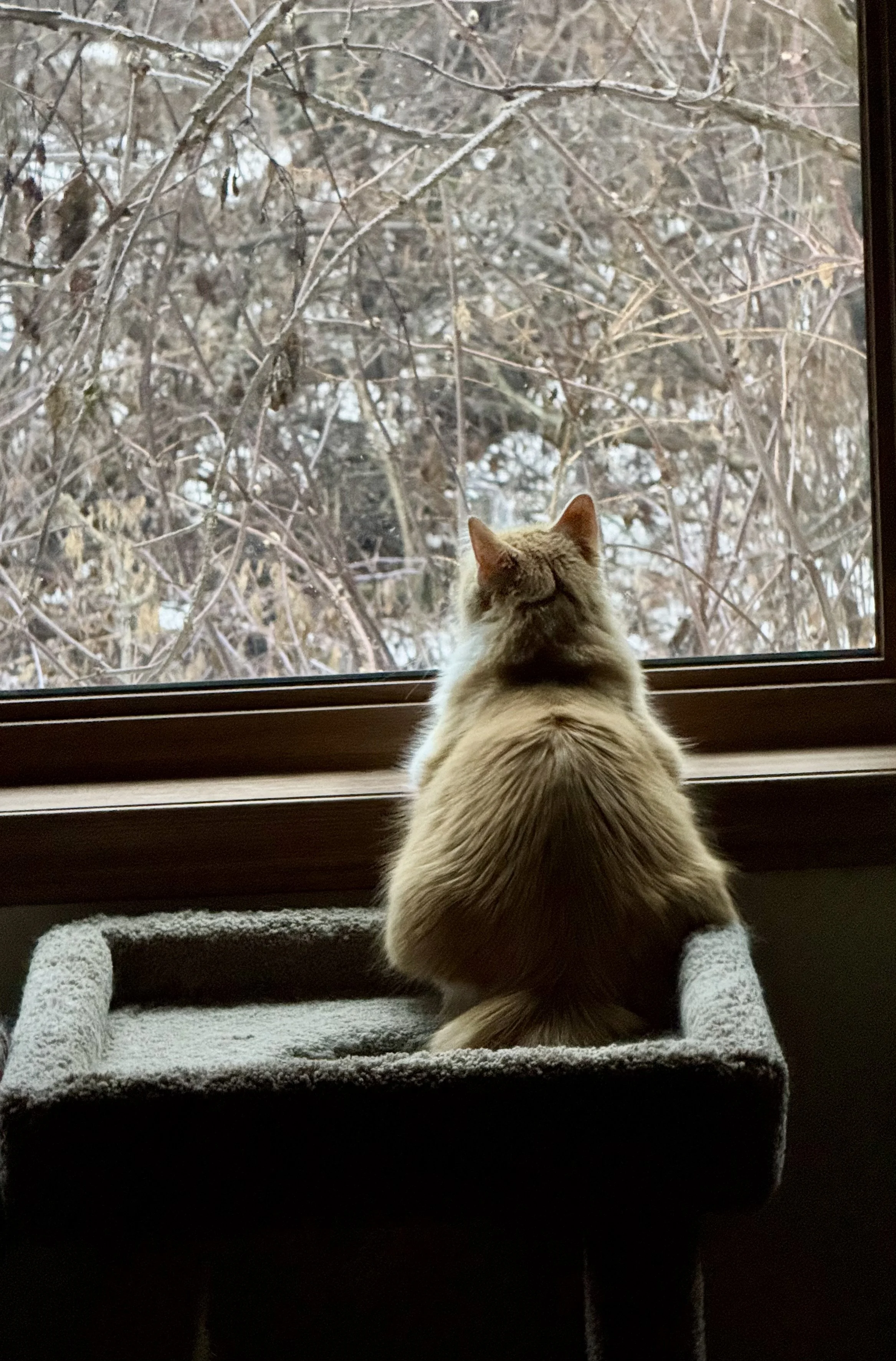
The always-a-house cat is on blizzard watch.
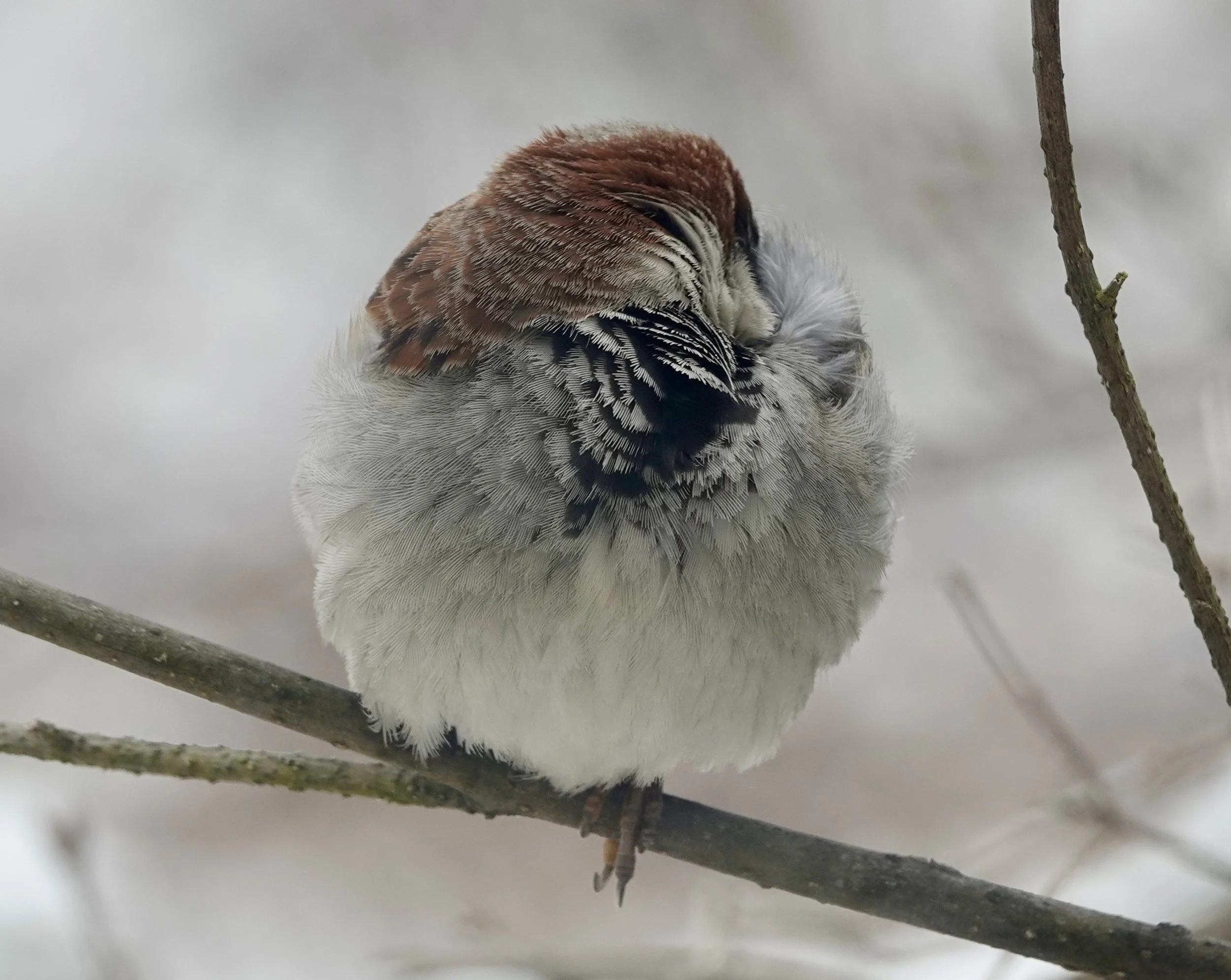
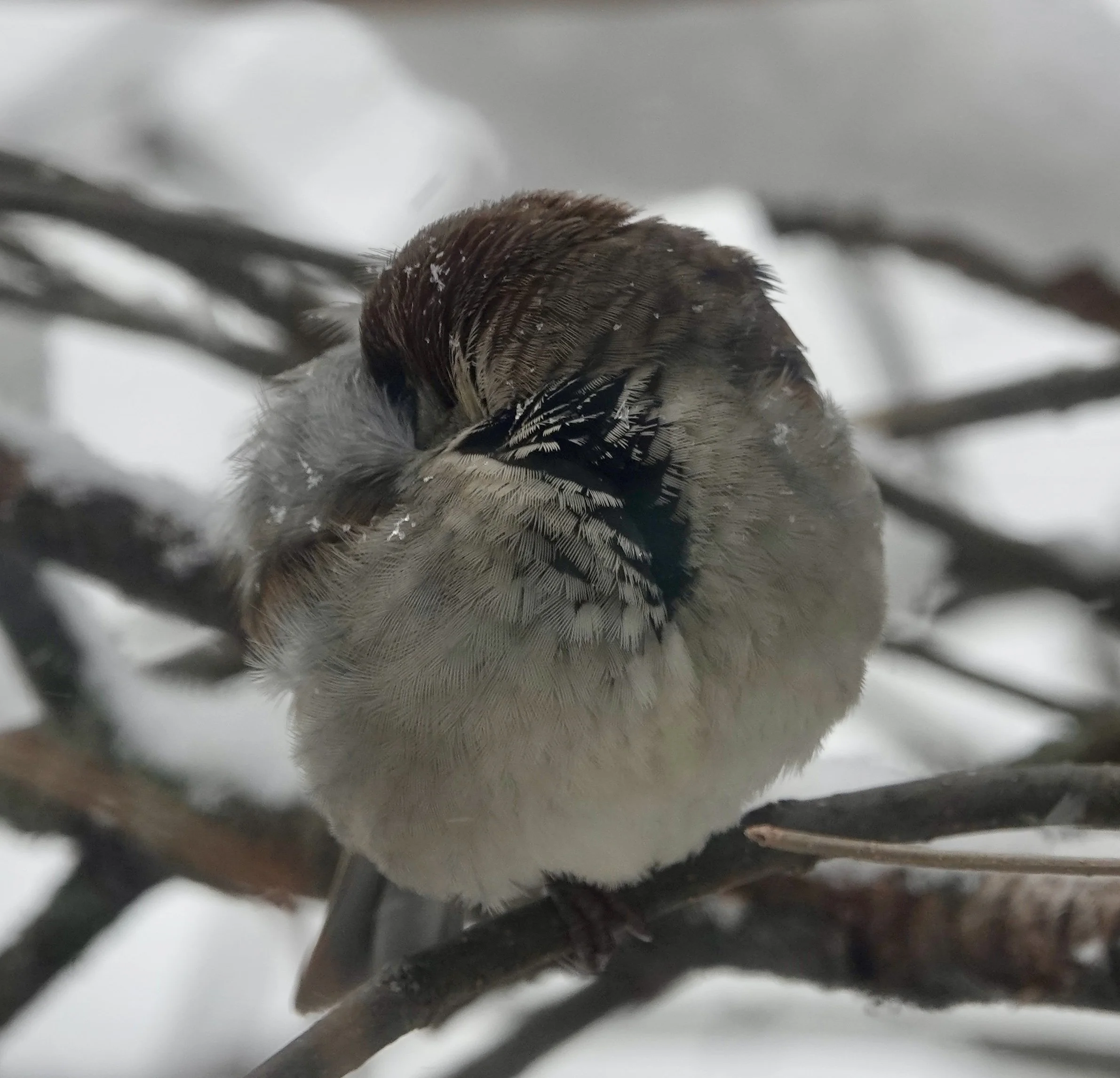
House sparrows catching a nap during a blizzard.