
Naturally
Winter can be a bit of a killjoy and cruel if we’re not careful.
On the roadsides, gusts of wind scattered small birds like leaves.
There were wild moments at my home’s windows. Feeders attached to the glass bring my local wild kingdom even closer.
I stopped at a friend’s house. We sat and watched the activity at his busy feeders. The cardinals were everywhere. I told someone later that I’d seen a ton of cardinals. That was a slight exaggeration. It would have meant I’d seen 21,333 redbirds, which would have been cool, but I’d have been unable to count them all. I hope you see something big out your window. Something really big—like a tiny chickadee.
An opossum was grinning like a possum eating a potpie under a feeder in my yard. It was cleaning up sunflower seed spillage. Rose Kennedy said, “Life isn't a matter of milestones, but of moments.” I wonder if Rose Kennedy wrote that after seeing an awesome possum?
While credited as Possums in the movie “Bambi,” they are Virginia opossums. A possum is a different animal from Australia. The film depicts them hanging upside down by their tails. Only baby opossums can do this, and only for a brief time.
Here’s a tip from the trail for you. If you ever find yourself lost in the woods, find an opossum and follow it. You’ll be in the middle of a road in no time.
A warm spell causes male skunks to look for love in all the wrong places—or at least one wrong place. Roads make easy waddling except for the getting hit by vehicles part. In the movie “Bambi,” the title character, a new fawn learning to talk, called a skunk "Flower" after meeting him in a flower patch. The name stuck. Flower was both adorable and odorable.
Book report
I enjoyed reading “Raising Hare” by Chloe Dalton, whose thoughtful storytelling and an eye for detail described a life with a leveret (a hare in its first year), which grew into a doe and a mother. Several lines made me pause and consider. Dalton wrote, “For the first time in my life, I have had cause to study animals rather than people, and to see that we are not diminished by making way for them. Coexistence gives our own existence greater poignancy, and perhaps even grandeur.”
I found it a wonderful read about the author’s relationship with a wild thing.
Q&A
Jennifer, Lily, Duncan and Derek of Pipestone wondered why doves and pigeons build flimsy nests. I had to assume the position of “The Thinker” statue to ponder this question. I leaned over, my right elbow placed on my left thigh, holding the weight of my chin on the back of my right hand. I did that fully clothed, which somewhat restricted my deep contemplation. Dove nests appear poorly constructed to us because of a minimalist form that prioritizes speed and efficiency over structural integrity. Their nesting strategy aims for quick reproduction rather than building a long-lasting nest. Doves can slap a nest together in a day or two, which reduces the time they are vulnerable to predators while gathering materials, and makes it possible to start the reproductive cycle quickly. And they can get by with it because there are no building permits required.
“Do rabbits have vocal cords?” The primary sound-producing organ in rabbits is the larynx (voice box), which is in the throat. Within the larynx, rabbits have vocal cords, flexible bands of tissue that vibrate when air passes through them. These vibrations create sound waves. In addition to vocalizations, rabbits can produce sounds by thumping their hind legs on the ground. See the movie “Bambi” for the foot-thumping rabbit who declared, “That’s why they call me Thumper.”
Bugs Bunny talked up a storm, but I’m not sure Bugs was a rabbit. I grew up in the company of jackrabbits and Bugs looked like a jackrabbit to me. Hares generally have longer ears and hind legs than rabbits. So, that means Bugs Bunny, despite his name, is a hare. Right? Hold on there, you hardworking brains. Bugs Hare would have one major character flaw—he lives in a burrow. Hares live above ground, and use camouflage and speed to survive. Rabbits could spend time underground in burrows or warrens. Warner Brothers produced Bugs Bunny cartoon titles that included the word “hare” in them. So, hare or rabbit? It’s more likely a character and a name best suited to creative and comedic needs. Shakespeare had his moments, but I’ll rely on an expert nimrod named Elmer Fudd to settle this. Elmer called Bugs a "wascally wabbit," not a “wascally jackwabbit” or “wascally hare.” There’s the answer. Elmer Fudd has spoken.
Thanks for stopping by
“To walk in nature is to witness a thousand miracles.”—Mary Davis.
“Joy in looking and comprehending is nature’s most beautiful gift.”—Albert Einstein.
Do good.
©️Al Batt 2026
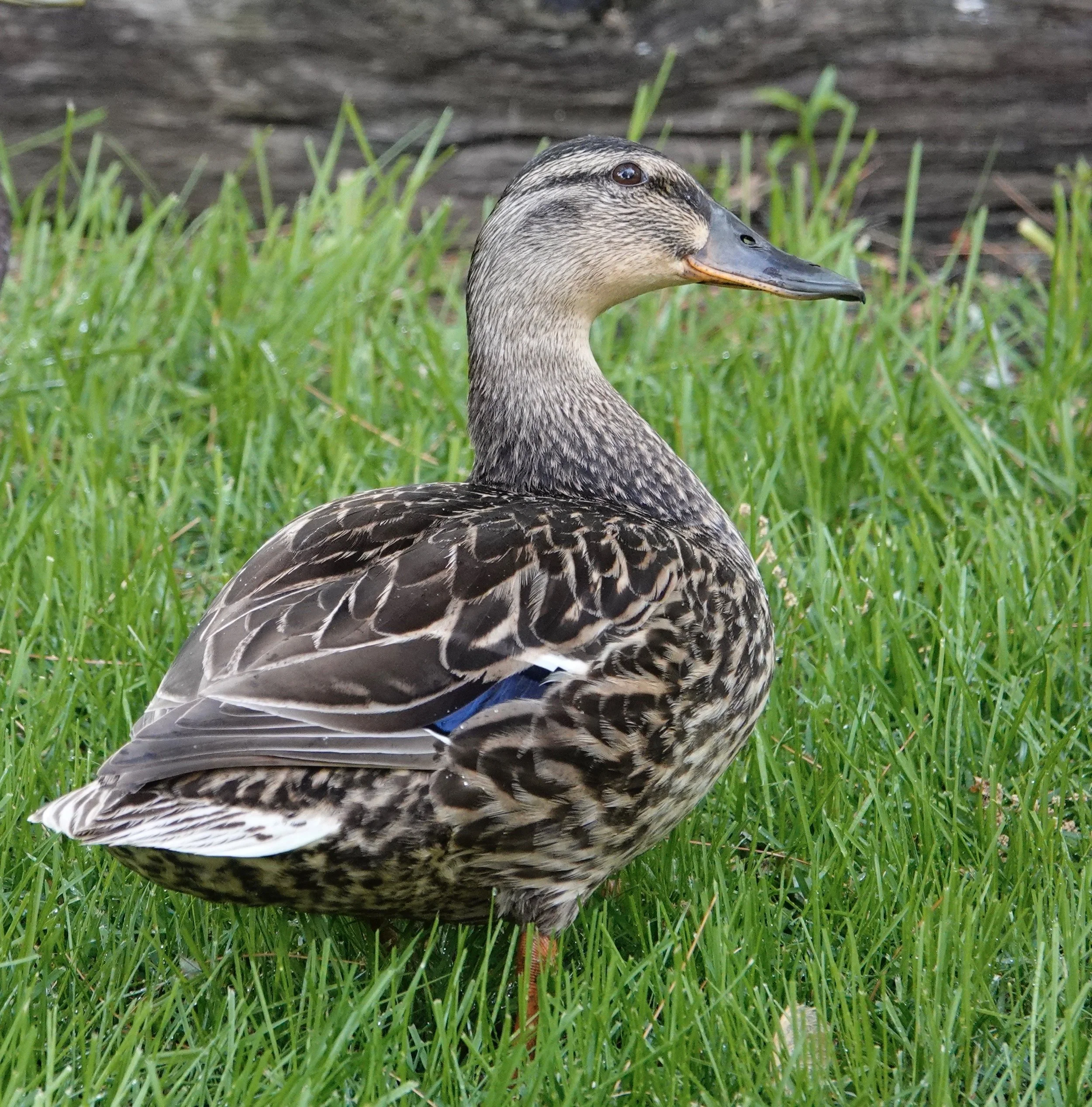
We’ve all likely made a quacking sound to imitate a duck. The classic duck’s quack is the sound of a mallard hen. It’s a myth that a duck’s quack doesn’t echo. Mallard, Iowa, which is south of Curlew and north of Plover, used to have a high school with a memorable school cheer: "Black and Gold, Gold and Black, Mallard Ducks go quack, quack, quack." Photo by Al Batt.
BIRDING WITH BATT If you missed “Birding With Batt” on the airwaves this week, you can hear it any time you like via the free KMSU radio streaming app. The app is available for Apple and Android devices, allowing you to livestream 89.7 the Maverick, find playlists and listen to shows on-demand.