
Naturally
When they aren’t scheming (plotting the overthrow of the current national bird), or being storytellers swapping tales, the jays and crows make sure a hush doesn’t cover the world. They strive to keep me safe from owls by broadcasting a raptor’s hiding place. In this case, they chased a Cooper’s hawk from its perch, and it flew like an arrow through the yard. Thoreau wrote, “It is not merely crow calling to crow, for it speaks to me too. I am part of one great creature with him; if he has voice, I have ears."
They are scratchers and they are dancers—native sparrows such as dark-eyed juncos and the birds with “sparrow” in their names, white-crowned sparrow, white-throated, Harris', chipping, clay-colored, swamp, American tree, fox, vesper, song, Lincoln's and savannah sparrows—forage on the ground by using a double-scratch technique to kick away leaf litter, soil or light snow, and expose hidden seeds and insects. The bird hops slightly forward while simultaneously sweeping both feet backward together to scratch at the ground or leaf cover.
We spend money to be wrong. Binoculars and cameras show us that what we saw wasn’t necessarily what we had thought we’d seen.
I heard soft whispers. The sound of cedar waxwings feasting in a berry tree. They are crowd pleasers. Some robins joined them. I love seeing robins. They bring wonder and make it easy for me to enjoy the commonplace.
The American Ornithological Society published the 67th Supplement to its checklist. Changes include the new names Hudsonian whimbrel (currently whimbrel), American egret (great egret) and eastern marsh-wren (marsh wren).
I see golden asparagus in road ditches. Wild asparagus turns yellow or golden in the fall when the green, ferny stalks mature and the plant goes dormant after a frost. Asparagus is a long-lived perennial plant with deep root systems. Many roadside ditches once were old farm gardens or fence lines where asparagus was planted. Birds eat the asparagus berries, and the seeds in their droppings fall into the rural ditches, fence rows and utility lines, creating scattered wild clumps. In mid-to-late October, near the first frost, the feathery green summer foliage of asparagus turns a bright golden-yellow color.
Making good time
My father and his brothers talked often about cars. They each favored a different make of automobile. The one thing they shared was the ability a fine car gave them to make good time. When one exclaimed he had traveled 132 miles in a barely believable time, he heard a chorus from the others: “You made good time.”
When one of the brothers declared a need to leave, the others asked, “What’s your hurry?”
They didn’t need an answer. They knew he had felt the call to make good time.
That’s what migrating birds are trying to do—make good time. Fall migration is leisurely compared to the spring migration when they must fulfill obligations. Still, even in the unhurried fall migration, many birds need to stay ahead of the weather and get to the next insect or flower eatery before it closes.
The great snowbird migration in Minnesota falls into two categories: human snowbirds who travel south for the winter and avian snowbirds, the dark-eyed juncos that migrate into or through the state). The human snowbirds head to Arizona, Florida, California and Texas to trade in the Gopher State’s cold and ice for other problems.
Did you know?
The scientific name of the northern mockingbird is derived from Latin mimus meaning "mimic" and Ancient Greek polyglottos meaning "many-tongued." In Nahuatl, the species is called Centzontlahtōleh, meaning "possessor of 400 voices."
In Bernd Heinrich’s book, “Life Everlasting,” the author explains that vultures find food by soaring, which has nearly the same metabolic cost as perching.
According to the Minnesota DNR, a red-tailed hawk weighs 2 to 4 pounds. Great horned owls tip the scales at 3 to 5 pounds. The female of both species is larger than the male.
Q&A
“I have no house sparrows all summer and have so many in the winter. Do they migrate?” House sparrows don’t migrate. They stay in their general region and shift their daily ranges based on where shelter and food are easiest to find. Your yard may simply become a primary winter refuge once snow covers the ground and wild foraging areas are off the table. Humans are reliable food providers with backyard feeders, farmyards, waste grain, food waste, pet food and livestock feed. In the winter, the sparrows form noisy, cooperative flocks with numbers that make them more noticeable.
Thanks for stopping by
"Where flowers bloom, so does hope."—Lady Bird Johnson.
"May your trails be crooked, winding, lonesome, dangerous, leading to the most amazing view. May your mountains rise into and above the clouds. May your rivers flow without end."—Edward Abbey.
Do good.
©️Al Batt 2026
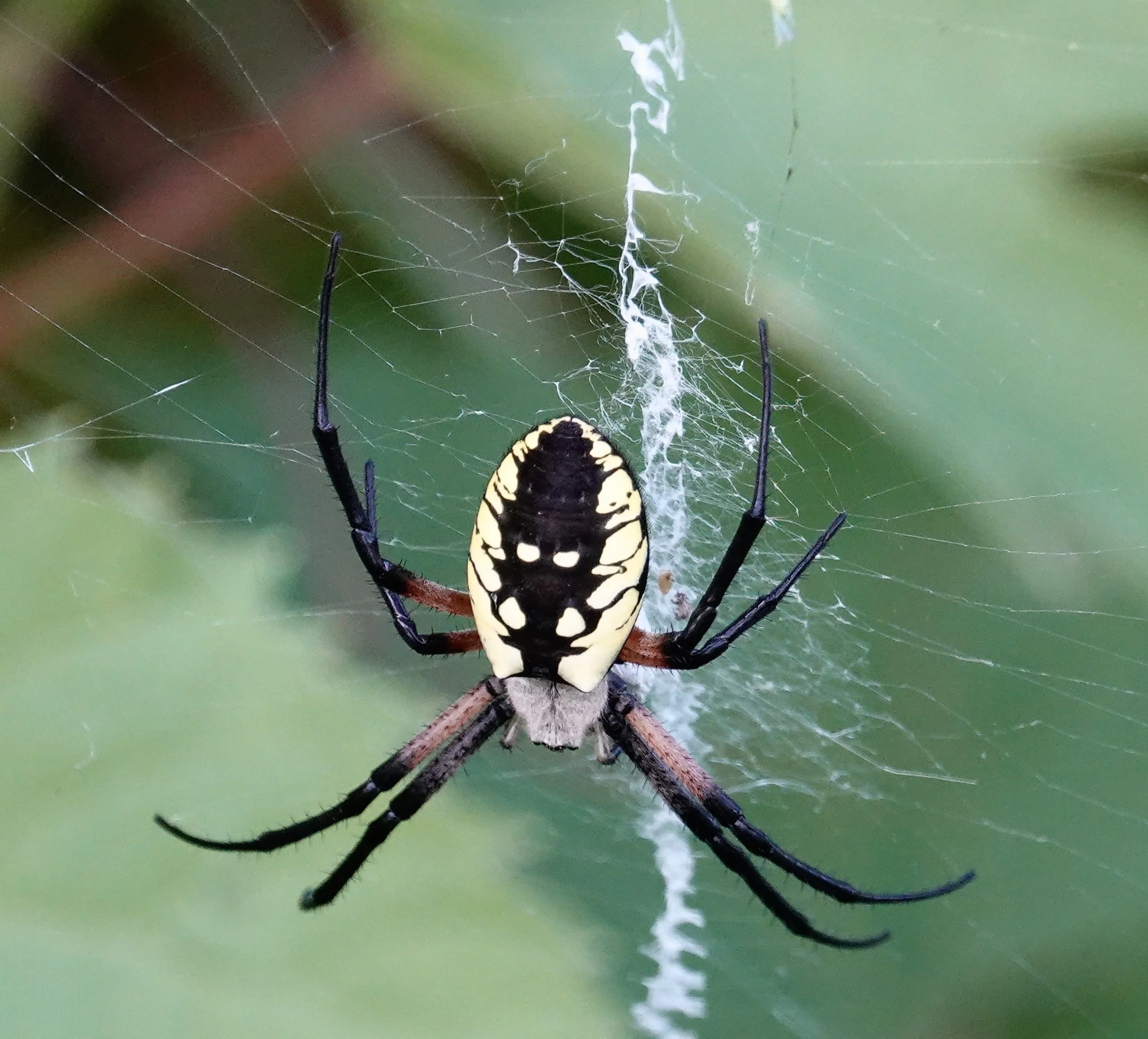
The argiope aurantia has more names than a lawn mower that never starts. Yellow garden spider, black and yellow garden spider, golden garden spider, writing spider (due to the zigzag silk pattern, called a stabilimentum, in its web), zigzag spider, zipper spider, black and yellow argiope, corn spider, golden orb-weaver, yellow garden orb-weaver, Steeler spider (team colors), McKinley spider (in 1896, one reportedly predicted the U.S. presidential election by spinning McKinley's name in her stabilimentum) and scribbler spider. Photo by Al Batt.
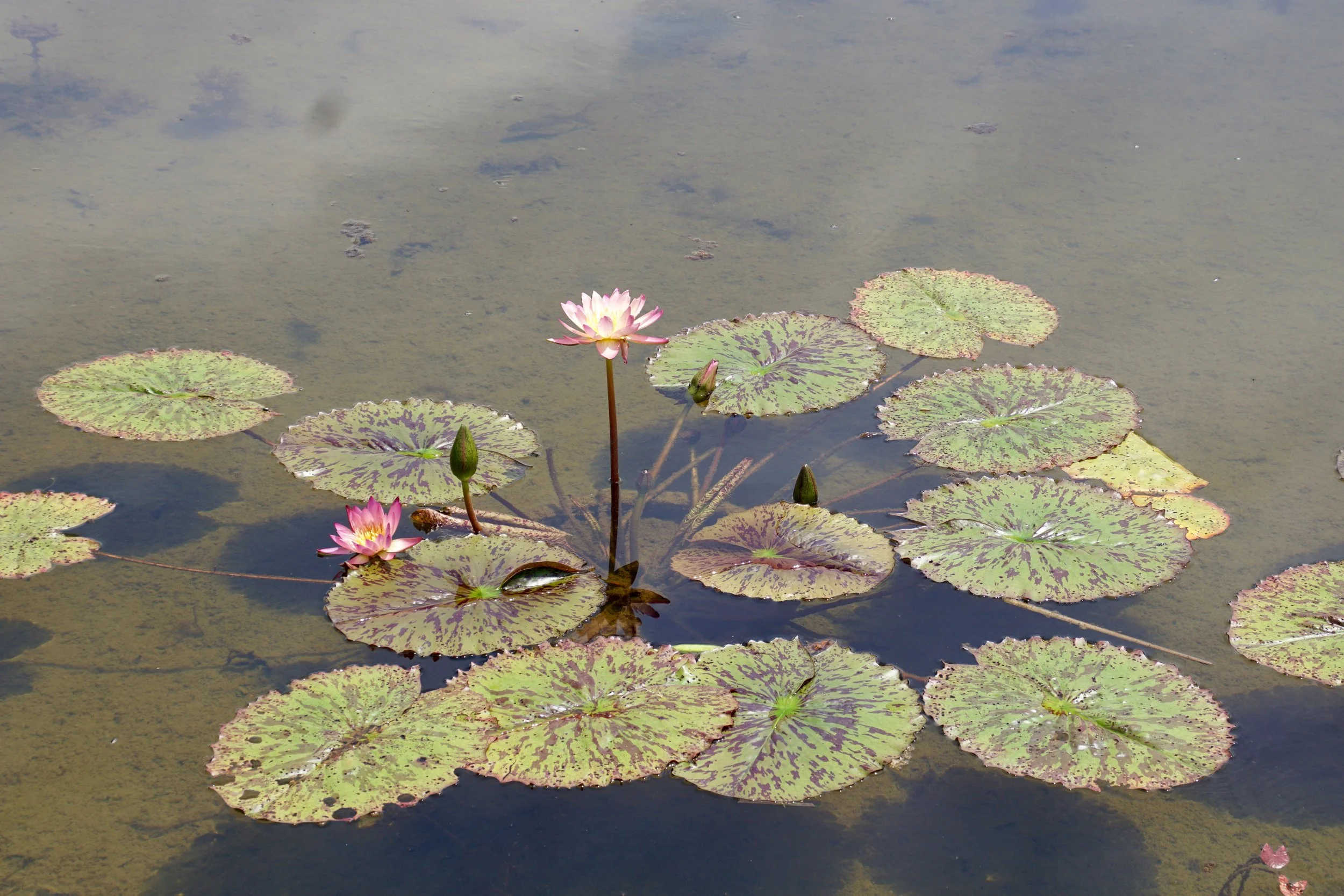
Nice pad at Reiman Gardens in Ames, Iowa.