Naturally
I wouldn’t miss the slicing wind that was blowing my whiskers off.
I do miss seeing turkey vultures and raccoons. Vultures have migrated and raccoons have gone to the land of Nod. They are in the arms of Morpheus where they are recharging their rascally ways. So many raccoons are hit by vehicles that they are a big provider of carrion for turkey vulture chow. To a vulture, a raccoon is room service, or more correctly, road service. Vultures are fascinating birds. They have ultra-acidic stomachs that neutralize toxins and harmful bacteria, including anthrax, botulism, cholera and rabies. They don’t spread disease; they eliminate disease. Vultures are the ultimate recyclers. They have chicken-like feet and cannot carry things like an eagle or a hawk can. No takeout for a vulture. A turkey vulture weighs much less than a bald eagle. Turkey vultures get their name because their heads resemble those of turkeys. They can smell dead animals up to several miles away, depending on conditions, and have excellent vision. They key off other vultures, reading social cues that indicate food availability. Vultures prefer meat that is as fresh as possible and could easily go several days without food. They migrate south because winter freezes carrion, making it difficult for vultures, which lack strong talons, to tear their food. There are fewer thermals in the winter. Turkey vultures employ those thermals to travel and search for food. A group of turkey vultures is called a committee, or a kettle if in flight, or a wake if they are feeding.
Raccoons have five dexterous toes, but they do not have opposable thumbs as humans do and cannot grip objects in the same way as we can. That’s why we don’t see raccoons as crafty left-handed baseball pitchers or race-car drivers. They can manipulate objects with great ease, which dogs or cats cannot. Not having opposable thumbs is all that has kept raccoons from running the world. Their eyes have a high concentration of rod cells—which excel at detecting motion and dim light—and very few cone cells, which are needed to see colors. Raccoons are at their highest densities in urban environments due to easy access to resources. A collective noun for raccoons is most commonly a gaze because of the way raccoons stare intently or lock eyes when watching people or other animals. I have heard a group of trash pandas (raccoons don’t care if we call them that) called a mask or a troop. A nursery refers to a mother raccoon with her young kits.
Did you know?
Umwelt was coined in 1909 by biologist Jakob von Uexküll to mean that different species inhabit distinct subjective realities within the same physical space. A living thing experiences the world around it uniquely.
Walter Lantz and his wife, Grace, were honeymooning in a cabin in California when an acorn woodpecker began hammering on the roof. Grace suggested Walter channel his annoyance into a cartoon character, leading to the creation of Woody Woodpecker. The acorn woodpecker makes a loud, laughing "waka-waka-waka" call that mirrors Woody’s iconic cackle.
According to English folklore, if you were to walk in circles around a tree where an owl was perched, the bird would keep its eyes locked on you and continue turning its head until it wrings its own neck.
Q&A
Jennifer, Lily, Duncan and Derek from Pipestone asked if birds have saliva. I wanted to say all of them do, but I’m going to hedge my bet and say most of them do. The amount of saliva and the development of their salivary glands vary with the species and diet. Birds that eat dry diets (like granivores that eat seeds or insectivores that eat insects) tend to have better-developed salivary glands than birds that eat wet or aquatic foods. Unlike mammals, birds don’t chew their food; they swallow it whole or in large pieces. Saliva acts as a lubricant to help the food slide down the esophagus into the crop and stomach. Some birds have highly specialized salivary glands. Canada jays store food for later use. They use their sticky saliva to glue small food items to tree branches above the height of the eventual snow line. Woodpeckers produce a sticky mucus to coat their long tongues used for trapping insects and as regular spit for swallowing. Swiftlets have specialized sublingual glands that secrete a protein-rich saliva. They use this hardened saliva to build cup-shaped nests, which are harvested to make edible bird’s nest soup. Swallows and phoebes mix small amounts of saliva with mud and grit to make their nests stick together and harden.
Thanks for stopping by
“There’s a sunrise and a sunset every single day, and they’re absolutely free. Don’t miss so many of them.”—Jo Walton.
“Every sunset brings the promise of a new dawn.”—Ralph Waldo Emerson.
Do good.
©️Al Batt 2026
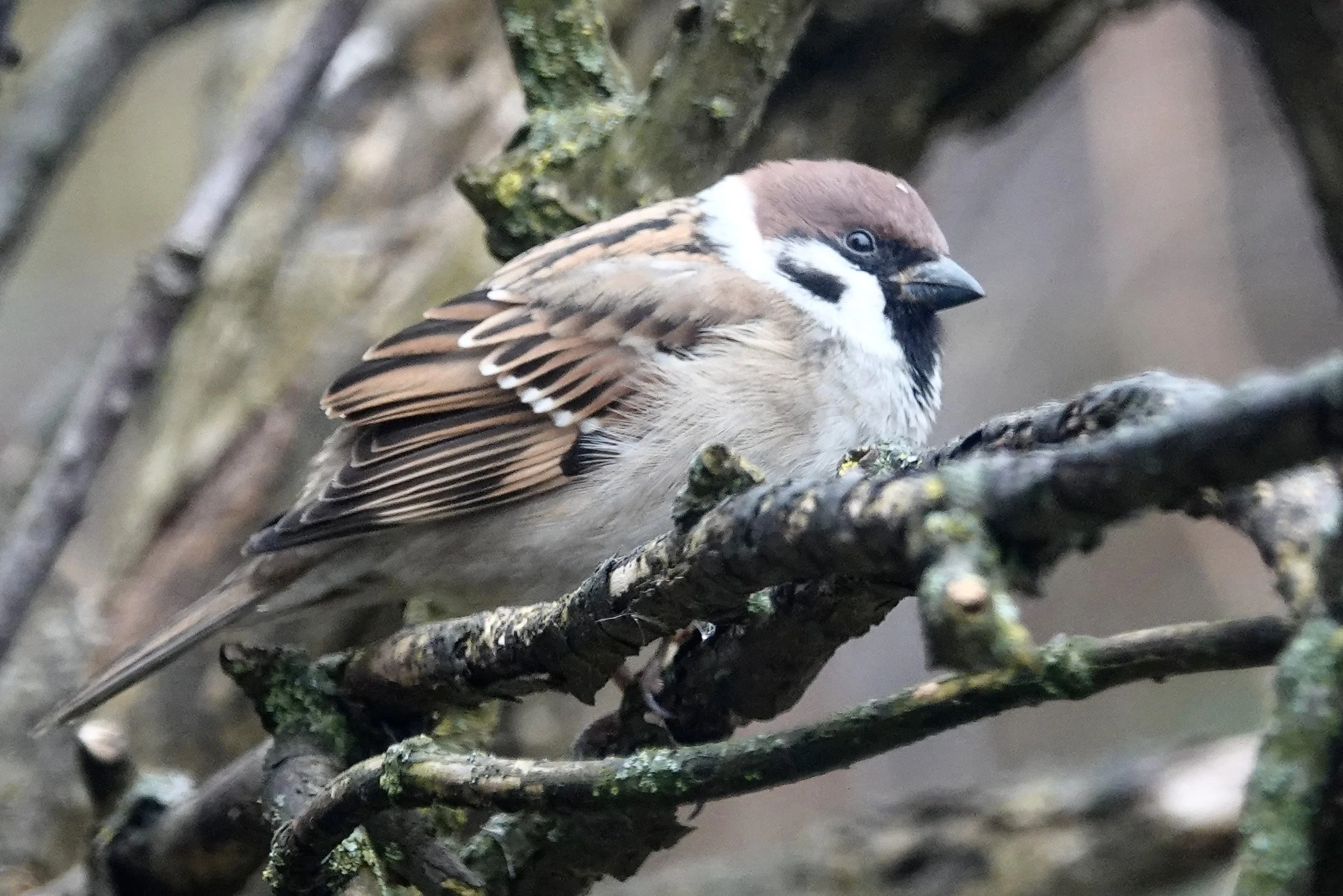
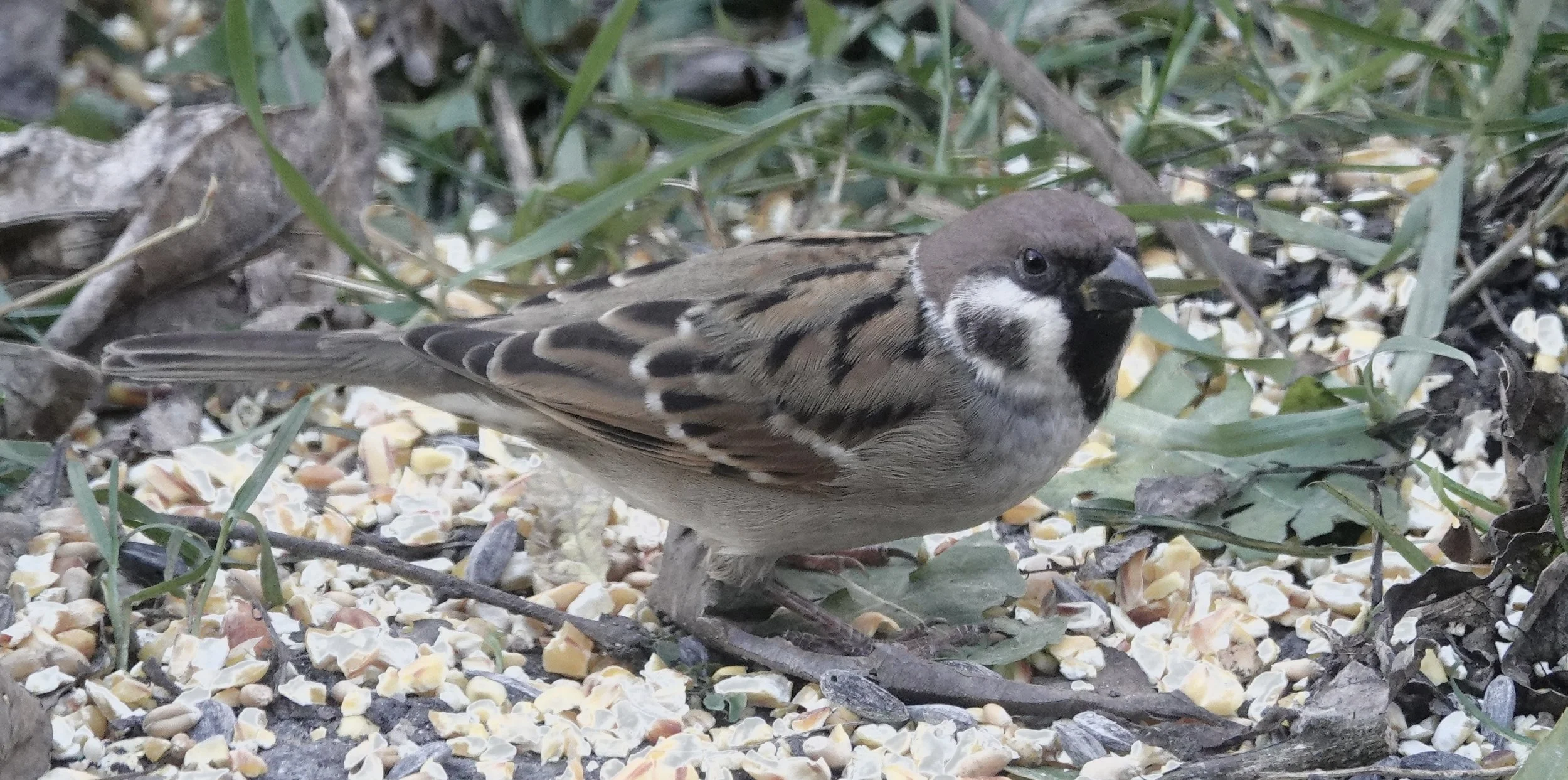
The Eurasian tree sparrow is smaller, but similar to its close relative the house sparrow. In 1870, 12 Eurasian tree sparrows from Germany were released in St. Louis to provide immigrants with a familiar bird. The sexes look alike, with a chestnut cap and black-and-white cheeks. The birds had hoped to one day play for the St. Louis Eurasian Tree Sparrows, but when the baseball team began in 1882 it was the St. Louis Cardinals. Photo of a bird in my yard by Al Batt.