
Naturally
Seasons change gradually, and then they change suddenly. Each is an unfolding mystery.
I hiked a trail. Each bend in the trail held the promise of remarkable things. Blue jays were trash-talking poor creatures who had the misfortune of being neither blue nor a jay. This trash-talking encouraged me to pick up trash, but I hadn’t brought a bag to put the detritus in. So, I piled the trash here and there, intending to continue my walk and gather the trash on my next trip around. Later, after grabbing a bag from my car, I began walking to where I’d left the trash. I discovered that all the trash piles were gone. Someone had picked them up—every one of them. On the old Lone Ranger show, an innocent bystander might say, “Who was that masked trash picker-upper?” It wasn’t the Lone Ranger. I do not know who to thank, but thank you, whoever you are.
A bright beacon lured me to the window. It was a bird that even people who ignore birds need to take a second look. A bedazzling black-winged red bird. A gorgeous scarlet tanager tunneled my vision. It was like seeing the Grand Canyon, only smaller. A grand bird, there is no doubt. I hear what you’re saying, “You’re not going to compare a scarlet tanager to the Grand Canyon, are you?” Who would do that? Me, that’s who. The bird is an amazement. Mervyn Peake said, “I am too rich already, for my eyes mint gold.” He might have seen a scarlet tanager.
A brown thrasher sings a loud, long series of doubled phrases, described as “plant a seed, plant a seed, bury it, bury it, cover it up, cover it up, let it grow, let it grow, pull it up, pull it up, eat it, eat it.”
Carpintero is the Spanish word for woodpecker. Woodpeckers are crucial keystone species that create essential nesting and roosting cavities in trees, which benefit a wide range of other animals. Their ability to excavate holes, which they might use for only one season, provides homes for cavity-nesting birds, mammals and insects, while aiding forest health by controlling pests and assisting in decomposition. Some pairs reuse a cavity for subsequent nestings.
I was in Garrison, on the shore of Lake Mille Lacs, when I saw a bald eagle carrying a mammoth stick to a nest. Home improvement project? Hockey stick? Because the fishing season had just opened, it could have been a fishing pole. That way, the raptor wouldn’t get its feet wet. With a population of 205, Garrison is the smallest city in the world to have a McDonald's restaurant.
Red-winged blackbird males and females exhibit extreme sexual dimorphism, appearing so different that they are mistaken for separate species. Males are glossy black with bright red-and-yellow shoulder patches, while females are streaky brown, resembling large sparrows.
Earth Day
I was on KEYC-TV on Earth Day and said that I liked dandelions. I’ve eaten dandelion greens. Not bad, but I like dandelions because I love honey. Dandelions are vital to honey bees, acting as one of the first abundant, accessible food sources in early spring. They provide nectar for energy and pollen for protein, helping colonies rebuild after winter. Dandelion pollen isn’t the most nutritious pollen, but the widespread, consistent availability of dandelions makes them a reliable lifeline for bees before other flowers bloom.
Q&A
“If parakeets are hatched in another country, will they be able to communicate immediately with parakeets from this country? Or would they have to learn a different language or dialect?” Parakeets raised in different countries could communicate with each other, although they might initially possess different regional dialects or accents. Parakeets rely on a combination of innate calls and learned vocalizations, allowing them to adapt their communication quickly. Parakeets of the same species share a basic, instinctual language of whistles, chirps and body language that is universal, regardless of where they hatched. Research shows that parakeets (specifically Monk parakeets) introduced to different areas develop unique regional dialects, similar to human accents. Because parakeets learn and adjust their vocalizations to fit in with their current flock, two birds from different regions would likely learn each other's language rapidly. Monk parakeets (Quaker parakeets) are native to South American grasslands—but if you're looking for them in North America, look in cities such as New York, Chicago, Portland (Oregon), San Diego, Houston, Dallas, New Orleans or Miami, where escapees or releases of this popular cage bird have started feral populations.
“How are hummingbird populations faring in North America?” Ruby-throated hummingbirds are doing relatively well, but rufous, Allen's, broad-tailed and Calliope hummingbirds are in significant decline. The Anna's hummingbird has an increasing population and a range expansion due to its ability to adapt to human-modified landscapes that offer environments rich in food.
Thanks for stopping by
“Life is not always perfect. Like a road, it has many bends, ups and down, but that’s its beauty.”―Amit Ray.
"A weed is a plant that has mastered every survival skill except for learning how to grow in rows."—Doug Larson.
Do good.
©️Al Batt 2026
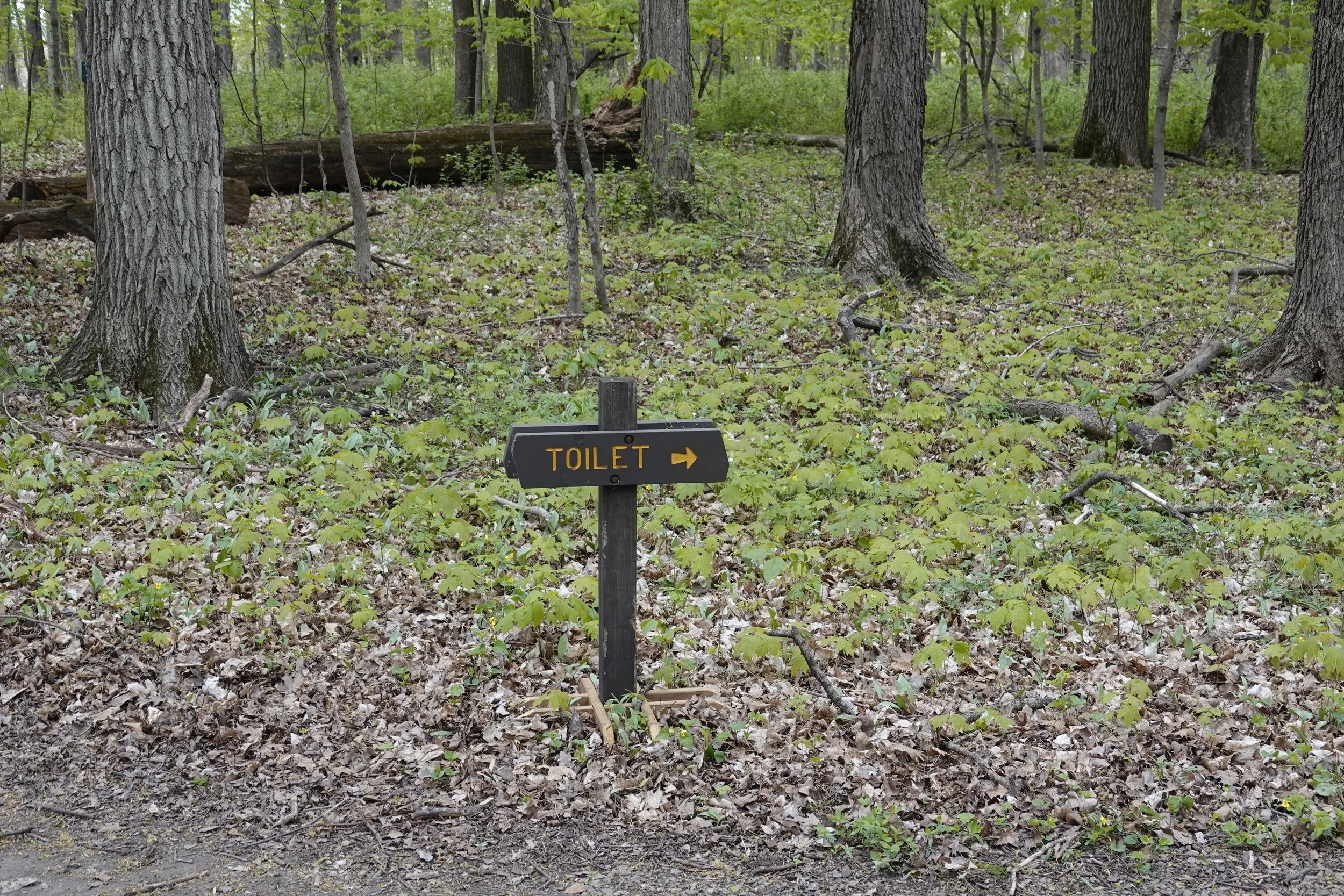
A bear sign in the woods. Photo by Al Batt.
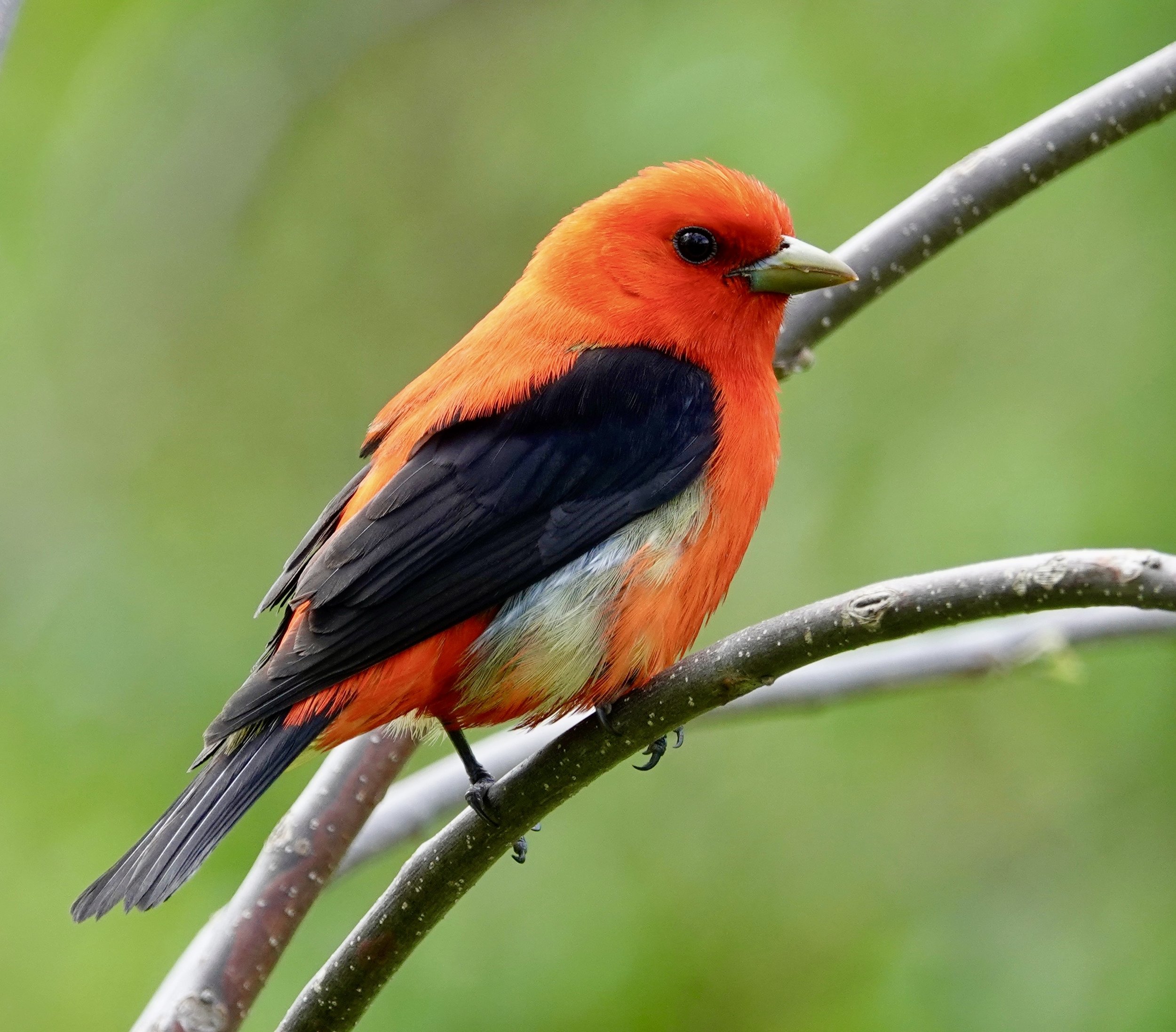
A bedazzling black-winged red bird (scarlet tanager). Photo by Al Batt.