
Naturally
The Earth is waking up. I can see it.
And it’s brought to me in living color.
There is a famous band named Green Day. This day was a green day. It was verdant everywhere I looked. It was a grand day in May to discover things that were already there. The thunderstorm had ended. It wanted us all to know there is no “e” in “lightning.” The sun came out. Annie sang, “The sun'll come out tomorrow. Bet your bottom dollar.” She was a day off. The sun came out today. Charming goldfinches glowed as if they were plugged in. I suspect being hatched as a goldfinch means they had no ambition to become an eagle. Marsh marigolds bloomed, with vivid yellow flowers contrasting with their deep green leaves.
Thankful that my emotional support orioles had arrived, I sauntered toward my bird chores. I replenished the bird feeders and watched the patrons eat. My mother told me how much she enjoyed watching people eat the meal she had prepared. I get enjoyment from watching the birds eat the food I give them. It takes a will and a way to become happier. Birds are a way.
I heard a yellow-bellied sapsucker’s drumming. It’s slower and more irregular than other woodpeckers. It has a stuttering cadence that some compare to tapping out Morse code. It was doing FaceTime on a tree, knocking the sap out of it. The sapsucker makes two kinds of holes in trees—round holes are deep and a sapsucker inserts its bill into the hole to probe for sap. Rectangular holes are shallower, and a sapsucker licks the sap from these holes. A sapsucker usually makes new holes in a line with old holes or in a new line above the old ones. Yellow-bellied sapsuckers dip insects, especially ants, in sap before eating them. The sapsucker produces a nasal mewing call.
Dame’s rocket is an invasive, non-native plant that blooms May-August in Minnesota. The pinkish-purple flowers look like a native phlox. Dame's rocket (closely related to garlic mustard) has four petals, while native phlox has five.
Pelicans magically disappear in the sky due to a mix of sunlight reflection, steep banking and high-altitude soaring. As pelicans soar, their wings catch or deflect the sun, causing the birds to vanish from sight, only to reappear as they bank and turn again. When a flock spirals together to catch a thermal, the birds disappear and reappear repeatedly as the entire flock rotates out of the sun's glint.
CAUTION
Woods on one side of the road and wetlands on the other make for a wildlife crossing.
Q&A
“I had yellow-rumped warblers at my suet feeders this spring. Is that normal?” The “butterbutts” readily visit suet feeders during chilly spring and fall migrations. They demonstrate kleptoparasitic behavior by stealing insects from spider webs. The webs provide a quick and easy meal with little hunting.
“If a bird were raised by another species, does it think it is that kind of bird?” Not all birds imprint. Imprinting is most common in precocial species—birds that are active, open-eyed, and able to leave the nest shortly after hatching, such as ducks, geese, chickens and turkeys.
“Do any songbirds eat carrion?” Ravens, crows, jays, shrikes, nuthatches, chickadees and starlings are the most likely.
“When is the mating season for coyotes?” In Minnesota, it runs from January through March, with the peak occurring in February—let’s say on Valentine’s Day.
“What are waspers?” I led a nature walk in Kentucky when one of the group said there had been a lot of waspers around. Waspers is a regional, colloquial term for wasps. “Waspers” is easier to say than “Wasps.”
“What Minnesota county has the most lakes?” According to Minnesota Sea Grant, Otter Tail County has 1073 lakes, St. Louis 969, and Itasca 897 lakes. Mower, Olmsted, Pipestone and Rock counties have no natural lakes.
“Where are badgers found in Minnesota?” I walked with a busload of birders when my co-leader stepped into a badger hole and took a fall. Thankfully, he was uninjured. Badgers inhabit most of Minnesota, except in the heavily forested northeast. They are nocturnal creatures that prefer open prairie but will make their homes in farmland.
“Why is there dried grass in my jelly feeder?” Orioles occasionally drop nesting materials into jelly feeders when multitasking. When the females weave complex, hanging pouch nests, they often carry food and building fibers simultaneously. They sometimes drop the fibers to eat, and then either forget them or are banished from the feeder.
Thanks for stopping by
“In nature, nothing exists alone.”—Rachel Carson.
“It’s a dangerous business, Frodo, going out your door. You step onto the road, and if you don’t keep your feet, there’s no knowing where you might be swept off to.”—J.R.R. Tolkien, “The Fellowship of the Ring.”
Do good.
©️Al Batt 2026
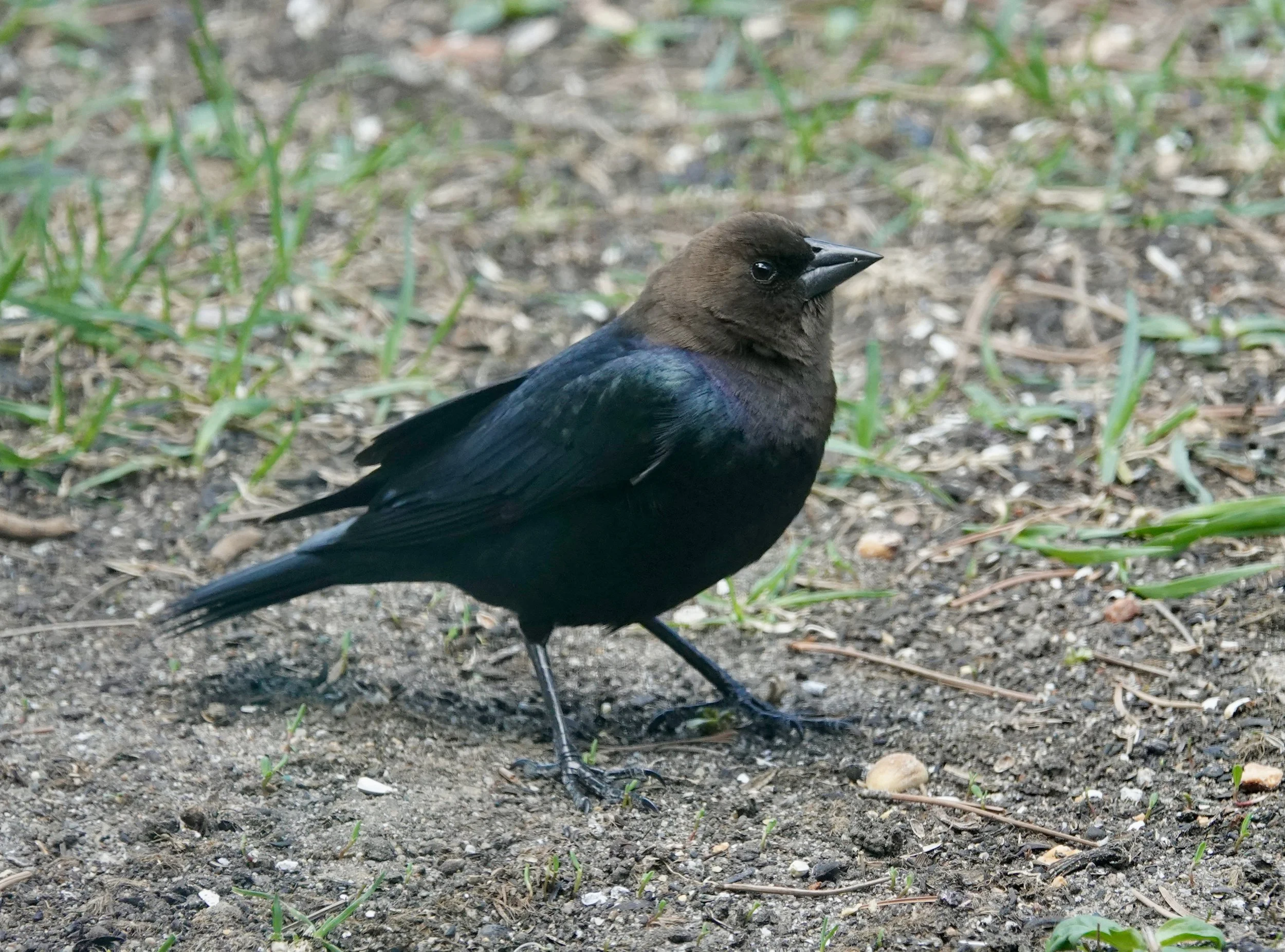
The male brown-headed cowbird is disguised as a Coppertop battery. The cowbird is the most common brood parasite in North America. The female builds no nest; she lays her eggs in the nests of other bird species, which raise the young cowbirds. The cowbird parasitizes the nests of over 220 different species. Some host species reject or abandon the foreign eggs, resulting in cowbird young being raised in the nests of only about 150 species. Photo by Al Batt.