Naturally
The day needed more shade.
The bird water park (birdbath) on the deck was experiencing long lines.
A blue jay was jaysplaining something to another bird. The jay is one of 1,161 species of birds on the official American Birding Association (ABA) Checklist. The total represents all native and accepted exotic birds documented in the ABA Area, which covers Canada, the 49 continental United States, the Hawaiian Islands and adjacent waters.
Common mullein and evening primrose show yellow flowers on tall stalks. Yellow sweet clover and white sweet clover are tall and leggy. Wild parsnip resembles a robust dill plant. It has flat disks of yellow flowers and can be troublesome. The combination of sunlight, parsnip sap and sweat can lead to blistered skin. Tall meadow rue looks as much like a white cloud as it does a lofty plant.
Lots of purslane and campion this year. Bindweed, looking like morning glory, blooms. Bindweed has leaves shaped like arrowheads. Morning glory leaves are heart-shaped. Blue vervain blooms. The Iroquois used mashed vervain as a remedy to deter obnoxious or troublesome individuals. Birdsfoot trefoil continues to yellow our road edges.
Q&A
“How can I tell native honeysuckles from invasive honeysuckles?” Invasive bush honeysuckles (like Amur and Tatarian) can be identified by their hollow brown stem centers (pith). Native honeysuckles have solid stems.
“How could I trap earwigs?” The University of Minnesota Extension suggests placing old tuna cans baited with fish oil or vegetable oil. Set the cans out in the evening in areas where you’ve seen earwigs. In the morning, shake the traps over a pail of soapy water.
“Are there more cicada killer wasps than there used to be?” Cicada killer wasps, which appear in Minnesota from late June to early September, have become increasingly common. Their population fluctuates directly with the availability of their primary prey: cicadas. While males dive-bomb, they are harmless, and the docile females rarely sting. Cicada killers prefer dry, bare soil. Watering and mulching can deter the wasps.
“Are wild turkeys found in every county?” Wild turkeys have been seen in all 87 counties in Minnesota and all 99 in Iowa. They thrive in areas with a rich mixture of timber and agriculture.
“What can I do to attract cardinals to my feeders?” Their favorite is black oil sunflower seed. They also eat unsalted peanuts, cracked corn, dried fruit and safflower seeds. Cardinals prefer large, sturdy tray or platform feeders in a sheltered area near dense shrubs, allowing them a safe place to retreat.
“Why are bee numbers dropping?” Bee populations are declining due to a complex mix of habitat destruction, parasitic mites, pesticide use, and climate change. These stressors—referred to as the "four P's" (Pests, Pathogens, Poor nutrition, and Pesticides)—compromise bees' immune systems and make them unable to survive winters or forage effectively. And ag fields have become cleaner—fewer weeds.
“How do bumblebees survive the winter?” Unlike honeybees, bumblebee colonies don’t survive. The old colony dies off, and only the newly mated queens survive by going into a dormant state of hibernation, spending the winter underground or buried in deep leaf litter.
“Why don’t I see tumbleweeds?” It’s because they see you first. Tumbleweeds aren't common in Minnesota because they need arid, barren and disturbed environments similar to the deserts of the American West to thrive. Minnesota’s climate is too wet and densely vegetated for these invasive plants to establish and compete with native flora. Tumbleweeds (Russian thistle) are meant to survive droughts. Bare, overgrazed or eroded ground combined with high winds and unobstructed, flat plains allow the plants to travel and drop up to 250,000 seeds per plant. A relative called kochia grows in the dry, flat plains of western Minnesota and the Dakotas, and becomes a tumbleweed, but don’t expect to see a great tumbleweed drive reminiscent of those done by cowboys on horseback in the Old West. Those drives might have been with a herd of cattle instead of a herd of tumbleweeds, but I wasn’t there.
“Do purple martins really eat 2,000 mosquitoes a day?” Purple martins were widely promoted to eat 2,000 to 10,000 mosquitoes per day. It was balderdash popularized by martin house manufacturers in the mid-20th century to boost sales. Studies of their stomach contents show that mosquitoes make up less than 3% of a purple martin's diet. These birds are daytime feeders that fly at high altitudes, whereas most mosquitoes swarm at dawn and dusk closer to the ground. Martins eat larger flying insects like dragonflies, damselflies, midges and Japanese beetles. Dragonflies are mosquito hawks. Purple martins eat dragonflies that eat mosquitoes. Martins do eat mosquitoes, but they get them secondhand.
Thanks for stopping by
“Few people know how to take a walk. The qualifications are endurance, plain clothes, old shoes, an eye for nature, good humor, vast curiosity, good speech, good silence, and nothing too much.”—Ralph Waldo Emerson.
“Wandering re-establishes the original harmony which once existed between man and the universe.”—Anatole France.
Do good.
©️Al Batt 2026
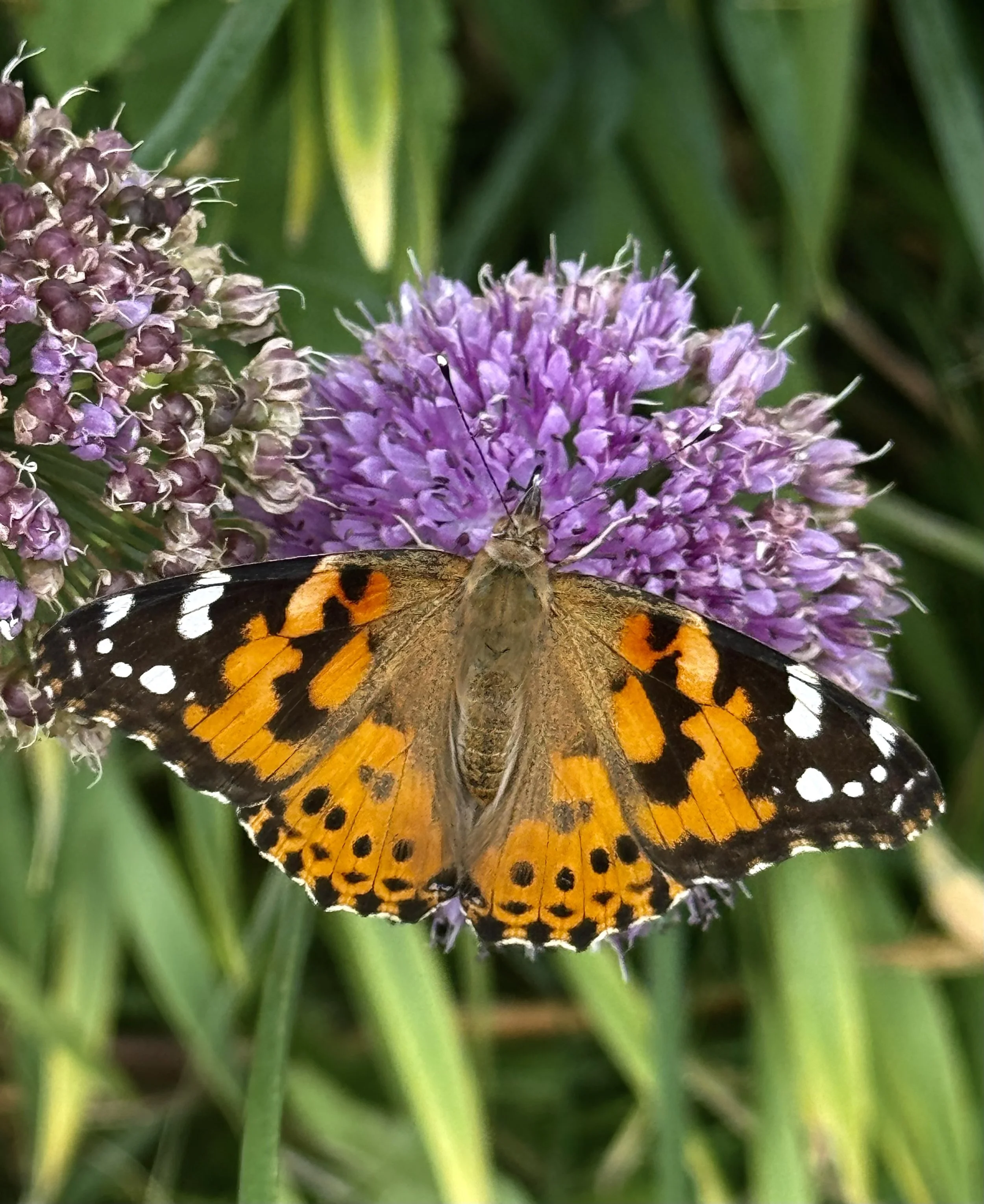
I walked merrily in the company of painted ladies—the insect kind. They fluttered about me and made delightful company on a July day. The painted lady is the most widely distributed butterfly in the world, found on every continent except Antarctica and Australia. They are sometimes called “thistle butterflies” and the host plants feeding the caterpillars include thistles, hollyhocks, sunflowers, mallows and burdock. Photo by Al Batt.
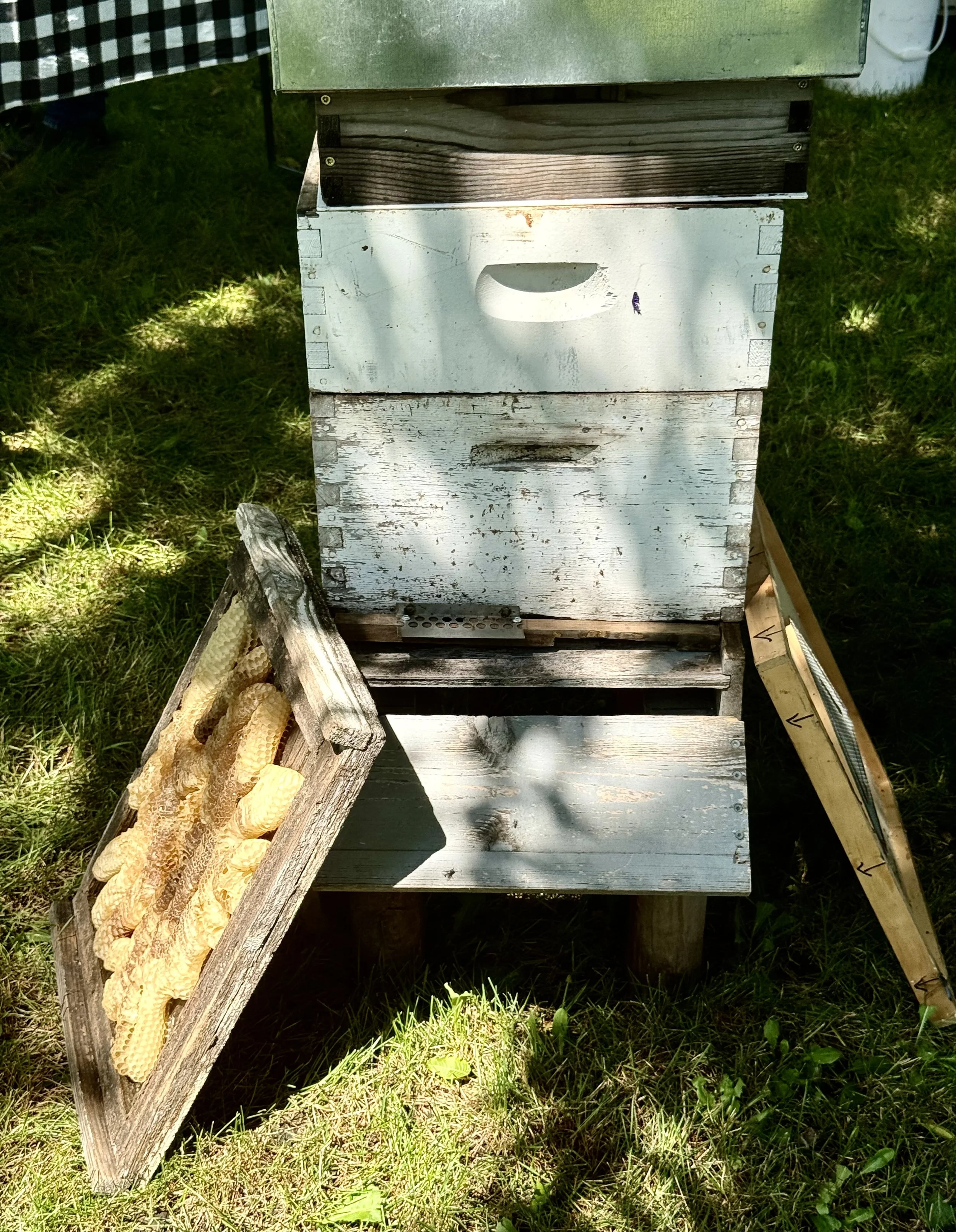
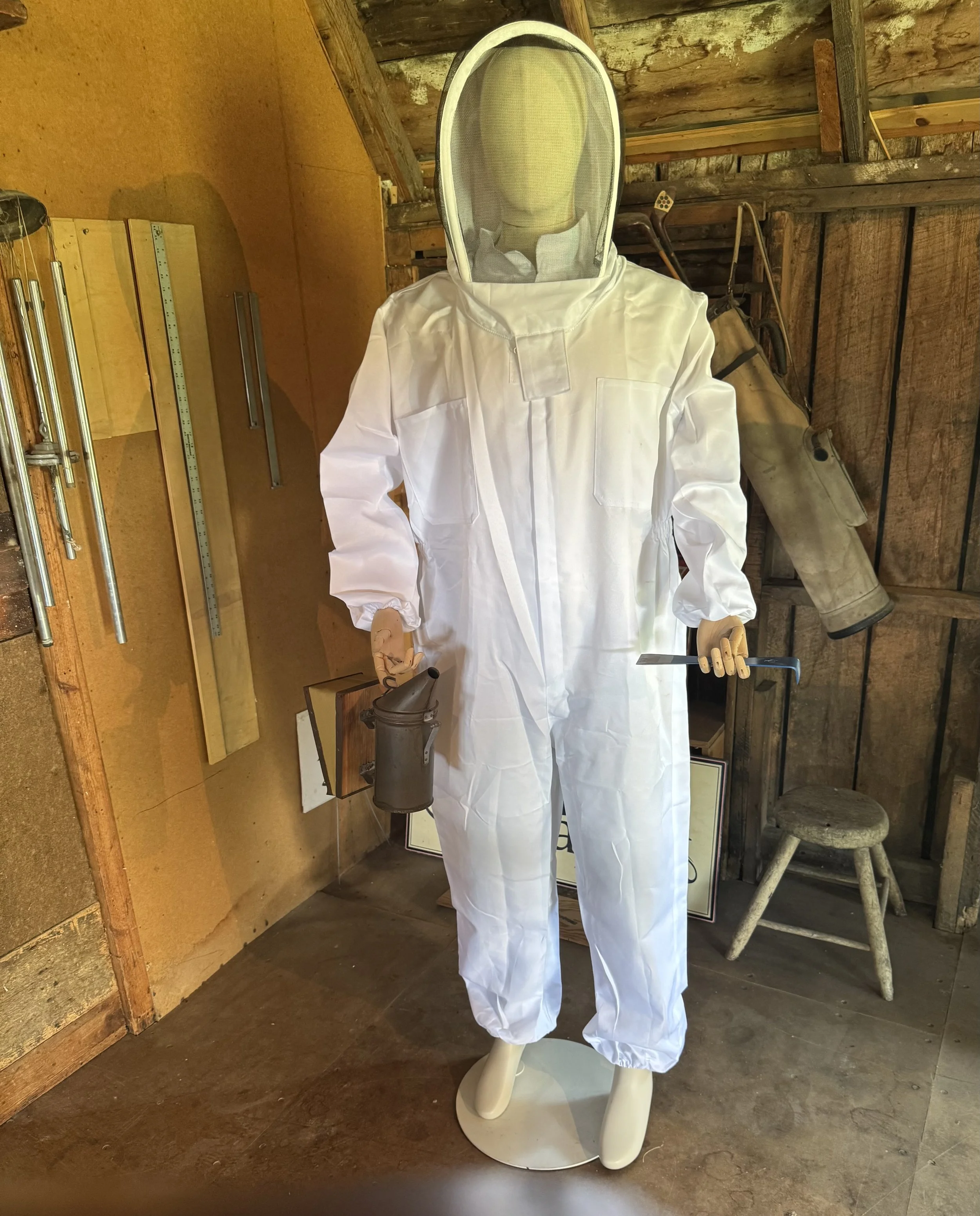
Here are some scenes from the wonderful Bee Bash 4.0 at Hofmann Apiaries near Janesville, Minnesota. I’d add that The Pollen Car is talented Terry’s only vehicle and she drives it regularly.