
Naturally
There was a cacophony of crows—caw and disorder—after they had discovered the daytime roost of an owl. They performed the corvid opera with equal amounts of outrage and glee, hoping a TV news team in search of a scoop worthy of an Emmy would magically appear. The collective noun for crows is a murder. Its cousin, the raven, was stuck with an unkindness or a conspiracy. Unfair but memorable names.
Birds are nature’s music, but much of the day’s sounds other than the crow voices were the begging of young birds. The young of the year need to be on constant alert. They are nature’s chicken fingers.
The little opossum drank at our yard’s water park for birds. I think the animal is lovely, but not everyone agrees with me. I think most people would say it’s a member of the family of animals that are nearly cute.
I could never see as many monarch butterflies as I’d like. I’m glad other butterflies, bees, sphinx moths and hummingbirds fill some of the vacant spaces. A Mayan legend says the hummingbird is the sun in disguise, and is trying to court a beautiful woman, who is the moon.
We’re told we can catch more flies with honey than vinegar. That’s unless it's fruit flies. Apple cider vinegar attracts fruit flies far better than honey does. Fruit flies love the sour smell of rotting fruit and vinegar.
Q&A
Donna Swenson of Waseca had been seeing hummingbirds, and then they were gone. She wondered why they had disappeared. In Minnesota, ruby-throated hummingbird eggs typically hatch in late June to early July, and the young fledge 18 to 22 days after hatching, which usually happens from mid-to-late July through early August. The mother hunts for tiny spiders and small insects like gnats, aphids and fruit flies to provide her nestlings with a high-protein mix of regurgitated goodies. There is a noticeable spike in hummingbird numbers at backyard feeders during mid-to-late August when the fledglings join adults to fuel up for the migration.
“Were birds used as omens?” Yes. For instance, in ancient Rome an official called an auspex or augur looked for omens by observing birds: how they flew, called or fed, which could decide whether an army marched or an election took place.
“My wife and I were watching birds near a lake. What is an easy way to tell ring-billed gulls from herring gulls? And bald eagles from turkey vultures when they’re soaring?” As summer breeding adults, the ring-billed gull is the most observed gull species. It has a ring on its bill and yellow feet. Herring gulls are substantially larger and have pink feet. Turkey vultures teeter from side-to-side while soaring, holding their wings above their body in a dihedral) V-shape). Bald eagles hold their wings flat and level.
Eric Annexstad of St. Peter wrote, “A question I ponder whenever we go through a long, hot-dry spell. Where do the squirrels and other animals get water to survive? There aren’t any drainage ditches or ponds nearby.” Squirrels and other animals get water from natural sources like streams and puddles, moisture in their food, and morning dew. Squirrels in other places and/or during different times find water in natural locations rivers, creeks, ponds, lakes and rain puddles. They find water in tree hollows and natural rock depressions, and on tree leaves. Also in fresh grass, green leaves, sap, fungi, berries, garden crops like tomatoes and insects. Carnivores get most of their hydration directly from the body fluids of their prey. Squirrels drink from birdbaths, garden fountains and decorative ponds and water bowls meant for pets. I have received photos from kind readers showing squirrels drinking from public drinking water fountains—called bubblers in some parts of the country. On one busy day, our birdbath was patronized by birds, squirrels, chipmunks, raccoons, opossums and a deer, all intent on staying properly hydrated.
Ken Nelson of Clarks Grove asked how long coyotes have been in Minnesota. Coyotes have been present in Minnesota for a long time, as they are native to our pre-settlement prairie ecosystems. While their numbers in the southern agricultural areas fluctuated and shifted toward the northern forests as the landscape changed, archaeological and paleontological evidence shows that coyotes lived in parts of Minnesota long before European settlement. As southern prairies were converted to farmland and large predators were displaced or managed, coyotes adapted by moving deeper into the state's forested regions and, into suburban and urban metro environments.
Thanks for stopping by
“A man hears what he wants to hear and disregards the rest.”―Paul Simon.
“Yes, it's a good day for singing a song, and it's a good day for moving along. Yes, it's a good day, how could anything be wrong? A good day from morning till night.”—Peggy Lee.
Do good.
©️Al Batt 2026
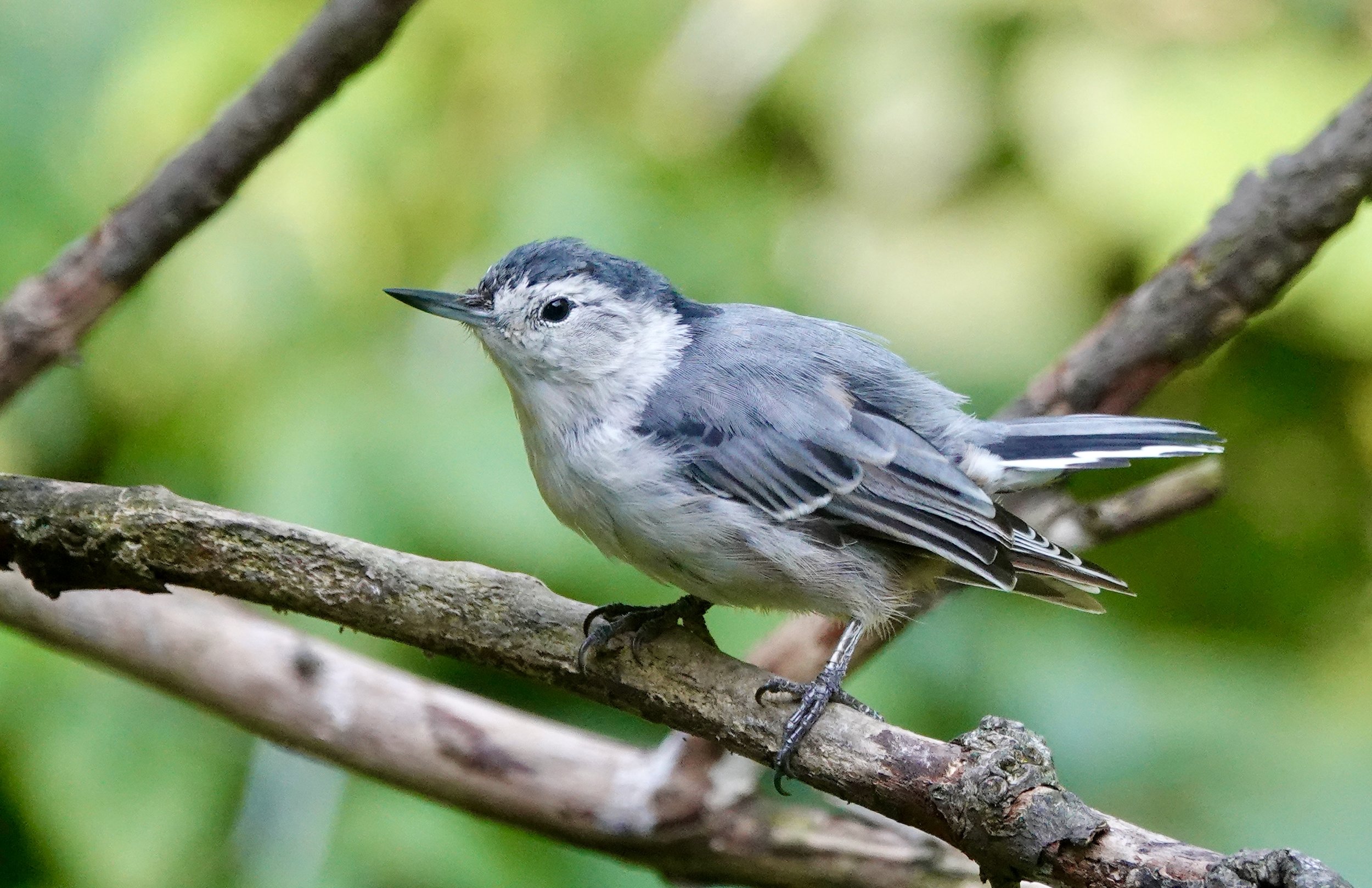
The word "nuthatch" comes from Middle English, combining the words nut and a corruption of hack. The cute white-breasted nuthatch could be named the white-breasted nuthack. A nuthatch takes a seed or nut, wedges it tightly into a crack in tree bark, and hits it with its sharp bill to open it. A nuthatch's foot has one toe facing backward and three toes forward, which aids in clinging upside down. Photo by Al Batt.