
Naturally
I fawned over a falcon—a tiny American kestrel hunting grasshoppers from a utility wire.
A timid fawn ate fallen crabapples until the flights of a blue jay and a mourning dove frightened it. I heard the comforting hum of a bumble bee, a sound signifying a day of lovely weather.
A killdeer ran on ahead. Killdeer may produce two broods each year. If they do, the male protects the first brood while the female lays and incubates her eggs. The occasional second brood is most often the result of an earlier effort's failure.
Woodpecker feet are zygodactyl. Two toes point forward and the other two point backward, providing an excellent grip for climbing trees. Woodpeckers don’t sing, but they are noisy with their calls and drumming.
I suffered from fly harassment. Stable flies are ankle biters—aggressive, blood-feeding pests that resemble houseflies. They use their bayonet-like mouthparts on my ankles and lower legs, perhaps to avoid being swatted. I hoped aerial predators would chow down on them—things like damselflies and dragonflies, which belong to the insect order Odonata, meaning toothed jaws.
Common nighthawks migrate through in an erratic, darting and diving flight while actively catching insects on the wing in the late afternoon and evening before sundown.
Crabgrass turns a reddish-purple on roadsides. The white berries of gray dogwood grow on bright red stems.
I walked along the edge of a prairie. A friend asked for the identification of a plant. I gave him sage advice. It was white sage.
White-tailed deer bucks start their new antler growth in May to June, and the antlers are covered in soft velvet. The antlers grow rapidly, reaching full size by late August. The bulk of velvet shedding occurs the first week of September, and by mid-September, most bucks are free of velvet.
The Labor Day ant, also known as the turfgrass or cornfield ant, has massive mating flights around the first Monday in September. Mature colonies release thousands of winged reproductive males and queens into the air simultaneously during warm late afternoons. Swarming typically peaks near Labor Day. Winged ants emerge en masse in the late afternoon, creating dense clouds over lawns, open fields and golf courses. The ants prefer open, sunny areas where they build small dirt mounds in lawns, turf and along sidewalks. They don’t bite or sting aggressively, nor do they damage structural wood.
Q&A
“What is the windshield effect?” It’s an observation that drivers are finding fewer dead insects smashed onto their car windshields and bumpers compared to the past. The primary cause of the decline in flying insects hitting vehicles reflects deep environmental changes, driven by pesticides, habitat loss, light pollution and climate change. There is another factor that might contribute to cleaner windshields. Modern cars have more aerodynamic curves that channel airflow, causing insects to travel over the roof rather than slamming into the glass.
“What eats monarch butterfly caterpillars?” Large monarch caterpillars will cannibalize smaller ones and eat the eggs. Insects like ladybugs, ants and shield bugs (stink bugs) can eat caterpillars. Various spiders and mice prey on monarch caterpillars. Some species of wasps and flies lay their eggs inside or on the caterpillar. When the eggs hatch, the larvae consume the caterpillar from the inside out. Monarch caterpillars are susceptible to various parasitic insects and nematodes.
“I see more ospreys now than when I was a child. Why?” Ospreys were found throughout Minnesota, but they disappeared from southern Minnesota after World War II due to habitat loss, human persecution and the use of DDT pesticides. There are more ospreys in Minnesota today because of successful conservation programs, the ban on harmful pesticides, reintroduction projects and the construction of artificial nesting platforms.
“How can I keep bees and wasps away from my hummingbird feeder?” Stop any feeder leaks, clean the outside of the feeder to remove sticky sugar residue, and/or switch to a feeder style with built-in bee guards to restrict insect access.
“Do most birds migrate?” About 70% of North American bird species are migratory, with 80% of them migrating at night. Globally, about 20 to 40% of all bird species migrate. That number depends on how migration is defined.
“When do fawns lose their spots?” Most fawns lose their spots during the first couple of weeks in September. Adult deer transition from their reddish-brown summer coats into their thicker, darker fall coats anywhere from late August to early September. By mid-September, most coat changes are complete.
Thanks for stopping by
"Some old-fashioned things like fresh air and sunshine are hard to beat."–Laura Ingalls Wilder.
"Fresh air is as good for the mind as for the body. Nature always seems trying to talk to us as if she had some great secret to tell. And so she has."–John Lubbock.
Do good.
©️Al Batt 2026
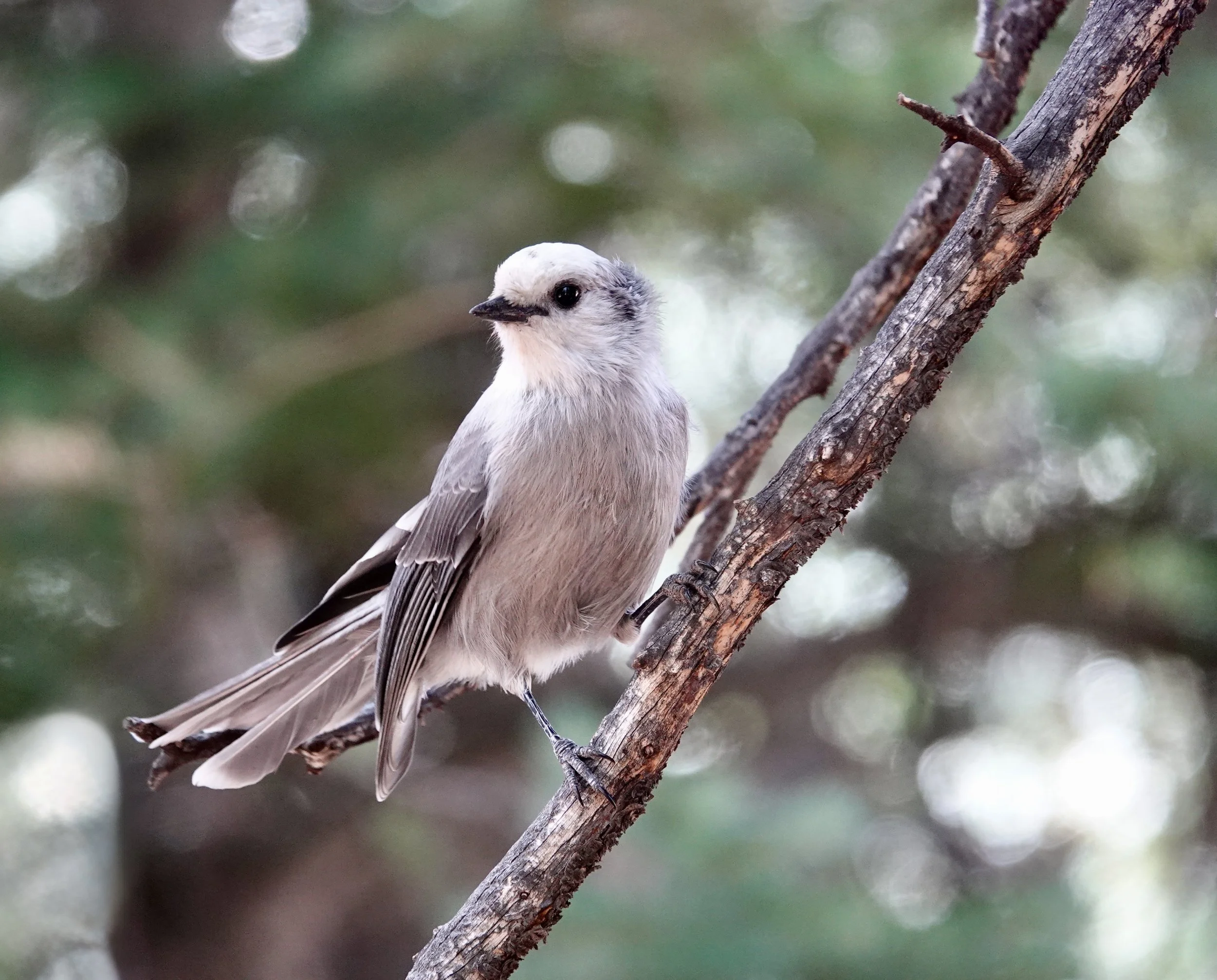
Canada jay, formerly the gray jay, has many nicknames: camp robber, whiskey jack, lumberjack, moose bird, gorby (meaning glutton) and venison hawk. Whiskey jack is a variation of “wisakedjak,” the name given to a benevolent hero in Cree culture, and camp robber originated with the Tlingit people. The long-tailed, short-billed birds glide silently into a campsite and steal food. They are skilled beggars when thievery doesn’t work. Photo by Al Batt.