
Naturally
A fox squirrel whipped its tail, as though it were feather-dusting a branch. I was a guest in its world. The squirrel barked to warn of a predator or to defend a territory. I thought of another day when I had gone walking down a local road. It was a day with well-behaved weather. A guy pulled up in a snazzy Cadillac. That might have been the make and model—a Cadillac Snazzy. The driver got out. He wore a nice suit and the shiny shoes of somebody in a mob movie. He walked around to the back of the car and opened the trunk. I thought it had been a mob hit. Now I'd be a witness. Witnesses don’t do well in mob movies. Watching “The Sopranos” changes the way a man sees the world.
“You live here?” the driver said.
“No!” I said with far too much enthusiasm. No one lived there. There was no livable place there or thereabouts. It was a gravel road. Nobody in the neighborhood lived on a gravel road. They might say they lived on a gravel road, but they didn’t do it without housing of some kind.
The trunk harbored a live trap. Maybe that is standard equipment on a Cadillac—I don’t know. He pulled the live trap from the trunk. The trap held an agitated gray squirrel as a prisoner.
“My wife wanted me to get rid of the squirrel. I didn't have the heart to hurt it,” he said as he opened the trap, and the squirrel bolted from it. It didn’t stop and ask for directions before it took off as if it knew where it was going.
The man put the empty trap back, closed the trunk, and drove away. I walked off in another direction, but not before wishing the squirrel good luck.
Neither the man nor the squirrel had waved goodbye.
An addendum to that story: The DNR says you must secure permission from the governing agency or owner of the property before releasing a squirrel. Make sure you check the local laws. And ask the squirrel.
How many “dees” are you?
Filling the bird feeders is a necessary meditation that brings me peace and joy, but coming back into the house, I have to check the feeders to see which bird was the first to the chow because the suspense was killing me.
Often the first customer at the feeder is the black-capped chickadee, an optimistic bird of
distinction. Its name is derived from its alarm call, an onomatopoeic chick-a-dee-dee-dee. Black-capped chickadees have a few different calls to indicate various levels of danger. The number of “dees” shows the intensity and proximity of a danger. Their song is a clear, two-to-three-note whistle that drops in pitch from the first note (the "fee") to the second note (the "bee"). At close range, a slight break or inflection in the second note makes the whistle sound like "cheese-burg-er" to some ears.
Many of the birds have found good travel agents and have flown the proverbial coop. I miss seeing and hearing them each time that happens.
I encountered my friend, the American toad. It’s a large one that will hibernate by burrowing underground. Leopard and green frogs hibernate underwater. Tree frogs, chorus frogs, spring peepers and wood frogs are terrestrial hibernators because of their natural antifreeze that makes them freeze-tolerant, and they can survive because they become one with winter.
Q&A
A passenger on the Pelican Breeze, a tour boat I am honored to do narrations on, asked how many times a chipmunk has babies each year. Eastern chipmunks in Minnesota breed twice a year. The first mating season occurs as chipmunks emerge from winter torpor in February to April. Young are born underground about 31 days later in April or May. A second mating period happens from June to August, with the pups born in August or October. The Females give birth to 2 to 7 pups per litter (average 4 to 5). Pups stay underground with the mother for about 6 weeks before appearing above ground, becoming independent at around 2 months of age. Minnesota has two species of chipmunks. The eastern chipmunk is found across the state, and the least chipmunk is restricted to northern Minnesota. The least, as might be expected, is the smaller mammal. In a group photo, the least would be standing in the front row, and the eastern chipmunks in the back row. The Pelican Breeze is a large pontoon that brims with bloviation when I’m aboard. I love the voyagers, the crew and their questions. It’s a love pontoon.
Thanks for stopping by
A couple of my favorite writers died recently. Here is a quote from each.
“Spend the afternoon. You can't take it with you.”—Annie Dillard.
“The earth is what we all have in common, what we are made of and what we live on, and what we return to, and what we therefore must protect.”—Wendell Berry.
Do good.
©️Al Batt 2026
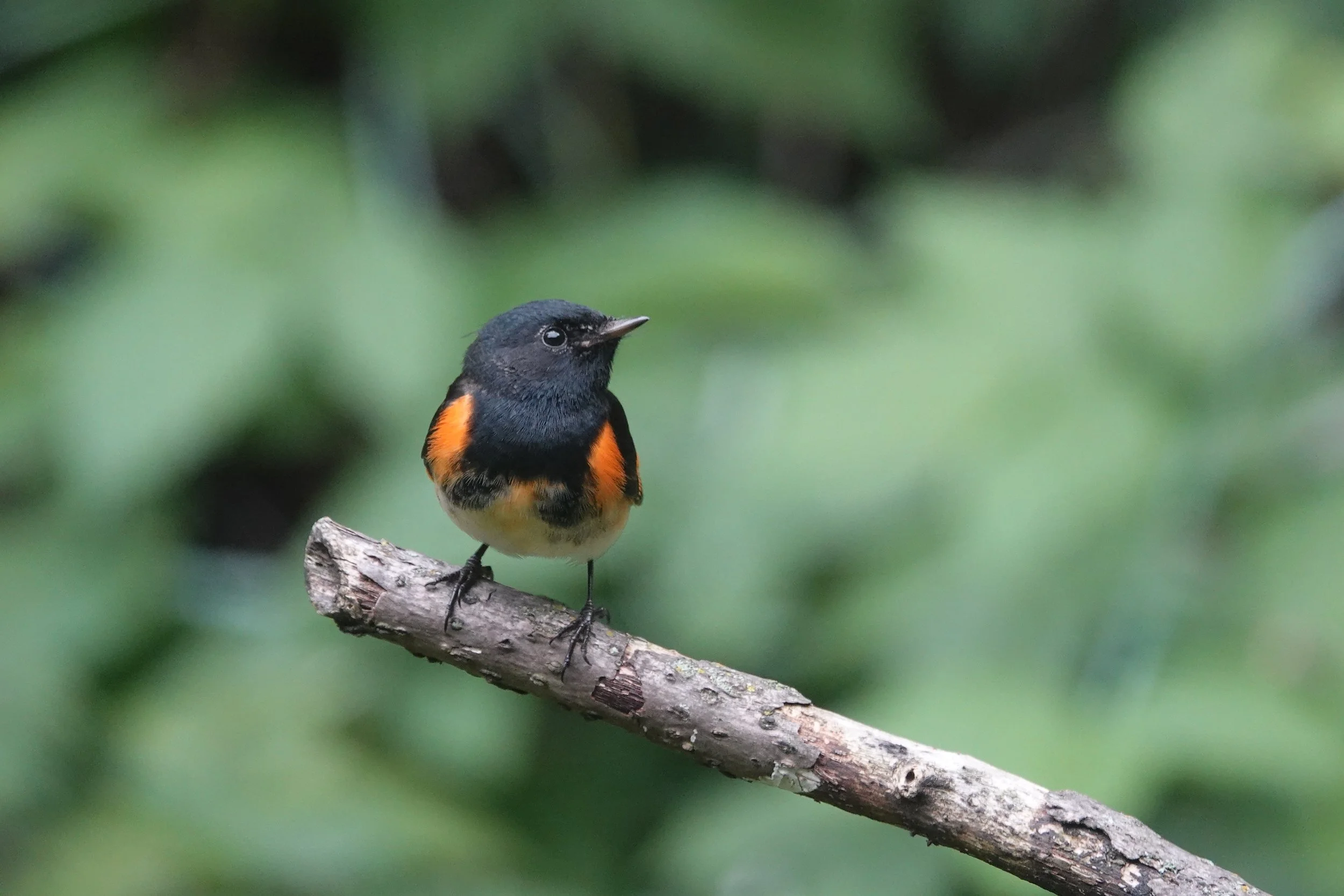
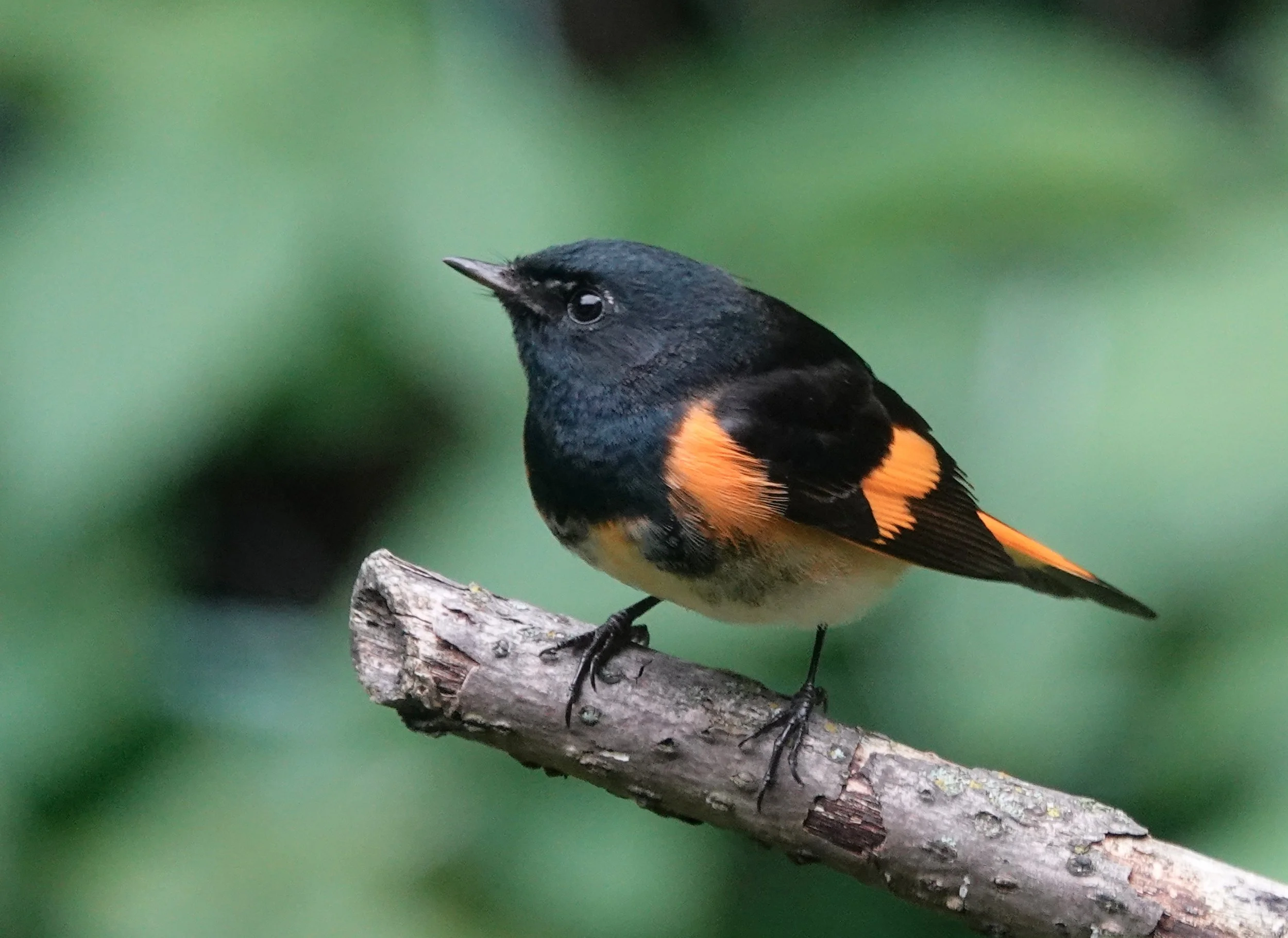
The glossy black and orange plumage of the adult male American redstart is stunning. The tiny warbler is seldom still, and “start” comes from an Old English word for “tail.” He flicks his tail open and closed like a fan, flashing patches of bright orange, presumably to flush insect prey from vegetation. They take more flying prey than most warbler species. In Latin America, it’s called candelita, or “little candle.” Photo by Al Batt.