
Naturally
Feeling peckish, a Goldilocks bird stopped by to sample the fare at a feeder. A Goldilocks bird is a chickadee because it’s just right.
I am happy to see birds. They comfort me. We are all canaries in a coal mine. I put out a handful of peanuts in the shell. The blue jays flew in the minute the last peanut dropped on the feeder. They formed a staggered line based on a pecking order. The CEO went first. The jays in the bottom half of that hierarchy experienced lengthy waiting times. They waited impatiently as if they were stuck behind a shopper attempting to use a fistful of expired coupons, while other jays searched for the heaviest peanuts for a better meal.
The sun had caused my shadow to be hurled far ahead of me when I saw a red fox tiptoeing through the yard. A fox’s musky scent marks its territory. Its potent urine serves the same purpose. The scent is similar to a skunk’s spray, but not as powerful or far-reaching. Red foxes belong to the canid or dog family, but they share behaviors with cats like hunting alone, stalking and pouncing on prey, and walking on their toes (digitigrade locomotion). An identifying field mark is the white-tipped tail. Red foxes can hear the low-frequency sounds of rodents digging under the ground or snow. Increases in Lyme disease frequently coincide with a decline in the red fox population. Foxes help control Lyme disease by preying on white-footed mice, the preferred host species of the ticks that become infected with the bacteria carrying the disease. Fox populations decrease when coyote numbers expand.
Q&A
“How do birds survive extremely cold weather?” Our winter birds are better at dealing with severe weather than we are. You’ve likely noticed many birds are wearing Patagonia coats. That keeps them toasty warm, and they look good in puffy jackets. Through adaptations and behaviors aimed at maximizing heat production and minimizing energy loss, birds survive the cold. Birds become borbs (bird + orb) by fluffing up, which traps air between the layers of feathers, creating a thermal barrier, and by tucking their bills under their wings, or standing on one leg, pulling the other leg into their feathers to limit exposed surface area. Birds shiver to increase their metabolic rate and generate internal heat. A bird’s specialized circulatory system allows warm arterial blood heading to the feet to transfer heat to the cold venous blood returning to the body, thus keeping the feet from freezing. Some small birds roost together in tight clusters at night to share body heat. Birds use tree cavities, dense evergreen foliage or roosting boxes as shields from wind and precipitation. Birds prioritize fat-rich foods like suet and oil-rich seeds like black oil sunflower seeds to boost their metabolic heat. Chickadees, nuthatches and blue jays cache food for the times when natural food is scarce.
Jennifer, Lily, Duncan and Derek of Pipestone asked how bald eagles got their name and if birds have ears. The eagle's name comes from an Old English word "balde," meaning white, and describing the adult’s white head. Birds may not wear eyeglasses or earrings, but they have ears. Their ears are hidden behind small holes covered by protective feathers (auriculars) on the sides of their heads, rather than external ear flaps like humans. External ear flaps would create drag, hindering flight efficiency. Owls have asymmetrical ears for precise sound localization to aid in capturing prey.
Mark Malepsy of Albert Lea put up a snazzy squirrel-proof bird feeder. It has stymied the squirrels, but the birds don’t like it. He wondered what he could do. The birds are being influenced to boycott the feeder by the powerful squirrel lobby. Your patience gives the birds time to make a discovery. It can take weeks for birds to trust a new feeder and food source. They are wary of new things. Make sure the seed is good. You could change location, sprinkle some seed on the ground below the new feeder, or move an existing feeder nearby to draw attention. Place the feeder where you can enjoy watching it. Good luck.
Thanks for stopping by
“The environment, after all, is where we all meet, where we all have a mutual interest. It is one thing that all of us share. It is not only a mirror of ourselves, but a focusing lens on what we can become.”–Lady Bird Johnson.
“We must not only protect the countryside and save it from destruction, we must restore what has been destroyed and salvage the beauty and charm of our cities … Once our natural splendor is destroyed, it can never be recaptured. And once man can no longer walk with beauty or wonder at nature, his spirit will wither and his sustenance be wasted.”–Lyndon B. Johnson.
Do good.
©️Al Batt 2026
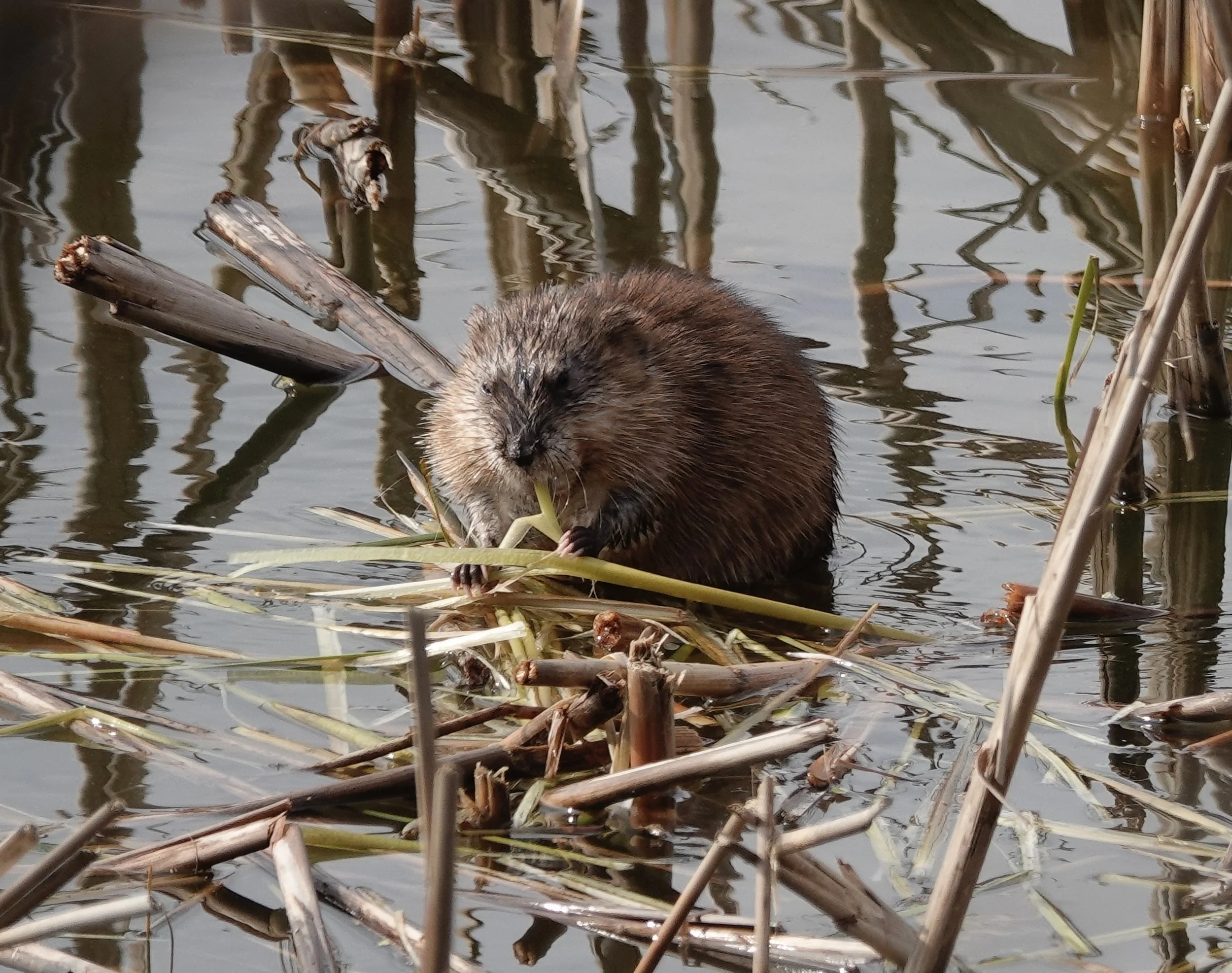
Llonamae Svebakken of Preston shared the story of the winter of 1967 when a bump in the night came from the basement of their old farmhouse. Her husband investigated and discovered a hungry muskrat. They fed Mushy the muskrat all winter. Mushy confined his bathroom duties to an unemployed tub. He left via a drainpipe when spring neared. Llonamae’s story proves that not all things that go bump in the night are unpleasant. Photo by Al Batt.