
Naturally
I have a watch-eastern kingbird in my yard. A kingbird is always ready to rumble with any other bird species. That includes a bald eagle.
I watched a robin and a catbird gathering mud for their nests. A kestrel hovered like a kite on a string I held in my hand.
A starling family discovered my suet feeder. Juvenile starlings are gray-brown. I’ve tried, but I find it impossible to dismiss them as a nuisance. Who am I to judge? A starling may have been someone’s spark bird—the bird that ignited someone’s passion for birdwatching.
Darkness loomed. An eastern screech-owl, about the size of a 12-ounce soda can, perched on the peak of the garage. Theodore Roosevelt was an avid birder who kept a detailed checklist of bird species seen on the White House grounds. Among his documented sightings was an eastern screech-owl. The word owl originated in early European languages. In Old Norse, it was called "ugla", and in Old German, it was "uwila." Both were likely created to describe an owl's call. In Old English (about 600 A.D. to about 1000 A.D.), owl was "ule", a word similar to the original Dutch word. In India, owls were once referred to as "oo-loo," and in Hebrew, "o-ah. "The female screech-owl incubates the 2 to 6 eggs for 30 days; the nestling stage is approximately 30 days. The young had fledged in my yard. The parents continue feeding them for 8 to 10 weeks after they leave the nest.
A pileated woodpecker made the suet fly in my yard. Its diet consists mostly of insects, about 97% of which are carpenter ants that had failed woodshop, and wood-boring beetle larvae. They also eat caterpillars, cockroaches, flies, grasshoppers, moths and termites. They supplement this with wild fruits, berries, nuts and suet.
Kentucky
I spoke in Kentucky and birded there. The tiny brown-headed nuthatch is a highly localized and critically imperiled bird in Kentucky. They seek mature stands of pine trees with an open understory. They sound like a squeaky rubber toy duck. I saw a worm-eating warbler, summer tanager and hooded warbler. It was great seeing them, and the shy Kentucky warbler with the dandy sideburns that would have made Ambrose Burnside envious. Sideburns are named after Ambrose Burnside, a flamboyant Civil War general and politician from Rhode Island.
Q&A
“I saw a kingfisher pecking away at a gravel pit. Was it getting grit for its gizzard?” It was likely digging a nest burrow. The belted kingfisher uses its sturdy bill to excavate burrows in the vertical banks of streams, rivers, lakes, ditches and gravel pits. They don’t need grit. Pellet-producing birds rely on powerful stomach acids and enzymes to dissolve soft tissues. Harder indigestible materials (bones, teeth and fur) are coughed out as pellets. Grit is typically required by birds that consume seeds or vegetation whole and require help to grind down plant matter in the gizzard. All birds of prey—owls, eagles, hawks and falcons—produce pellets, as do kingfishers, crows, gulls, herons, jays, terns, swallows, cormorants, shorebirds, ravens and others. Any bird that eats something indigestible, which is unable to pass through the intestines, could produce a pellet.
“How much does a fawn weigh at birth?” A white-tailed deer fawn weighs between 5 and 8 pounds. By the time this fawn is 2 weeks old, it will outrun most predators.
“Do you think grape jelly feeders are a bad thing?” Eating too much of one thing is not good for any of us. That’s why vultures eat both road-killed skunks and road-killed opossums. I feed the orioles more oranges than grape jelly. The birds that feed on the grape jelly are short-lived, with lasting long-term effects probably not a major concern. They have a diet balanced with insects and other natural foods. Many things are more worrisome—habitat loss and cats. Just my take.
“What hawks nest in Minnesota?” I’ve widened your question to, “What birds of prey with fistfuls of sharp steak knives nest in Minnesota?” Bald eagle and osprey. The hawks are the red-tailed, broad-winged, red-shouldered, Swainson's, sharp-shinned, Cooper's, northern goshawk and northern harrier. The falcons include the peregrine falcon, Merlin and American kestrel. Owls: great horned, barred, eastern screech, great gray, northern hawk, boreal, northern saw-whet, short-eared and long-eared. Some species are common, others not so much.
Thanks for stopping by
“The animal shall not be measured by man. In a world older and more complete than ours, they move finished and complete, gifted with extension of the senses we have lost or never attained, living by voices we shall never hear. They are not brethren; they are not underlings; they are other nations, caught with ourselves in the net of life and time, fellow prisoners of the splendor and travail of the earth.”—Henry Beston.
“The earth is what we all have in common.”—Wendell Berry.
Do good.
©️Al Batt 2026
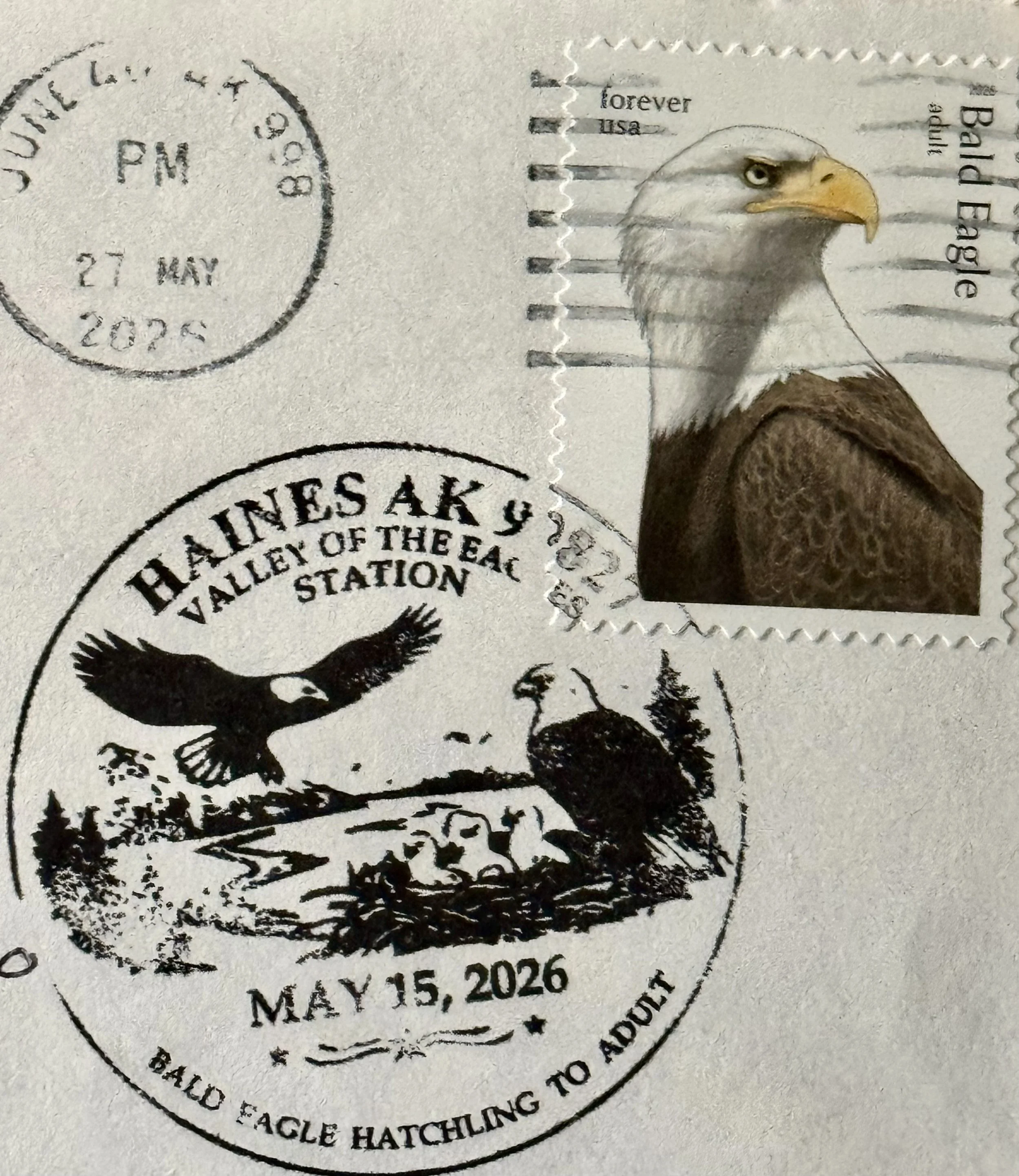
A supercool postage stamp. Photo by Al Batt.
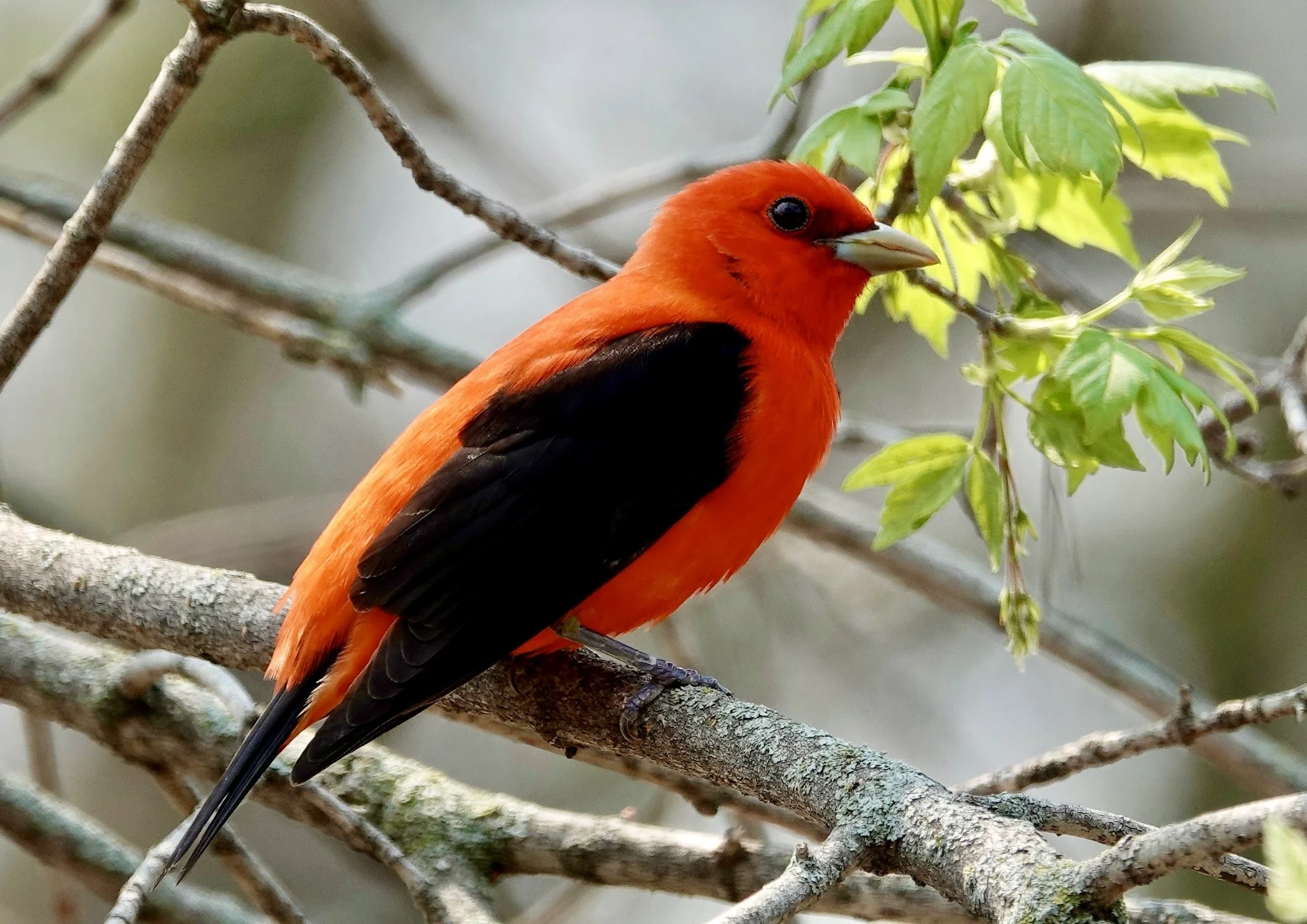
A black-winged redbird. Scarlet tanager photo by Al Batt.
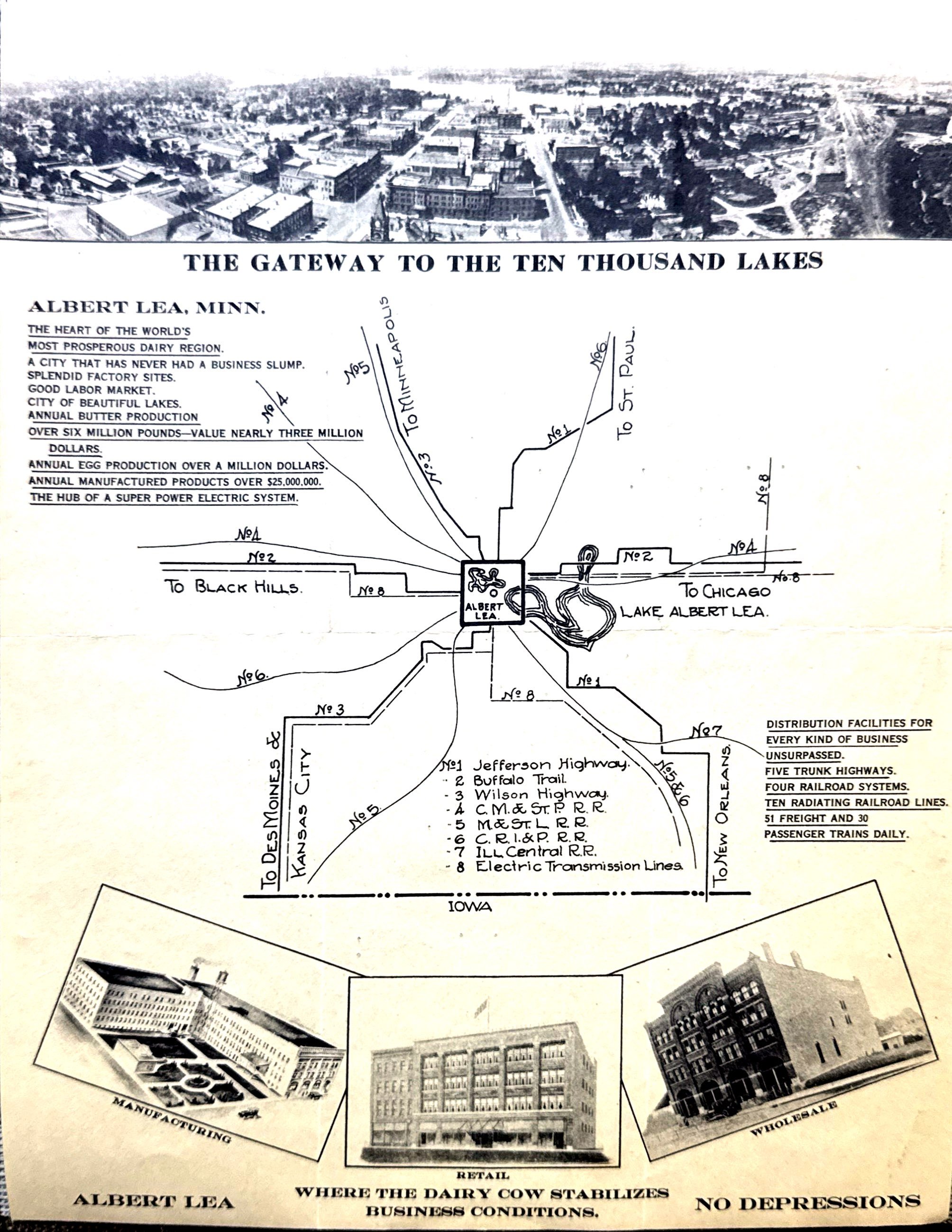
Albert Lea, Minnesota—1926.