
Naturally
I parceled out black oil sunflower seeds to several feeders. I feed the birds and they feed my soul. It’s bird magic.
I took a lengthy stroll. Starlings were perched on a utility wire. Starlings are good at that. One bird pecked at the birds on each side of it. No surprise. Being on line turns a lot of life forms into jerks.
I was blessed by the sight of baby killdeer. I was wonderstruck. Seeing a bird is a gift. Someone told me they are s’mores on stilts. I call one a cotton ball on toothpicks. Baby birds that hatch with their running shoes on are called precocial. A precocial bird is capable of moving around and foraging on its own soon after hatching. Birds that hatch blind, naked and helpless are called altricial. An altricial bird is incapable of self-locomotion or finding its own food shortly after hatching. Robins, cardinals and blue jays are altricial. Killdeer are precocial. I think I can say without fear of contradiction that precocial birds are the cuter of the two.
I watched a great blue heron fishing. Its patience was inspiring. I watched as long as I could. The big bird had caught no fish but had way more patience than I had.
A friend told me, “If a white butterfly comes, summer follows.” I see many cabbage white butterflies, an abundant, exotic species introduced to North America in the 1860s. Its green worms (larvae) feed on plants in the cabbage family, necessitating an application of Bacillus thuringiensis (Bt) in the garden.
I provided nesting habitat for native bees by cutting older, dry elderberry stems to around 18 inches tall in the late spring. Bees nest in the soft, spongy pith of the stems. Cutting the standing stalks in late spring prevents disturbing any bees that are overwintering in last year's stems.
I picked black-capped raspberries from their treacherous brambles. I added the tasty fruit to my morning’s shredded wheat. It was scrumptious. The origin of the name raspberry is unclear and is likely to remain so. It comes from raspis + berry, possibly from raspise, a sweet rose-colored wine.
Q&A
“You said the sex of a turtle is decided by the temperature. What is that determinant in degrees?” The sex of most turtles is determined by the incubation temperature of the eggs, a process called temperature-dependent sex determination. The turtles do not call it that. Generally, cooler temperatures produce males, while warmer temperatures produce females. Hot chicks, cool dudes. Specific temperature ranges vary by species, but for many turtles, the general thresholds are: Males are produced at cooler incubation temperatures, typically below 81.86°F. Females are produced at warmer incubation temperatures, typically above 88.8°F. The intermediate temperatures produce a mix of both male and female hatchlings.
“Dragonfly or damselfly?” Dragonflies are larger, stronger fliers and rest with their wings spread flat like an airplane. Damselflies are smaller, delicate fliers that typically fold their wings vertically together along their backs. It gives them a sleeker look. Dragonflies look as if they visit the gym regularly, and damselflies look as if they’re trying to cancel their gym memberships because they never go there.
“There is a goldfinch pecking at a window of my house. What is going on?” Male American goldfinches are highly territorial during the breeding season. They don’t recognize the reflection in the glass as themselves, but rather as an intruder and act aggressively toward the reflection. Robins, cardinals and chipping sparrows commonly battle with windows. I’ve had orioles, great crested flycatchers and indigo buntings attack our windows. Folks who live within range of mockingbirds report that bird shadowboxing with its reflection. Readers have kept me informed about bluebirds, pileated woodpeckers and wild turkeys finding worthy adversaries in images in the glass.
Birding with Batt
I host “Birding with Batt” on KMSU Radio, 89.7 on the FM dial. It’s my 101st year of talking about the glories of nature on the airwaves. My math might not be working there. We discuss the birds, flowers, insects, mammals, plants, trees, fish, reptiles, amphibians, weather, fungi, arachnids and the kind people who tread lightly upon this good earth. Uffda! Please forgive me if I missed anything on that list. You can listen live or catch up on on-demand archives using the free KMSU streaming app, which can be downloaded from the Apple App Store or the Google Play Store.
Thanks for stopping by
“Live and let live, be and let be. Hear and let hear, see and let see. Sing and let sing, dance and let dance. Live and let live and remember this line: ‘Your business is your business and my business is mine.’”—Cole Porter.
“We delight in the beauty of the butterfly but rarely admit the changes it has gone through to achieve that beauty.”—Maya Angelou.
Do good.
©Al Batt 2026
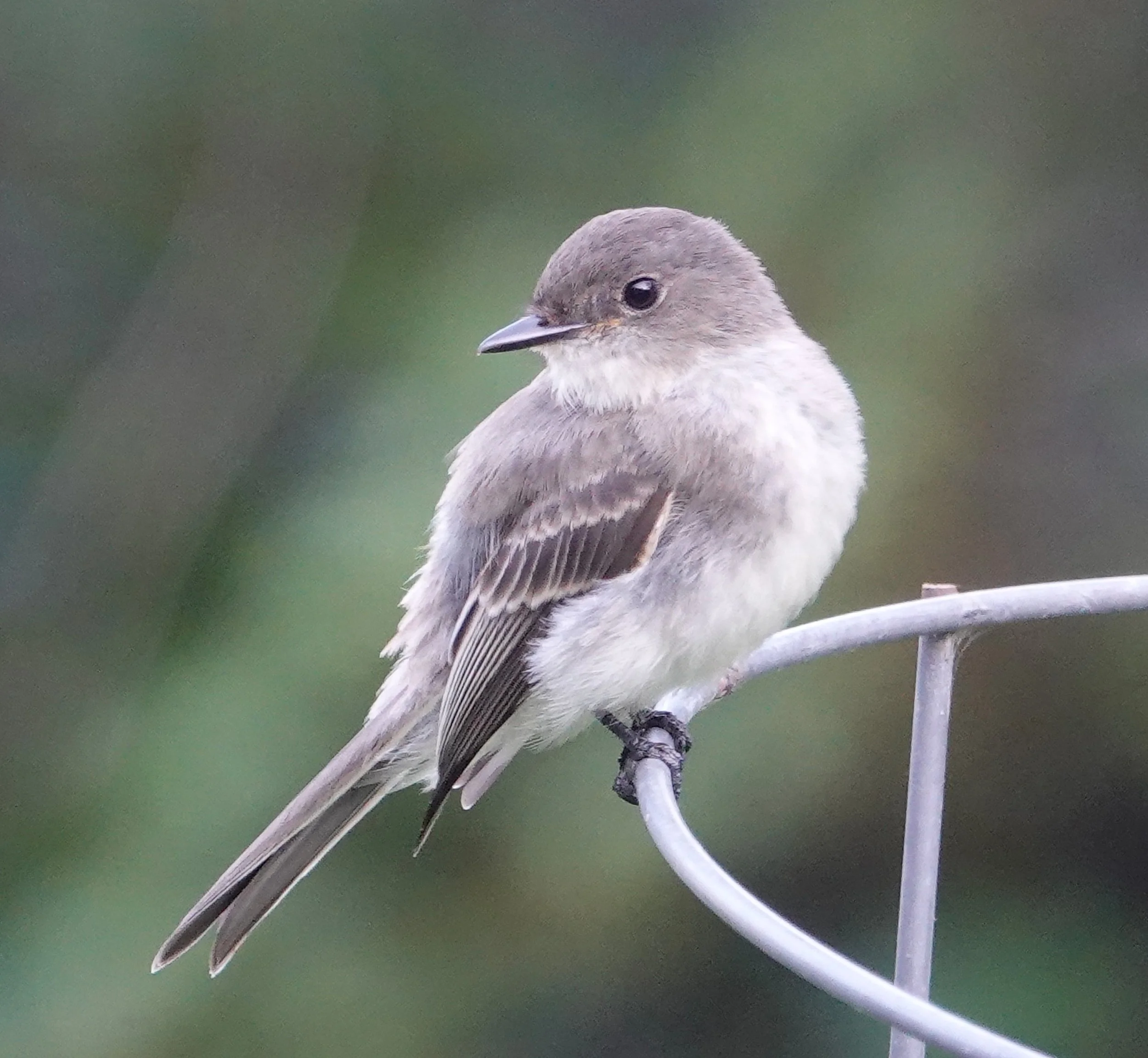
The eastern phoebe twitches its tail, calls out its name, and was the first bird ever banded in North America. In 1804, John James Audubon tied pieces of silver thread around the legs of nestling phoebes to track their migration and see if they returned to the same area. The birds wanted fitness trackers. Photo by Al Batt.